


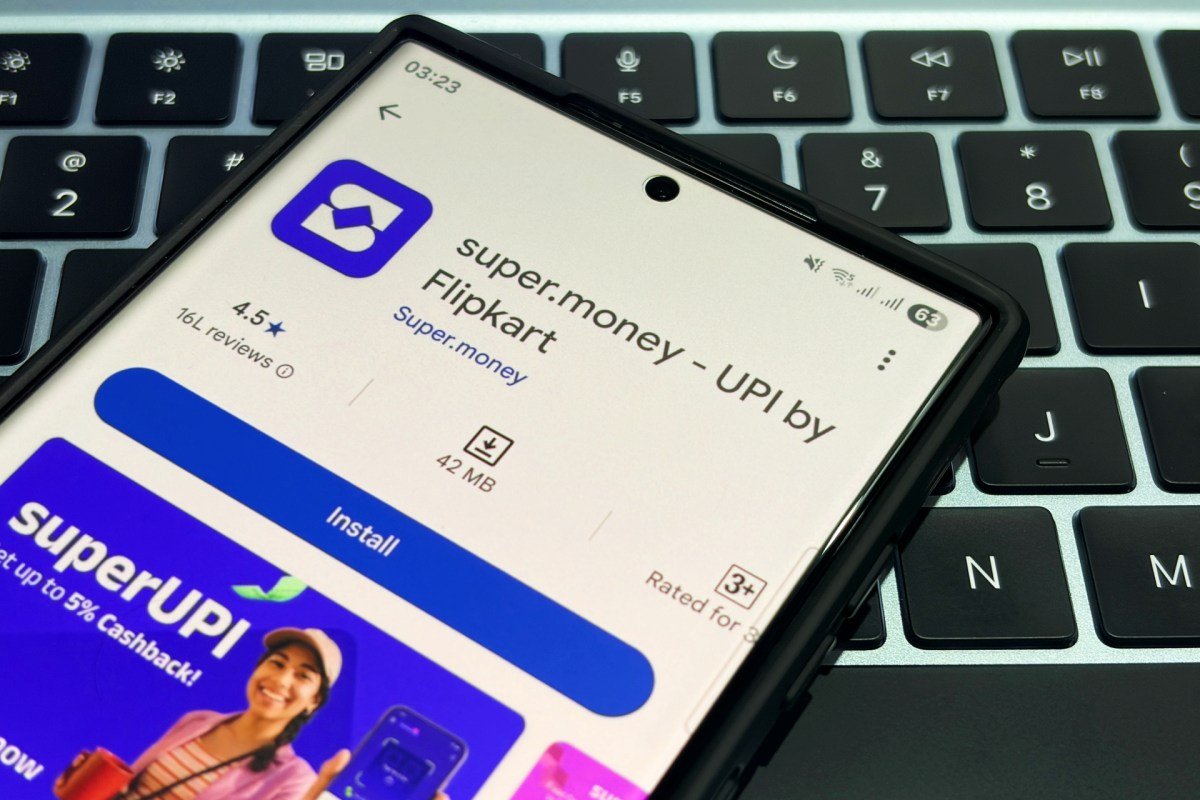
India’s free digital payments revolution has upended the way money moves — but not the way fintechs manage it. Now, Flipkart’s fintech arm Super.money is partnering with Kotak811, the digital offering of one of India’s leading commercial banks, Kotak Mahindra Bank, to change that by bundling UPI payments, savings and secured credit into a single account with the aim of turning usage into profit.
The partnership aims to issue about 2 million secured credit cards in the next 12 months – about 60% to first-time borrowers – and 5 million within two years. Super.money, which already serves 10 million active users, expects the Kotak alliance to contribute about 10% of its revenue next year as it works toward profitability by 2026, CEO Prakash Sikaria said in an interview.
The Unified Payments Interface of India (UPI), backed by the Indian government, has made direct bank transfers free and ubiquitous, processing more than 19 billion transactions a month. This success, however, has left fintechs with little room for profit as regulators, including India’s finance ministry, don’t allow commercial fees which usually fund reward and credit programs. Super.money’s bet — using a secure card and savings account to reintroduce incentives — offers a template for building sustainable business models on top of fee-free payment systems.
“We’re doing UPI to not solve the pure payments use case,” Sikaria told TechCrunch. “We are doing UPI to create an interesting inter-financial services play where we acquire and retain customers with UPI.”
Super.money, launched in June 2024 as Walmart-owned Flipkart’s latest fintech venture after spinning off PhonePe in late 2022, is already generating about $3 million in monthly revenue, with an annualized rate of about $36 million, the executive said.
The fintech app has emerged as one of India’s top five UPI platforms in recent months, processing more than 200 million transactions a month for four straight months through August, according to the National Payments Corporation of India, the federal body that runs the system.
About 80% of Super.money’s revenue comes from personal loans, 10% from credit cards and the remaining 10% from payment products such as bill payments and top-ups. The fintech says it retains about 85% of users, with 60% to 70% of its transactions coming from customers under 30.
Techcrunch event
San Francisco
|
27-29 October 2025
Sikaria noted that Super.money’s business model is based on two monetization engines. “The first is the financial services engine – personal loans, cards, deposits and similar products – and the second is commerce,” he said. “Our idea is to bring a Klarna-style ‘pay-in-3’ model on top of commerce, creating a financial overlay that allows customers to buy now and pay later in the Super.money ecosystem.”
The partnership with Kotak Mahindra Bank, India’s fourth largest lender by market capitalization, gives Super.money access to a large, controlled banking infrastructure. It follows an earlier tie-up with Utkarsh Small Finance Bank to offer specially secured cards through its platform, marking fintech’s move into mainstream retail banking.
The partnership introduces what the companies call a “3-in-1 Super Account”, combining a savings account, UPI payments and a secured credit card with fixed deposits aimed at expanding access to credit for first-time borrowers.
To open a 3-in-1 Super Account, users need to make a fixed deposit of at least ₹1,000 (about $11). The account earns interest on deposit and offers cashback on every transaction. It also includes a UPI-on-credit facility – a deposit-backed credit line that does not require any proof of income.
Sikaria told TechCrunch that the secured cards were chosen as the anchor product because they fit into India’s zero-fee UPI system while still enabling rewards and cashbacks that the platform was never designed to support.
“Our goal is to bring in users who are more inclined to engage with our products,” he said. “UPI happens to be the key engagement and acquisition hook, but for people who don’t want to engage with financial services or other products that we’ve launched, we don’t want to serve them from a UPI or payment perspective.”
The partnership with Kotak Mahindra Bank comes on the heels of Super.money partnering with SoftBank-backed Juspay to launch a one-click checkout experience for online merchants, primarily targeting direct-to-consumer brands.
About 1,000 merchants are already using the solution and Super.money plans to expand this network through partnerships with more D2C players and other companies within the Flipkart group, Sikaria said.
The secured card earns merchant discount revenue on transactions, and that funds the cash back, Sikaria said. “Obviously, there’s a standard acquisition fee at the partner bank that we charge to the bank, so that comes as a revenue generator for us as well,” he added.
Super.money plans to issue about 200,000 secured cards a month under its partnership with Kotak before expanding to other banks, Sikaria said.
So far, Flipkart has invested around $50 million in Super.money to start its operations. As the business scales, the fintech plans to raise additional capital — possibly from outside investors as well.
“We need more funds for at least two years,” Sikaria said. “Very soon, we will begin to formulate our capital raising strategy.”
He declined to say whether the next round would come from Flipkart or outside investors, but noted that Super.money is receiving inbound interest from “multiple investors.”
Meanwhile, Sikaria said the company is keeping its cash low, describing its current monthly burn as “low single-digit millions” without providing details.
He added that Super.money is deliberately focusing on India’s top 10 to 30 million users, rather than competing with mass-market payment players like Google Pay or PhonePe that target hundreds of millions.
“What we want to do is create a terrific secured card franchise with a profitable P&L — for us, the bank and our customers as well,” Sikaria said.
