

Close Menu
TechTost
  • AI
  • Apps
  • Crypto
  • Fintech
  • Hardware
  • Media & Entertainment
  • Security
  • Startups
  • Transportation
  • Venture
  • Recommended Essentials
What's Hot

Jest, a marketplace for messaging games, is challenging the app store status quo

After Zomato, Deepinder Goyal is back with a $54 million brain-monitoring bet

Pentagon moves to designate Anthropic as a supply chain risk

Facebook X (Twitter) Instagram
  • About Us
  • Contact Us
  • Privacy Policy
  • Terms and Conditions
  • Disclaimer
Facebook X (Twitter) Instagram
TechTost
Subscribe Now
  • AI

    Pentagon moves to designate Anthropic as a supply chain risk

    28 February 2026

    Anthropic CEO stands firm as Pentagon deadline looms

    27 February 2026

    Jack Dorsey just halved the size of Block’s employee base — and he says your company is next

    27 February 2026

    Salesforce CEO Marc Benioff: This isn’t our first SaaSpocalypse

    26 February 2026

    Gushwork is betting on AI prospecting for leads — and the first results are showing

    26 February 2026
  • Apps

    Spotify releases audiobook maps

    28 February 2026

    Bumble adds AI photo feedback and profile guidance tools

    27 February 2026

    Threads is testing a shortcut to quickly start DM conversations

    27 February 2026

    Instagram now alerts parents if their teen is looking for suicide or self-harm content

    26 February 2026

    Snapchat announces ‘The Snappys’, its first creator awards show

    26 February 2026
  • Crypto

    Hackers stole over $2.7 billion in crypto in 2025, data shows

    23 December 2025

    New report examines how David Sachs may benefit from Trump administration role

    1 December 2025

    Why Benchmark Made a Rare Crypto Bet on Trading App Fomo, with $17M Series A

    6 November 2025

    Solana co-founder Anatoly Yakovenko is a big fan of agentic coding

    30 October 2025

    MoviePass opens Mogul fantasy league game to the public

    29 October 2025
  • Fintech

    3 days left: Save up to $680 on your ticket to Disrupt 2026

    25 February 2026

    More startups surpass $10M ARR in 3 months than ever before

    24 February 2026

    Stripe, PayPal Ventures Bet on India’s Xflow to Fix Cross-Border B2B Payments

    24 February 2026

    InScope raises $14.5M to solve financial reporting pain

    20 February 2026

    OpenAI deepens India push with Pine Labs fintech partnership

    19 February 2026
  • Hardware

    Last 24 hours to get Disrupt 2026 tickets at the lowest prices of the year

    27 February 2026

    Everything announced at Samsung’s Galaxy Unpacked event, including S26 smartphones, privacy screen and more

    26 February 2026

    Samsung introduces new display technology that adds a privacy screen to apps and notifications

    25 February 2026

    Oura launches a proprietary AI model focused on women’s health

    25 February 2026

    Spotify and Liquid Death are releasing a limited-edition speaker shaped like a … container?

    24 February 2026
  • Media & Entertainment

    Apple and Netflix team up to stream Formula 1 Canadian Grand Prix

    27 February 2026

    Netflix pulls out of bid for Warner Bros. Discovery, giving studios, HBO and CNN to Ellison-owned Paramount

    27 February 2026

    Book the best deals for Disrupt 2026 | TechCrunch

    26 February 2026

    Americans now listen to podcasts more often than talk radio, study shows

    25 February 2026

    Music producer ProducerAI joins Google Labs

    25 February 2026
  • Security

    CISA replaces deputy director after a difficult year on the job

    27 February 2026

    Cisco Says Hackers Are Exploiting Critical Flaw To Break Into Large Customer Networks By 2023

    26 February 2026

    US cybersecurity agency CISA reportedly in dire straits amid Trump cuts and layoffs

    26 February 2026

    Treasury sanctions Russian zero-day broker accused of buying holdings stolen from US defense contractor

    25 February 2026

    Former L3Harris Trenchant boss jailed for selling hacking tools to Russian broker

    25 February 2026
  • Startups

    Jest, a marketplace for messaging games, is challenging the app store status quo

    28 February 2026

    Superhuman bets on redesigned smart ring to win back US market after Oura controversy

    27 February 2026

    Trace raises $3 million to solve AI agent adoption in the enterprise

    27 February 2026

    How to avoid bad hires in early stage startups

    26 February 2026

    Apply to take the stage at Founder Summit 2026

    26 February 2026
  • Transportation

    Self-driving truck startup Einride raises $113M PIPE ahead of public debut

    27 February 2026

    It’s time to pull the plug on plug-in hybrids

    26 February 2026

    Harbinger acquires self-driving company Phantom AI

    26 February 2026

    Waymo robotaxis are now operating in 10 US cities

    25 February 2026

    Self-driving tech startup Wayve raises $1.2 billion from Nvidia, Uber and three automakers

    25 February 2026
  • Venture

    After Zomato, Deepinder Goyal is back with a $54 million brain-monitoring bet

    28 February 2026

    Dive into Boston’s startup ecosystem at Founder Summit 2026 | TechCrunch

    27 February 2026

    A VC and some big-name developers are trying to solve the open source funding problem, permanently

    27 February 2026

    Y Combinator grad and AI insurance brokerage Harper raises $47 million

    26 February 2026

    Anthropic acquires AI startup Vercept after Meta indicts one of its founders

    26 February 2026
  • Recommended Essentials
TechTost
You are at:Home»Startups»Intuitive Machines’ first moon landing also broke ground on safer, cheaper rocket-type propulsion
Startups

Intuitive Machines’ first moon landing also broke ground on safer, cheaper rocket-type propulsion

techtost.comBy techtost.com1 March 202404 Mins Read
Share Facebook Twitter Pinterest LinkedIn Tumblr Email
Intuitive Machines' First Moon Landing Also Broke Ground On Safer,
Share
Facebook Twitter LinkedIn Pinterest Email

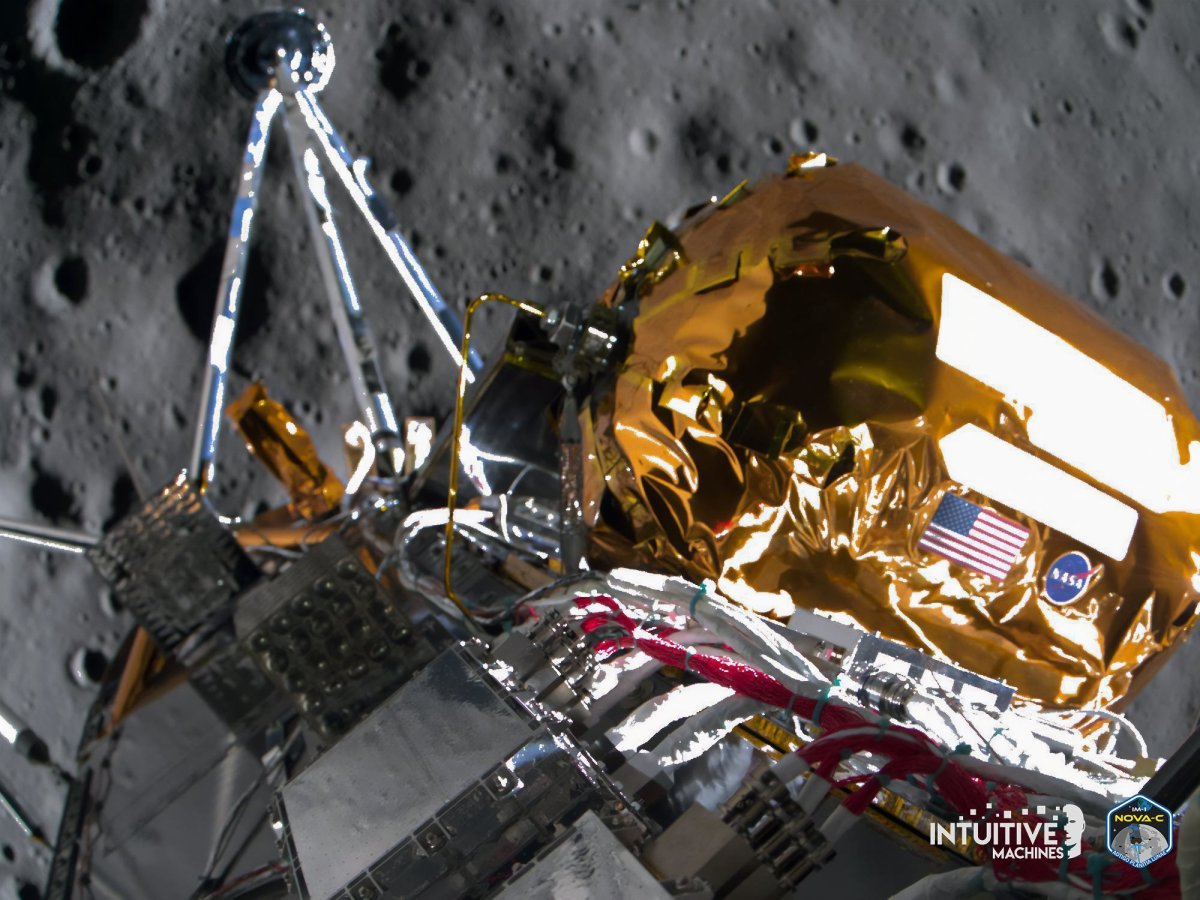
Intuitive MachinesThe first lunar landing officially lost power today after spending seven days on the moon. The aircraft made history as the first American hardware to reach the lunar surface since 1972 and the first private spacecraft to land on the Moon. But the landing craft, named Ulysses, will be remembered for another reason: its propulsion system.

This propulsion system, which uses a combination of cryogenic liquid oxygen and liquid methane, could unlock new possibilities in space and de-risk future missions by other commercial carriers.

Prior to Intuitive Machines’ IM-1 mission, no lander had ever used this combination of propellants. If they sound familiar, that’s because they’re used in high-performance rocket engines like SpaceX’s Raptor, Blue Origin’s BE-4, and Relativity Space’s Aeon R.

But ground craft – and most spacecraft today – use “space-stored” or hyperbolic propellants, such as hydrazine or nitrogen tetroxide, which can be passively stored but are extremely toxic. In contrast, “cryogens” are more efficient, higher energy, and significantly less dangerous, but must be actively cooled to very, very low temperatures.

This presents some unique challenges. Because the fuel must be kept so cold, it can only be stored before removal for a very short time. To address this issue, Intuitive Machines and SpaceX began fueling the Nova-C class lander’s VR900 engine (manufactured by IM) just three hours before liftoff, when the rocket was on the launch pad and the spacecraft was already inside the payload fairing. This is anything but typical.

It’s so unusual that SpaceX had to develop entirely new capabilities to power the landing, said Bill Gerstenmaier, SpaceX’s vice president of manufacturing and flight reliability, during a Feb. 13 press conference. second stage of the Falcon 9 rocket and adding an adapter to access the payload fairing when it was already attached to the vehicle.

The two companies conducted two wet dressing trials prior to launch. problems with propellant loading led to the first launch attempt being pushed back by one day, to 15 February. After the successful launch, Intuitive Machines also experienced a brief cooling problem of the liquid oxygen supply line, which took longer than expected. Once the propellant had cooled sufficiently, flight controllers successfully fired the engine into space for the first time the next day.

Because the company used liquid oxygen and liquid methane, which are extremely efficient, they were able to take a more direct trajectory to the moon. The spacecraft only had to cross the Van Allen Belt, a high-radiation belt around Earth, only once, which reduced the spacecraft’s exposure to harmful high-energy particles.

Two VR900 engines will also be used on Intuitive Machines’ much larger ‘Nova-D’ spacecraft to carry 500-750 kg of payload to the moon. (The Nova-C aircraft has a payload capacity of 100 kg.)

The Nova-C and Nova-D spacecraft will be far from the last spacecraft using cryogenic propellants in space. Impulse Space’s high-energy kick stage, Helios, will use cryogenics to deliver payloads directly into geostationary orbit, CEO Tom Mueller explained in an interview from January.

“People have talked about doing big super goal kicking stages in the past, and I just think you’re talking about tons of propellant and the price and the cost of security is just too much,” he said. “So using very low-cost, very high-energy propellants like liquid oxygen and liquid methane is something of a no-brainer.”

One of the six NASA science and research payloads that Ulysses carried to the surface also made direct use of the cryogenic propulsion system. The radio frequency mass meter statement from the agency’s Glenn Research Center uses radio waves and an antenna to measure how much propellant is available in the engine’s tanks. It’s technology that could be crucial to measuring spacecraft fuel levels during long-duration space missions, especially since “slosh” can make measuring liquids in microgravity a challenge.

This issue is of particular importance to NASA because the agency’s Artemis missions to return humans to the lunar surface depend on spacecraft that use cryogenic propellants — notably SpaceX’s Starship Human Landing System and Blue Origins’ Blue Moon. These missions will require the transfer of large quantities of cryogenic fluids from orbital storage to the spacecraft. While these liquids will need to be in orbit for much longer than Ulysses was in transit to the moon, the IM-1 mission is still clearly knocking on the door for cryogenic use in space.

broke cheaper Ground im-1 Intuitive Intuitive Machines landing machines moon NASA Odysseus propulsion rockettype safer
Share. Facebook Twitter Pinterest LinkedIn Tumblr Email
Previous ArticleLordstown Motors has been accused of misleading investors about the sales potential of its EV pickup
Next Article A database leak leaked 2FA codes for the world’s tech giants
bhanuprakash.cg
techtost.com
  • Website

Related Posts

Jest, a marketplace for messaging games, is challenging the app store status quo

28 February 2026

Superhuman bets on redesigned smart ring to win back US market after Oura controversy

27 February 2026

Trace raises $3 million to solve AI agent adoption in the enterprise

27 February 2026
Add A Comment

Leave A Reply Cancel Reply

Don't Miss

Jest, a marketplace for messaging games, is challenging the app store status quo

28 February 2026

After Zomato, Deepinder Goyal is back with a $54 million brain-monitoring bet

28 February 2026

Pentagon moves to designate Anthropic as a supply chain risk

28 February 2026
Stay In Touch
  • Facebook
  • YouTube
  • TikTok
  • WhatsApp
  • Twitter
  • Instagram
Fintech

3 days left: Save up to $680 on your ticket to Disrupt 2026

25 February 2026

More startups surpass $10M ARR in 3 months than ever before

24 February 2026

Stripe, PayPal Ventures Bet on India’s Xflow to Fix Cross-Border B2B Payments

24 February 2026
Startups

Jest, a marketplace for messaging games, is challenging the app store status quo

Superhuman bets on redesigned smart ring to win back US market after Oura controversy

Trace raises $3 million to solve AI agent adoption in the enterprise

© 2026 TechTost. All Rights Reserved
  • About Us
  • Contact Us
  • Privacy Policy
  • Terms and Conditions
  • Disclaimer

Type above and press Enter to search. Press Esc to cancel.