


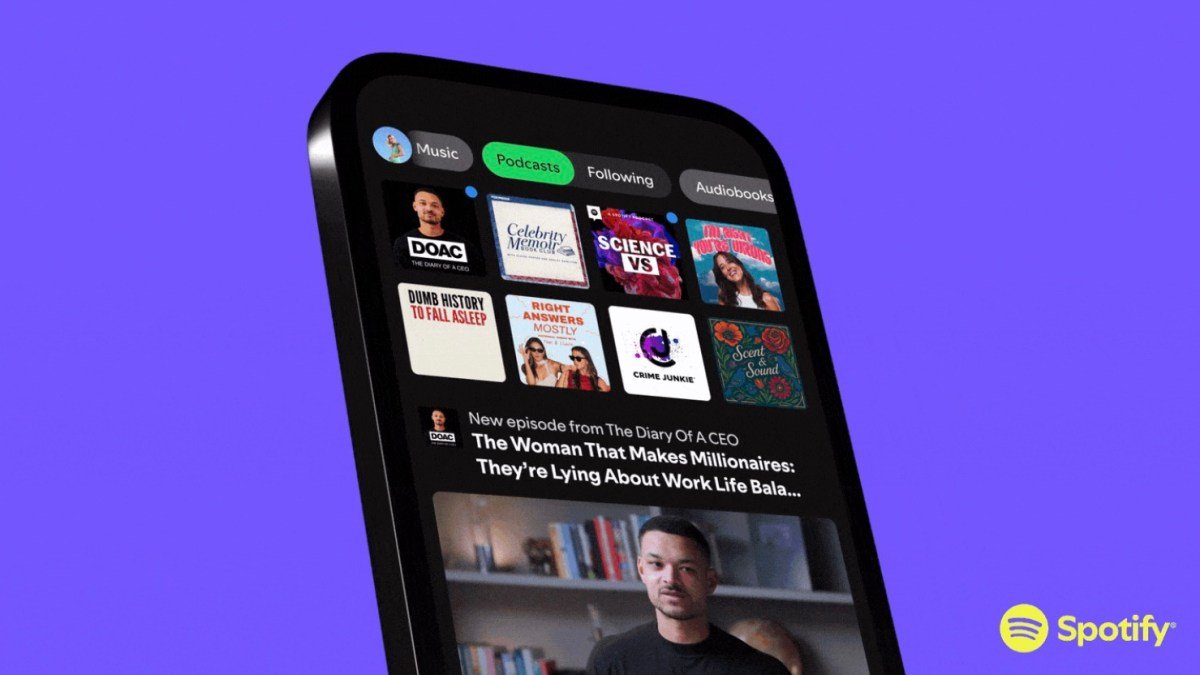
Spotify says its video podcasts are seeing increased consumer adoption. In its Q3 earnings report, the company shared that its video podcast catalog has grown to nearly half a million shows, and more than 390 million users have now streamed a video podcast on the platform.
This figure is up 54% year-over-year, and also reflects Spotify’s increased investment in the format. In June 2024, the company said it had about 250,000 video podcasts as it introduced tools that allow non-hosted podcasters to upload their videos to the platform. The streaming giant also allows users to interact with podcasts through comments, questions and answers, and polls, making the app feel more like a social network.
As a result, Spotify says the time users spend with video content on Spotify has also more than doubled year over year, largely due to video podcasts. In addition, video podcast consumption has increased by more than 80% since the launch of the Spotify Partner Program, or SPP, in January, which gives eligible creators the ability to monetize their shows in new ways, including audience-driven payments from Spotify Premium user loyalty;
The company also recently announced a partnership with Netflix to distribute its video podcasts to a wider audience, starting in 2026 in the United States, with more markets to follow. Investors did not ask about the specifics of the revenue sharing agreement on the earnings call. However, investors wanted to understand how off-platform podcast distribution would ultimately benefit Spotify.
According to incoming co-CEO Alex Norström, the move is intended to focus Spotify as a creator distribution hub.
“We believe … that when the creator wins, we win, and as creators optimize to create their best shows and interviews, which is what they’re really focused on,” Norström told investors and analysts. “They wanted to syndicate everywhere. And we believe, of course, in helping them reach audiences in as many places as possible, which is consistent with our core philosophy of being creator-first.”
Co-CEO Gustav Söderström later suggested that allowing creators to be on both Spotify and Netflix gives the company more “revenue opportunities”.
“Here’s the way to think about it: It’s part of our ubiquity strategy, and it’s very important that while we’re building a good user experience, we also have to have a very strong creator offering[ing]”, he noted.
Norström pointed out that having Spotify podcasts on YouTube increased awareness of the shows and their origins, which then led to pure incremental usage on Spotify. The company expects the same from Netflix.
Additionally, Spotify said the TV opportunity was part of that equation — hence the recent upgrade of the Apple TV app. The more people that can use Spotify across all platforms, the more their usage grows and that helps Spotify’s ad business.
The company also noted that it has given advertisers programmatic access to its audio and video inventory, although it admits that 2025 is a “transition year” for its ads and doesn’t expect to see an improvement in growth until the second half of 2026.
The streamer also announced that its monthly active users grew 11% year-over-year to 713 million and revenue came in at €4.27 billion (~$4.9 billion), beating Wall Street expectations. The company posted a net profit of €899 million (~$1 billion) during the quarter.
However, the stock it slipped after the opening bell on Tuesday, amid Wall Street concerns about Spotify’s mixed fourth-quarter guidance.
