


Activewear company Lululemon has invested in a $30 million Series A round raised by Syntetica, a French startup that has developed a new approach to recycling nylon, whose properties make it both too good to throw away but hard to reuse.
Syntetica promises to recycle two types of nylon — Nylon 6 and Nylon 6.6 — that cannot be easily separated from each other in the textile waste collected by consumers, its CEO Marco Bertone told TechCrunch.
With tons of clothing ending up in landfill every year, a key reason for the fashion industry to invest in more circularity is customer perception, especially for high-end clothing brands. Startups like Syntetica are also benefiting regulatory tailwinds and from recent price volatility which has unusually affected nylon.
In the last six months, geopolitical turmoil in the oil industry; led to quarterly or weekly renegotiations of the nylon price, Bertone said. “It was a wake-up call for many brands that rely on nylon and gasoline-derived synthetics for pricing and convenience, and which today have seen massive shocks to their system.”
According to Bertone, this suits Syntetica’s pragmatic approach. “We built the company with the clarity that there is no green premium. That if you want to scale real solutions for a sustainable world, it has to be cost-competitive, highly scalable, and you have to build partnerships from the ground up.”
The startup’s partners include brands such as Lululemon, as well as Victoria’s Secret and Etam, with a recycling project that could hit the market early next year. Syntetica’s Series A was also backed by a major apparel manufacturer, MAS Holdings — “a recognition of how important the problem has become,” Bertone said.
It is indeed very unusual for a supply chain player to invest in a player that has not yet scaled up. But before its Series A, Syntetica already had closed a partnership with Michelin’s Center for Sustainable Materials to create a commercial demonstration facility in the industrial company’s French city of Clermont-Ferrand.
Unlike other startups in its field, Syntetica won’t produce textiles itself, let alone a new material. The product of its recycling process will be pellets, which can then be used by others to make yarn like MAS. “It’s a story of realistic industry partnerships with the right players to win from the entire value chain,” Bertone said.
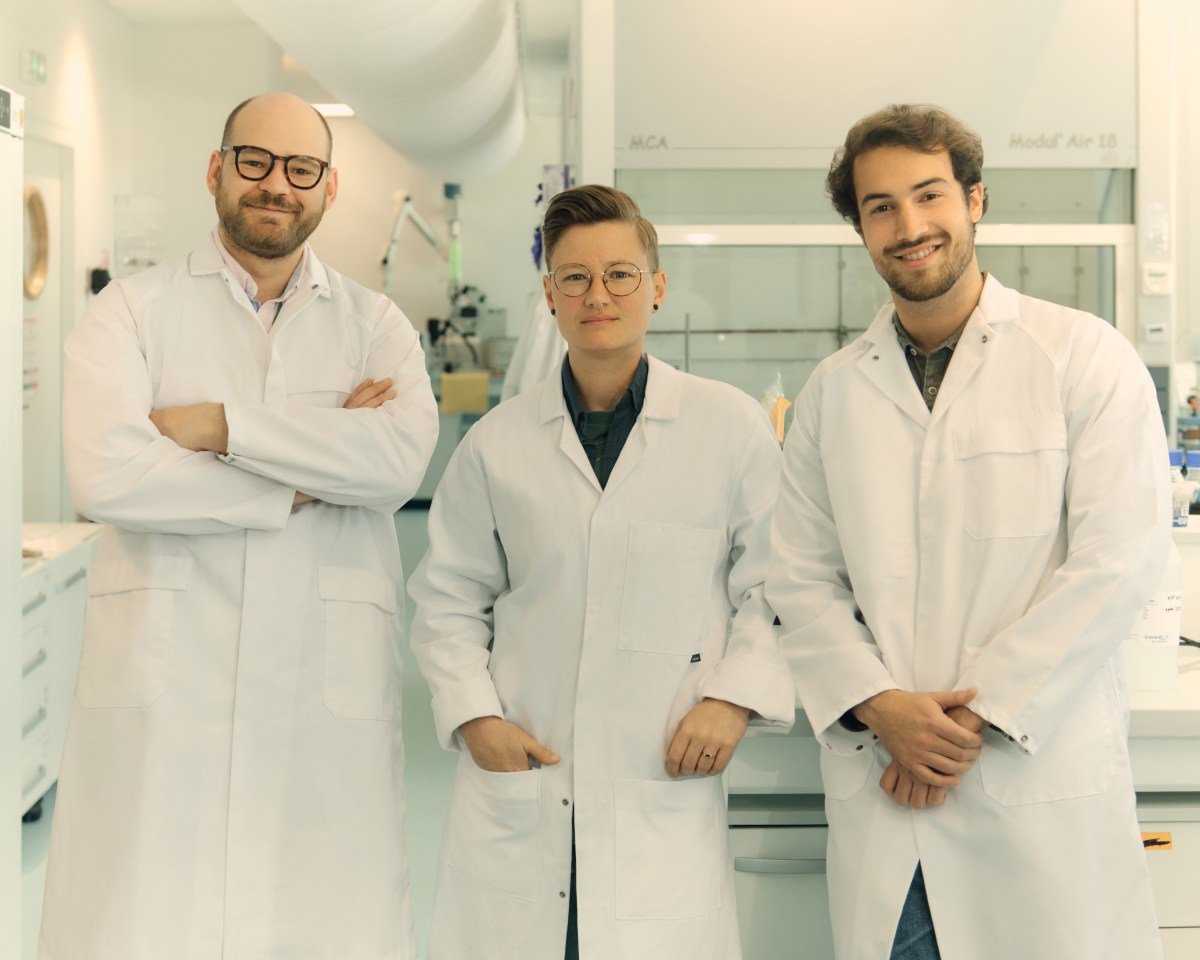
With a background in fashion and second-hand e-commerce, Bertone is Syntetica’s entrepreneur. But through Entrepreneurs First’s matchmaking accelerator hosted at Station F on the Paris campus, he teamed up with chemistry researcher Louis Monsigny. The duo then cemented their partnership at Reims, where they used to be AgroParisTech laboratory.
Since then, they have hired a CTO, Ash Ward, who previously worked for failed battery company Northvolt, whose co-founder Peter Carlsson is also one of Syntetica’s advisors. For Bertone, their scars and first-hand experience with the ups and downs of scaling give them experience of when and where to take risks.
“As startups, we have to be comfortable taking more risks than industrials, otherwise there would be no innovation. But there’s also a line — when you parallel too many risks, then it can get complicated,” he said. This is also why Syntetica is not yet diversifying.
While it could eventually recycle other materials or serve other industries, it is focused on using its funding to demonstrate its ability to produce hundreds of tons of pellets annually and deliver them to customers in the apparel supply chain. After that, Bertone said: “Syntetica will build facilities around the world, close to waste sources and close to textile production.”
While it has global ambitions, the startup benefits from being based in France. Its Series A was led by the Ecotechnologies 2 fund managed by the Green Venture team at Bpifrance, the French public investment bank as part of Plan France 2030. It has also received support from the European Innovation Council (EIC) with equity and grants and through acceleration program.
For these public advocates, startups like Syntetica are part of a broader plan to boost Europe’s industrial capabilities while reducing dependence on fossil fuels. But the startup also hopes to generate returns and is backed by private investors including EQT Ventures, SWEN Capital Partners and family offices.
Syntetica also has competitors — some that use an enzymatic approach to “eat” plastics, as well as chemical giant BASF, which developed recycled nylon. However, after attending industry events, Bertone hopes they will all grow. “If everyone were to scale up to dozens of factories, we still wouldn’t solve this problem,” he said. “Everyone has to succeed in order for us to succeed as a society.”
Lululemon has also invested in other textile recycling startups, such as Epoch Biodesign and Samsara Eco.
When you purchase through links in our articles, we may earn a small commission. This does not affect our editorial independence.
