


Varahaan India-based climate technology startup has raised $20 million in new funding as it seeks to scale carbon removal projects from the Global South and position itself as a lower-cost supplier of verified emissions reductions.
The investment marks the first part of a planned $45 million Series B round led by WestBridge Capital, the venture firm’s first investment in climate technology, with participation from existing investors including RTP Global and Omnivore. Founded in 2022, Varaha has raised about $33 million in equity to date, along with $35 million in project funding and $500,000 in grants, as it builds carbon removal projects across Asia and Africa.
India has emerged as an increasingly important base for carbon removal projects, offering lower operating costs, deep agricultural supply chains and a large technical talent pool as corporate demand for verified removals increases, including from companies facing increasing data center energy use and artificial intelligence workloads. Varaha is positioned to take advantage of these advantages, arguing that its execution-focused model allows it to offer lower-cost carbon removal while meeting the same international verification standards as higher-priced competitors in Europe and North America.
Varaha’s advantage lies less in proprietary technology and more in execution, co-founder and CEO Madhur Jain said in an interview, arguing that high operating costs could be a constraint for carbon removal developers in wealthier markets as prices come under pressure.
“If the carbon credit is a cost to the businesses that buy those carbon credits … it’s a cost on their balance sheet. It’s not a CSR item,” Jain told TechCrunch. “And so if the cost of a particular geography is going to be that high on the order of magnitude, 1.5 times to 3 times credit production, it’s going to be extremely difficult for those companies to survive.”
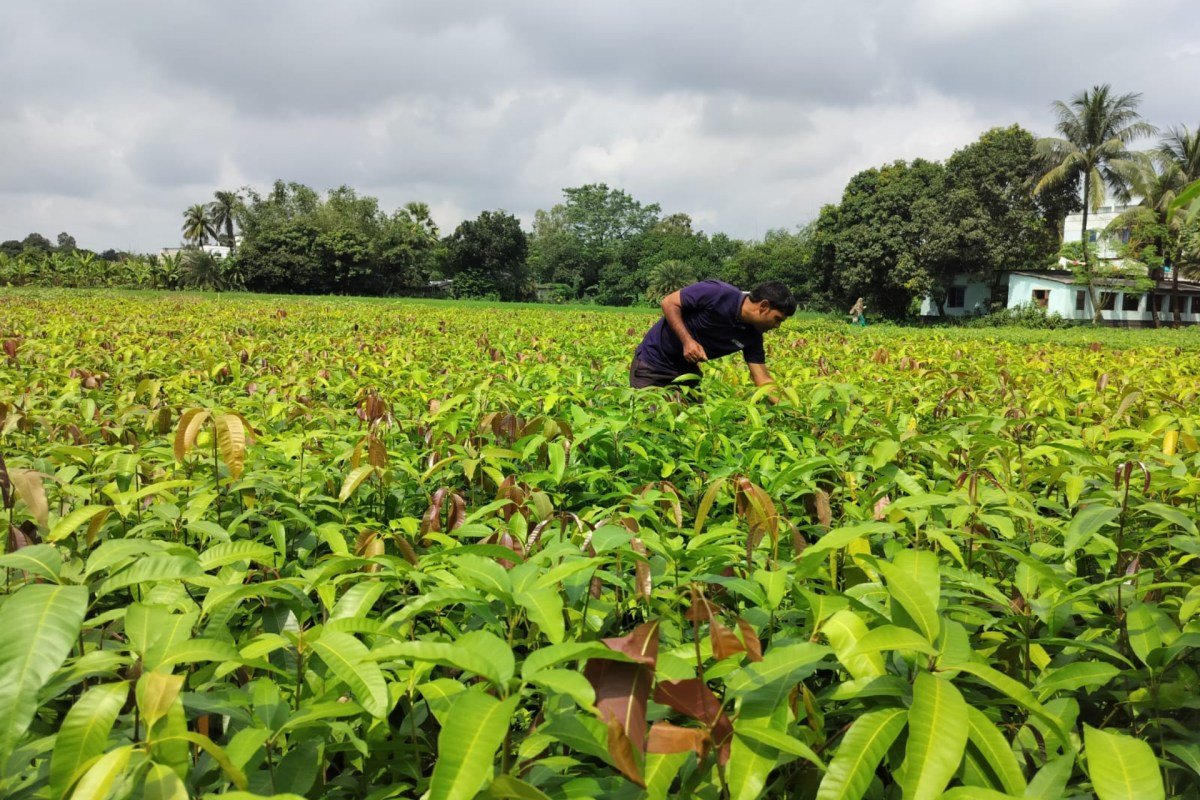
Varaha develops carbon removal projects in four main pathways: regenerative agriculture, agroforestry, biochar and enhanced rock weathering, working heavily with smallholder farmers and industrial partners in emerging markets. The startup creates and sells verified carbon credits through international registries including Puro.earth, Isometric, Verra, Gold Standard and Switzerland-based Carbon Standards International, positioning itself as a supplier to global companies seeking consistent and independently verified emission reductions.
To date, Varaha has removed more than 2 million tons of carbon dioxide across 14 active projects, generating about 150,000 carbon removal credits, Jain said. He added that the startup was the first in India to issue carbon credits from biochar projects and the first in Asia to issue credits from enhanced rock erosion through an international registry.
Techcrunch event
Boston, MA
|
June 23, 2026
Varaha reported revenue of ₹430 million (about $4.76 million) last fiscal year from delivered credits and expects revenue to rise to nearly ₹1 billion (about $11.06 million) this year while remaining profitable after tax.
The startup has signed long-term offtake deals with global buyers such as Google and Microsoft, as well as companies such as Lufthansa, Swiss Re and Capgemini.
Varaha currently operates in India, Nepal, Bangladesh, Bhutan and Ivory Coast, working with about 170,000 to 175,000 farmers on about 1.7 million acres, Jain said. The latest funding will be used to expand into additional markets in South and Southeast Asia, including Vietnam and Indonesia, while deepening its presence in existing geographies.
The startup is also launching an Industrial Partner Program, which allows industrial operators with access to sustainable biomass and gasification capacity to generate verified biocard-based carbon removal credits using Varaha’s measurement, reporting and verification systems. The program is already operational with partners in West Africa and India, including agribusinesses and a steel producer, as Varaha tries to scale carbon removal through partnerships rather than owning all the assets itself.
“The problem is so big that the technology, etc., will become open source over a period of time,” Jain said. “So what matters most is the execution.”
Varaha employs approximately 225 to 230 people, including approximately 55 in technology, science, product and data roles, with more than 80% of its workforce based in India. While the startup does not maintain overseas offices, it has staff in markets such as Nepal, Germany, the US and Australia, reflecting its growing international customer base.
“We believe Varaha is uniquely positioned to build a global decarbonization platform from India, combining integrity, scale and impact,” said Sandeep Singhal, co-founder and managing partner, WestBridge Capital. “This investment reflects our confidence in the team and their potential to shape the next phase of climate infrastructure globally.”
