


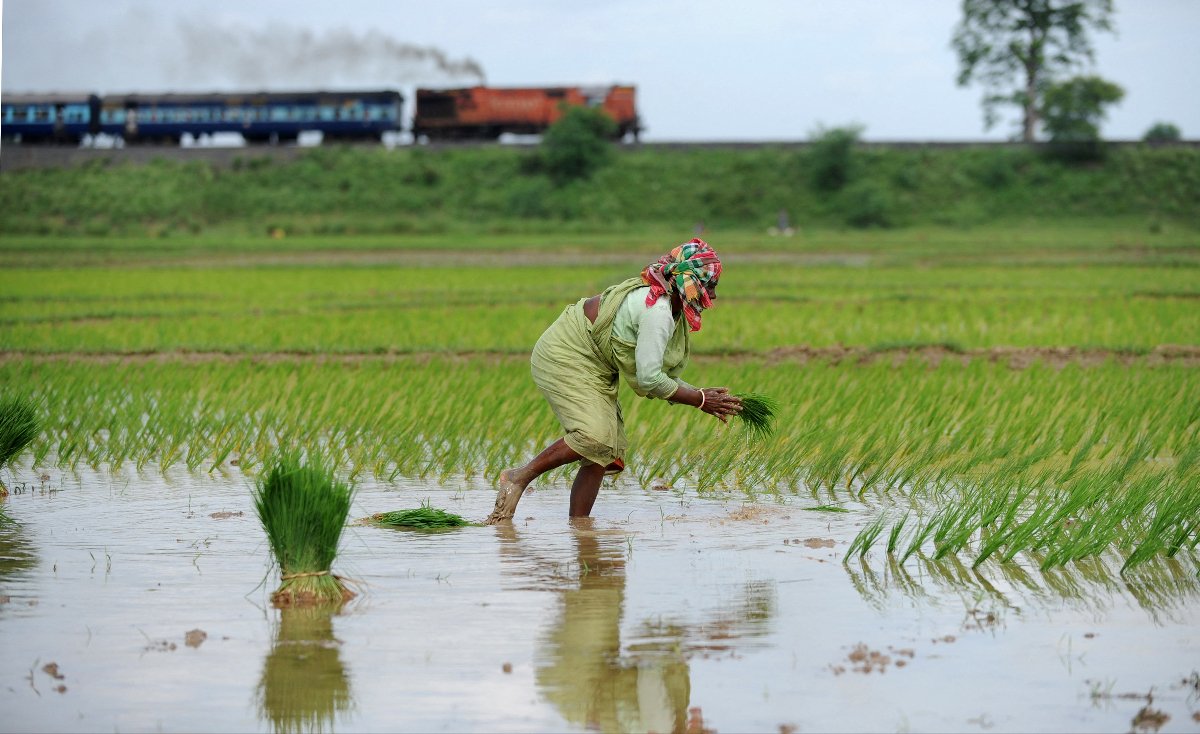
Varaha has attracted investor interest as an end-to-end developer of carbon credits that it creates by working with thousands of smallholder farmers who produce crops on a total of more than 700,000 hectares in India, Bangladesh, Nepal and Kenya.
The voluntary carbon offset market will reach $250 billion by 2050 from $2 billion in 2020, according to Morgan Stanley estimates. However, awareness of the monetary and environmental benefits associated with carbon credits is low.
Generally speaking, carbon offsets are awarded when an organization or company implements a practice that reduces CO2 emissions, such as replacing fossil fuel-based energy sources with renewable energy sources or (rarely) removes CO2 from the atmosphere through technology such as carbon sequestration. Polluters then buy these offsets to deal with CO2 emit, which allows them to claim that they are reducing their emissions or moving towards “net zero” carbon emissions. This has become increasingly important as awareness of CO2Its role in global warming has increased among the public and among public sector investors, and as governments have begun to face political pressure to reduce CO2 emissions.
But not all carbon offsets are created equal, and the market is largely unregulated. There have also been highly publicized cases of carbon credits being awarded to projects that did little to reduce emissions, leading to greater uncertainty and downward pressure on market prices.
Large entities in the space find it difficult to work at the grassroots level. Some large-scale carbon credit companies prefer to work on renewable energy projects, including switching to EVs or installing solar panels to generate electricity, as they require fewer resources and less effort to measure and monitor carbon emissions. Similarly, industry giants in sectors as diverse as automotive, chemicals, and pharmaceuticals have inherently created nature-based carbon credits, leading to conflict and criticism of their offsets.
Enter Varaha.
After spending 17 years academically and professionally with farmers in India, agricultural engineer Madhur Jain co-founded Varaha in 2022 along with Ankita Garg (COO) and Vishal Kuchanur (CTO). Years before starting Varaha, Jain – while working with Nobel laureate Michael Kremer at the social enterprise Precision Agriculture for Development as its country director for India – realized the need to motivate farmers to reduce the burning of crop residues, which which contributes to smog blanket during winter. It was early, as there were no methodologies available at the time to generate carbon credits from agriculture. However, the 34-year-old businessman decided to launch his venture once the methodologies started appearing in developed markets, including the US and Europe.
Varaha now works with more than 100 partners across geographies to onboard smallholder farmers to help them pursue sustainable and regenerative farming practices that result in quantifiable emissions reductions and soil organic carbon sequestration. This leads to the creation of nature-based carbon credits, which the startup sells to companies — mainly in Europe.
The startup has developed its Measurement, Reporting and Verification (MRV) platform that uses a combination of remote sensing, machine learning and scientific research to quantify sequestration (safe separation and storage of harmful substances, including carbon dioxide) and limit its gases greenhouse from regenerative agriculture, reforestation and biochar projects. Consequently, these projects help farmers improve their productivity, boost crop yields, save water, increase biodiversity and improve climate adaptation.
Usually, farmers follow certain practices that ultimately lead to carbon emissions. For example, when farmers flood their farms to grow rice, Jain explained, the contact between the soil and the environment is disrupted by the water layer and creates methane-emitting bacteria. This is so strong that 2% of total global emissions today are rice methane emissions, he said. Farmers can reduce this impact by limiting water use.
In such cases, the nature-based carbon credit approach helps generate more revenue and limits their contribution to the impact on the atmosphere.
Unlike nature-based credits, carbon credits from renewable energy projects are easy to measure and record and do not involve co-benefits for nature. So Jain said they were priced between $0.5 and $4 — one-fifth to one-seventh the price of nature-based credits. However, selling carbon credits produced by nature, including agriculture, requires additional checks and balances and third-party audits.
Co-founders of Varaha (left to right): Vishal Kuchanur, Ankita Garg, Madhur Jain. Image Credits: Varaha
“It’s basically like coming full circle in terms of identifying a problem long before and then now finding a solution and building towards it,” Jain told TechCrunch in an interview.
Now the company has raised $8.7 million in an investment round led by RTP Global, as the two-year-old startup looks to expand access to carbon credits for small farmers and enter new markets over the next two years.
The new funding comes amid an ongoing market slowdown that has hit startups in emerging markets, including India, and limited investors from taking different bets.
Varaha works with the NGO Verra, which runs a major carbon credit scheme, to review its data and measurement practices before generating credits. Jain told TechCrunch that the startup went through the vetting process last year, which took seven and a half months.
For agricultural projects, the process also requires field scientists to be deployed to examine available data models and validate them to determine whether they are appropriate for regional conditions.
That said, strict oversight contributes to the acquisition of high-quality carbon credits that can be sold globally.
Farmers receive 60% to 65% of the sales value of the carbon credit, while Varaha takes a cut of between 20% and 25%, depending on the category of carbon credit, and 10% to 15% goes to its partners.
Varaha said it had already signed and sold more than 230,000 carbon credits across a range of project portfolios and included among its key clients Klimate in Denmark, Goodcarbon in Germany and Carbonfuture in Switzerland. It has also received interest from financial institutions and technology companies across the US and the UK
When asked why Varaha doesn’t have Indian customers for the credits it generates, even though India is one of the biggest carbon emitters, Jain told TechCrunch that consumer behavior is putting pressure on companies in Europe and the US to reduce carbon emissions voluntarily. “There is no parallel you can draw between India and developed markets. . . there is a huge fragmentation on the ground. The piece of land for the farmers is very less and the income of the farmer is very less. So you have to understand the underlying piece of the infrastructure challenge,” he said.
However, the startup is seeing some interest coming from India as well.
“We expect that within the next six to nine months, we will have some active talks,” he said. “The willingness to pay a premium exists mainly in the Western world today. Therefore, this was our main objective. But we see that changing in the next four to five years and we will come to India as well.”
Varaha plans to use its new fundraising to enter five to six countries in the next 12 to 18 months and has already opened eight to 10 markets in South Asia, Southeast Asia and East Africa. Some of those markets will be Vietnam, Thailand, Zambia and Tanzania, Jain said.
The startup is also looking to hire more people to its team of 51 full-time employees to improve its technology and science, where half of its workforce is based, and build a sales team in the US and UK
“We are also looking at other innovative carbon sequestration solutions at the farm level,” said Jain. “So piloting these solutions and rolling them out is another key area to focus on for this fundraiser.”
Jain’s industry experience and down-to-earth approach convinced RTP Global to lead the Series A round — after placing a small angel ticket in its first round in 2022.
“We’ve been watching what it’s been able to deliver over the course of a year and we’re very impressed with the result,” RTP Global Partner Galina Chifina told TechCrunch. “The team has made several calls with the farmers. . . they saw what was happening on the ground, not just in the boardrooms.”
Varaha’s Series A round also saw participation from the startup’s existing investors Omnivore and Orios Venture Partners, as well as Japan’s institutional investor Norinchukin Bank’s seed investment in an Indian startup. It also included investments from AgFunder and the IMC Pan Asia Alliance arm, Octave Wellbeing Economy Fund. The new round brings the startup’s total funding to $12.7 million, including a $4 million investment from late 2022.
