


Marketing is one of the few functions that no industry can afford to ignore, which is why we have a veritable array of AI-powered marketing tools placed in the faces of marketers today. All social media platforms, from Facebook and Instagram to TikTok, and major incumbents like Microsoft and Google, to content-production startups like Jasper and Copy.ai, offer AI tools that claim to make marketers’ lives easier in countless ways.
That’s partly why I was confused to see yet another marketing AI startup enter the fray: San Francisco-based Kana just came out of stealth with a suite of AI agents that can do data analysis, audience targeting, campaign management, customer engagement, media planning and optimization for AI chatbots. The startup has raised $15 million in a seed funding round led by Mayfield.
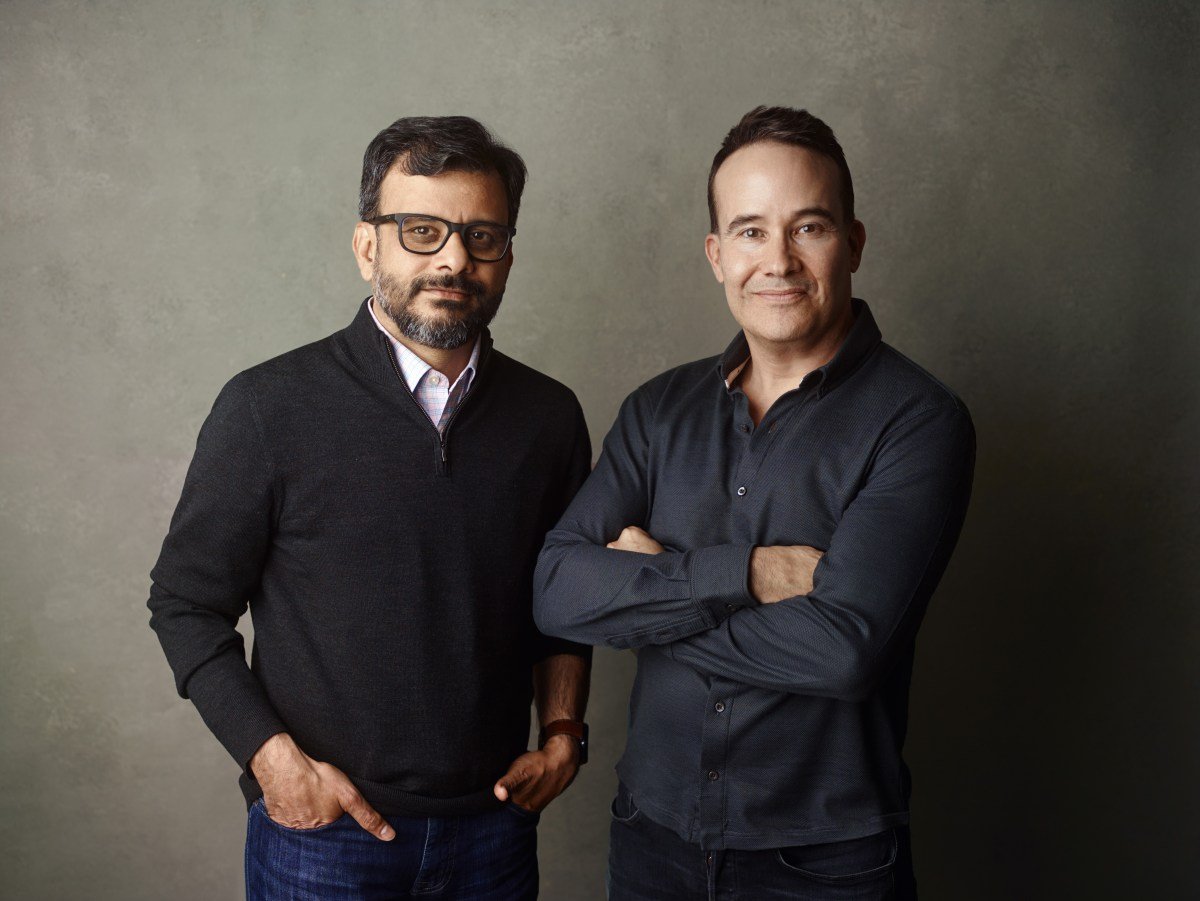
But Kana has something that most marketing startups today don’t: Its co-founders, Tom Chavez (CEO, pictured above right) and Vivek Vaidya (CTO, pictured above left), have been building marketing technology for more than 25 years. Kana is actually their fourth venture after Rapt (acquired by Microsoft in 2008), Krux (acquired by Salesforce in 2016) and startup studio super{set}, in which they incubated Kana for nine months.
Calling this a “wonderful” time to build, Chavez said there is a clear opportunity to bring their experience and today’s AI technology to bear on this class of problems. “We see a market crying out for responsive solutions right now […] We understand space deeply, having wandered into it arguably a little too much. having really stood in the pain of our customers,” he told TechCrunch.
The solution, as Kana suggests, involves “loosely coupled” AI agents that can be adapted “on the fly,” integrated into legacy marketing software, and can simultaneously work on different functions. So a marketer could, for example, upload a media brief which Kana agents would analyze to understand the campaign’s goals, find the audience to target, and pull data from inventory and market research to further tweak the plan. The platform offers autonomous campaign tracking, optimization and reporting.
Alongside agents, Kana offers synthetic data generation to augment third-party data sources for activities such as market research and audience targeting. This, Chavez argued, could help companies reduce the cost of using third-party data, fill data gaps and help marketers test across platforms faster and narrow down strategies.
Kana says this is all done while keeping people in the loop, so marketers can approve AI agent actions, give feedback and adjust what agents are doing as their needs change.
Chavez and Vaidya emphasized the importance of the platform’s flexibility, arguing that the ability to develop, adapt and create new agents in real-time would allow marketers to see results in their campaigns faster than with legacy systems.
Going forward, the startup sees this much flexibility to customize its platform for customers, doubling its moat over incumbents and other startups making similar products.
“We have an opportunity to not create custom solutions, but to highly customize and configure those solutions to meet customers where they are. The bigger companies are just never going to get there,” Chavez said.
“We live in a world that allows us to explore a third option [with customers]: not build, not buy, but build with — build in a supported way,” Vaidya added. “We can move at crazy speed that these big companies just can’t. And this is our advantage.”
Kana will use the fresh cash to expand hiring in engineering, product and marketing. Mayfield CEO Navin Chaddha joins the company’s board.
