

Close Menu
TechTost
  • AI
  • Apps
  • Crypto
  • Fintech
  • Hardware
  • Media & Entertainment
  • Security
  • Startups
  • Transportation
  • Venture
  • Recommended Essentials
What's Hot

Why China’s humanoid robot industry is winning the early market

Google launches Nano Banana 2 model with faster image generation

Xiaomi launches 17 Ultra smartphones, an AirTag clone and an ultra-thin powerbank

Facebook X (Twitter) Instagram
  • About Us
  • Contact Us
  • Privacy Policy
  • Terms and Conditions
  • Disclaimer
Facebook X (Twitter) Instagram
TechTost
Subscribe Now
  • AI

    Musk slams OpenAI in deposition, says ‘no one killed themselves because of Grok’

    28 February 2026

    Pentagon moves to designate Anthropic as a supply chain risk

    28 February 2026

    Anthropic CEO stands firm as Pentagon deadline looms

    27 February 2026

    Jack Dorsey just halved the size of Block’s employee base — and he says your company is next

    27 February 2026

    Salesforce CEO Marc Benioff: This isn’t our first SaaSpocalypse

    26 February 2026
  • Apps

    Google launches Nano Banana 2 model with faster image generation

    1 March 2026

    South Korea is opening the door to allow Google Maps to be fully operational

    28 February 2026

    Spotify releases audiobook maps

    28 February 2026

    Bumble adds AI photo feedback and profile guidance tools

    27 February 2026

    Threads is testing a shortcut to quickly start DM conversations

    27 February 2026
  • Crypto

    Hackers stole over $2.7 billion in crypto in 2025, data shows

    23 December 2025

    New report examines how David Sachs may benefit from Trump administration role

    1 December 2025

    Why Benchmark Made a Rare Crypto Bet on Trading App Fomo, with $17M Series A

    6 November 2025

    Solana co-founder Anatoly Yakovenko is a big fan of agentic coding

    30 October 2025

    MoviePass opens Mogul fantasy league game to the public

    29 October 2025
  • Fintech

    3 days left: Save up to $680 on your ticket to Disrupt 2026

    25 February 2026

    More startups surpass $10M ARR in 3 months than ever before

    24 February 2026

    Stripe, PayPal Ventures Bet on India’s Xflow to Fix Cross-Border B2B Payments

    24 February 2026

    InScope raises $14.5M to solve financial reporting pain

    20 February 2026

    OpenAI deepens India push with Pine Labs fintech partnership

    19 February 2026
  • Hardware

    Xiaomi launches 17 Ultra smartphones, an AirTag clone and an ultra-thin powerbank

    28 February 2026

    Last 24 hours to get Disrupt 2026 tickets at the lowest prices of the year

    27 February 2026

    Everything announced at Samsung’s Galaxy Unpacked event, including S26 smartphones, privacy screen and more

    26 February 2026

    Samsung introduces new display technology that adds a privacy screen to apps and notifications

    25 February 2026

    Oura launches a proprietary AI model focused on women’s health

    25 February 2026
  • Media & Entertainment

    Apple and Netflix team up to stream Formula 1 Canadian Grand Prix

    27 February 2026

    Netflix pulls out of bid for Warner Bros. Discovery, giving studios, HBO and CNN to Ellison-owned Paramount

    27 February 2026

    Book the best deals for Disrupt 2026 | TechCrunch

    26 February 2026

    Americans now listen to podcasts more often than talk radio, study shows

    25 February 2026

    Music producer ProducerAI joins Google Labs

    25 February 2026
  • Security

    The resulting data breach is growing, affecting at least 25 million people

    28 February 2026

    India cuts off access to popular developer platform Supabase with block order

    28 February 2026

    CISA replaces deputy director after a difficult year on the job

    27 February 2026

    Cisco Says Hackers Are Exploiting Critical Flaw To Break Into Large Customer Networks By 2023

    26 February 2026

    US cybersecurity agency CISA reportedly in dire straits amid Trump cuts and layoffs

    26 February 2026
  • Startups

    Why China’s humanoid robot industry is winning the early market

    1 March 2026

    Jest, a marketplace for messaging games, is challenging the app store status quo

    28 February 2026

    Superhuman bets on redesigned smart ring to win back US market after Oura controversy

    27 February 2026

    Trace raises $3 million to solve AI agent adoption in the enterprise

    27 February 2026

    How to avoid bad hires in early stage startups

    26 February 2026
  • Transportation

    Self-driving truck startup Einride raises $113M PIPE ahead of public debut

    27 February 2026

    It’s time to pull the plug on plug-in hybrids

    26 February 2026

    Harbinger acquires self-driving company Phantom AI

    26 February 2026

    Waymo robotaxis are now operating in 10 US cities

    25 February 2026

    Self-driving tech startup Wayve raises $1.2 billion from Nvidia, Uber and three automakers

    25 February 2026
  • Venture

    After Zomato, Deepinder Goyal is back with a $54 million brain-monitoring bet

    28 February 2026

    Dive into Boston’s startup ecosystem at Founder Summit 2026 | TechCrunch

    27 February 2026

    A VC and some big-name developers are trying to solve the open source funding problem, permanently

    27 February 2026

    Y Combinator grad and AI insurance brokerage Harper raises $47 million

    26 February 2026

    Anthropic acquires AI startup Vercept after Meta indicts one of its founders

    26 February 2026
  • Recommended Essentials
TechTost
You are at:Home»Startups»Why China’s humanoid robot industry is winning the early market
Startups

Why China’s humanoid robot industry is winning the early market

techtost.comBy techtost.com1 March 202606 Mins Read
Share Facebook Twitter Pinterest LinkedIn Tumblr Email
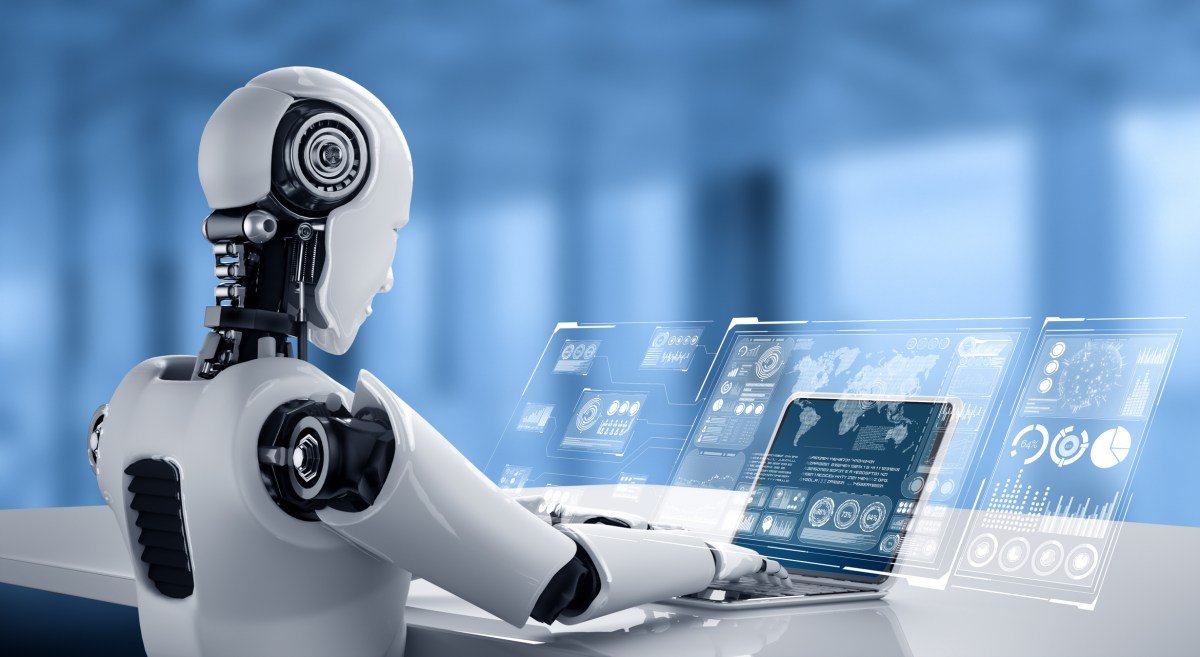
Why China's Humanoid Robot Industry Is Winning The Early Market
Share
Facebook Twitter LinkedIn Pinterest Email

China’s humanoid robots have taken over global attention with kung fu kicks at the country’s televised Spring Festival gala, while Chinese phone maker Honor is set to unveils its first humanoid robot at MWC in Spain.

Robotics was highlighted as a priority within the country “Made in China 2025” plan.though initially focused on factory automation, rather than humanoids. Now, rapid advances in multimodal artificial intelligence are accelerating so-called embedded AI — autonomous machines that operate in the real world — a push that officials say could help offset labor shortages and boost productivity.

At this early stage of humanoid robot development, Chinese companies are outpacing their U.S. rivals in both speed and volume, said Selina Xu, head of China and artificial intelligence policy in Eric Schmidt’s office.

“China has a more robust hardware supply chain — much of it built through the EV sector, from sensors to batteries — and the strongest manufacturing base in the world, allowing companies to iterate much faster than Western competitors,” Xu told TechCrunch.

As a result, not only are Chinese robots cheaper, but companies can also roll out new models faster, Xu noted, adding that top Chinese company Unitree shipped about 36 times more units last year than U.S. rivals Figure and Tesla.

Global shipments of humanoid robots totaled just 13,317 units last year, according to a Forbes report published last month. That’s a small base for an industry expected to nearly double annually to 2.6 million units by 2035. (Still, the figures should be taken with a grain of salt. The report notes that it remains unclear how many units represent commercial sales versus demo models or pilot deployments, underscoring the industry’s early-stage nature.)

The leading makers of humanoid robots by 2025 missions were China’s Agibot and Unitree, followed by UBTech, Leju Robotics, Engine AI and Fourier Intelligence, underscoring Beijing’s early dominance in the field.

Techcrunch event

San Francisco, California
|
13-15 October 2026

The biggest shift recently has been from “demonstration-driven excitement” to “features-driven adoption,” Yuli Zhao, chief strategy officer at Galbot, told TechCrunch. Galbot’s humanoid robot G1 appeared at this year’s Spring Festival Gala, China’s annual state-run New Year’s Eve show, along with robots from Unitree Robotics, Noetix and MagicLab.

“More customers are asking: Can the robot work stably in real environments and take work off people’s plates? This practical appeal is enhanced in China because policy and industrial strategy encourage automation upgrades and the manufacturing ecosystem makes iterating extremely fast,” Zhao said.

While increased funding to humanoid startups “has certainly accelerated” the pace of progress, “the most durable adoption comes when you can show reliable and repeatable value in production or service operations, not just a one-time exposure,” Zhao added.

However, investment helps, and Chinese robotics manufacturers are making sure of it. Last year Unitree was valued at around $3 billion after closing a Series C, with aspirations to reach up to $7 billion in a future IPO. Meantime, Galbot has raised more than $300 million in new funding, pushing its valuation to $3 billion, one of the largest in China’s humanoid robotics sector to date.

American companies are moving beyond impressive displays and focusing on real developments. In addition, they pursue their own aggressive goals. US Startup FoundationFor example, it plans to build 50,000 humanoid robots by the end of 2027.

But China is already targeting a combination of affordable mass-market models and advanced applications, rapidly expanding humanoids into industrial, consumer and rehabilitation sectors, according to a December report. TrendForce report.

Congestion in China’s rule

When it comes to AI systems and embedded software, it’s still unclear where Chinese humanoid companies really stand. The industry is betting heavily on vision-language-action models and “world models,” but both technologies remain in early stages. Nvidia currently leads the space with its end-to-end humanoid software stack, according to Xu, so naturally most humanoid startups in China are powered by Nvidia’s Orin chips. However, domestic chipmakers are developing domestic alternatives, he said.

However, manufacturers of humanoid robots are still working on fundamental problems. The challenge is to allow robot foundation models to predict the “next natural state” the robot will encounter in unpredictable environments, similar to how large language models predict the next word. But unlike LLMs, humanoid robotics companies can’t just “scrape” the web for training data, Xu said. Thus, most are based on simulation environments, which generate synthetic data, although real-world data collection remains essential.

“Because of the lack of data problem, humanoids are still a long way from autonomy. The hardware is currently ahead of the software – the robot body can handle much more dexterity today than years ago (although it has reliability issues, as we’ve seen with robots that broke down in humanoid marathons), but the brain is still nascent,” the analyst said.

Safety is also a major hurdle for humanoid robots. A high-profile accident could cause a public backlash, and China is likely considering how to develop the technology quickly without moving too quickly. As the industry matures, more regulation is expected.

Given the lack of data, Zhao believes that demand for humanoids will first increase in fairly limited workplaces.

“The early momentum is likely to be in manufacturing, warehouse logistics and retail, where tasks are repetitive, hours are long and processes are clear – creating real demand and ideal conditions for humanoid robots to deliver value at scale,” he said.

Other APAC Players

The development of humanoid robots is not a race between two countries. Japan’s robotics ecosystem — from startups to semiconductor heavyweights — is aiming to mass produce humanoids by 2027. Pioneering projects like Honda’s Asimo, Murata Manufacturing’s Murata Boy and SoftBank Robotics’ Pepper, Japan relies on precision and advanced control. An area unique to this nation: Humanoid robots are increasingly being used in elder care.

Coral Capital CEO James Riney, who invests in technology companies in Japan, believes Tokyo will continue to thrive in the humanoid robotics industry. “There are three factors likely to drive the adoption of robotics in Japan. One is the labor shortage and the desire to be less dependent on mass immigration. The second is the widespread cultural view of robots as our friends – more against Terminator. The third is that Japan is already Doraemon dominant in many parts of the robotics supply chain.”

Boston Dynamics unit of Hyundai Motor unveiled a new humanoid Atlas for factory use by 2028with production plans up to 30,000 units per year in the US as part of the AI-based robotic push.

However, for China, government policy, industrial strategy, labor shortages and private capital are all converging to enable the country’s humanoid robotics push.

“China’s leadership is best understood as a speed-to-scale advantage,” Zhao said. “The ecosystem here compresses the entire cycle—R&D, supply chain, manufacturing, integration, and customer development—into a very tight loop. That means humanoid companies can move from prototype to real-world development faster, learn from real-world operations, and iterate at a pace that’s hard to match elsewhere.”

AI engine ASIMO Boston dynamics China Chinas Early Fourier intelligence Galbot humanoid humanoid robot humanoid robotics industry Japan market robot softbank robotics Ubtech Robotics Unitree winning
Share. Facebook Twitter Pinterest LinkedIn Tumblr Email
Previous ArticleGoogle launches Nano Banana 2 model with faster image generation
bhanuprakash.cg
techtost.com
  • Website

Related Posts

Jest, a marketplace for messaging games, is challenging the app store status quo

28 February 2026

Superhuman bets on redesigned smart ring to win back US market after Oura controversy

27 February 2026

Trace raises $3 million to solve AI agent adoption in the enterprise

27 February 2026
Add A Comment

Leave A Reply Cancel Reply

Don't Miss

Why China’s humanoid robot industry is winning the early market

1 March 2026

Google launches Nano Banana 2 model with faster image generation

1 March 2026

Xiaomi launches 17 Ultra smartphones, an AirTag clone and an ultra-thin powerbank

28 February 2026
Stay In Touch
  • Facebook
  • YouTube
  • TikTok
  • WhatsApp
  • Twitter
  • Instagram
Fintech

3 days left: Save up to $680 on your ticket to Disrupt 2026

25 February 2026

More startups surpass $10M ARR in 3 months than ever before

24 February 2026

Stripe, PayPal Ventures Bet on India’s Xflow to Fix Cross-Border B2B Payments

24 February 2026
Startups

Why China’s humanoid robot industry is winning the early market

Jest, a marketplace for messaging games, is challenging the app store status quo

Superhuman bets on redesigned smart ring to win back US market after Oura controversy

© 2026 TechTost. All Rights Reserved
  • About Us
  • Contact Us
  • Privacy Policy
  • Terms and Conditions
  • Disclaimer

Type above and press Enter to search. Press Esc to cancel.