


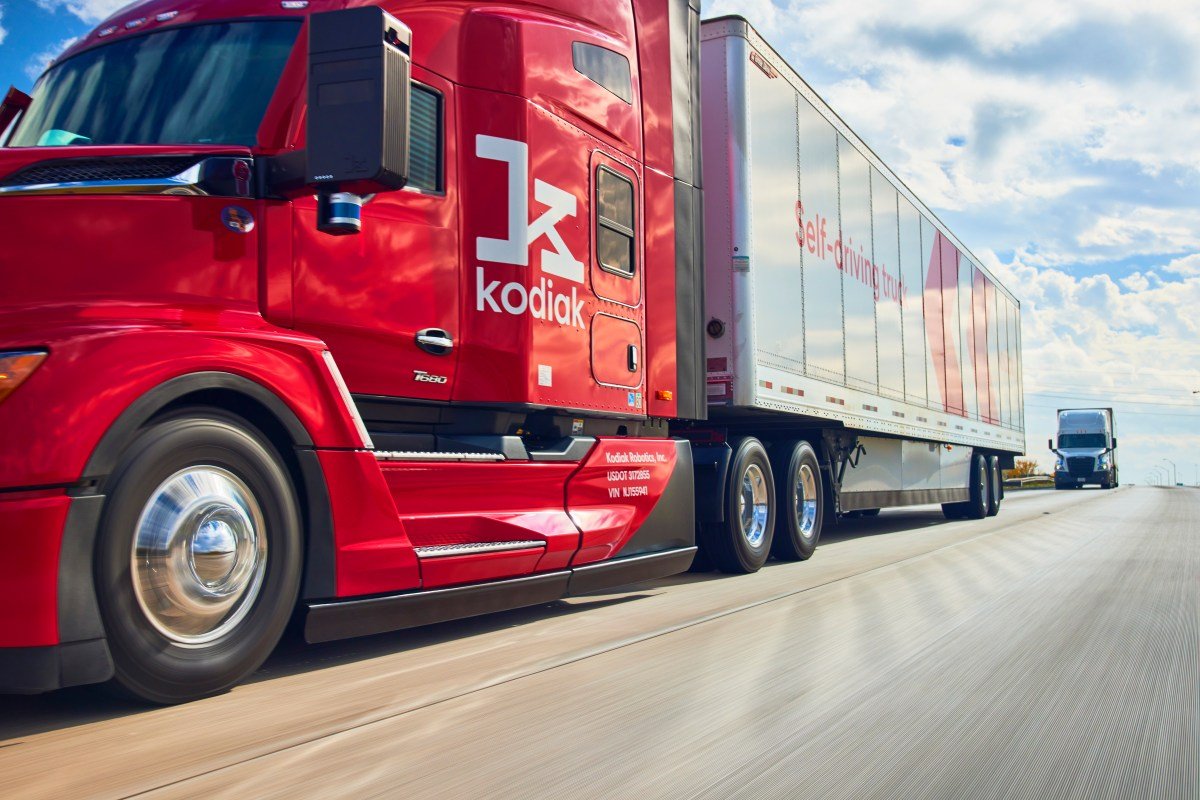
California regulators have released revised rules that will allow companies to test and eventually deploy autonomous trucks on public highways.
The California Department of Motor Vehicles, the agency that regulates autonomous vehicles in the state, has opened a 15-day comment period for the proposed revisions which expires on December 18.
California is home to many companies developing and testing autonomous vehicle technology in the state. And while robotaxis have become commonplace in the San Francisco Bay Area and parts of Los Angeles, autonomous trucks are absent because regulations prohibit testing driverless vehicles weighing more than 10,000 pounds on public roads.
The agency, which has been considering lifting the ban for two years, released a draft of proposed changes in 2024. The final proposed revisions were released Wednesday.
The revised regulations cover a few areas beyond self-driving trucks, including language that appears to give law enforcement the power to issue traffic tickets to driverless vehicles — an issue that has received more attention as Waymo has expanded its commercial robotaxi operation in the state.
The self-driving truck element is by far the most controversial. The revisions reflect feedback received during the initial public comment period this spring, the agency said.
The proposal has been met with enthusiasm by companies developing autonomous vehicle technology, many of which are based in California but are being tested on highways in other states such as Texas. Companies like Aurora Innovation and Kodiak AI eventually want to use autonomous trucks to haul freight along interstate highways.
Techcrunch event
San Francisco
|
13-15 October 2026
“California DMV’s latest draft regulations show real progress toward creating a regulatory framework for driverless trucks in the state and unlocking autonomous operations from coast to coast,” said Daniel Goff, Kodiak AI’s vice president of external affairs, in an emailed statement. “These proposed regulations are a critical step toward bringing autonomous trucks to California highways by 2026, a milestone that will enhance road safety and grow the economy.”
The Teamsters Union, which has fought to protect truckers, is unmoved.
“Our position remains the same, we are opposed to the development and testing of this technology on our roads,” Shane Gusman, legislative director of Teamsters California, told TechCrunch. “The changes that are made do not change our position.”
Gusman noted that the Teamsters will fight the proposed revisions. It is also a lobby for excerpt AB 33a bill currently in the state Senate that would require a human safety operator behind the wheel of any autonomous heavy-duty truck.
The DMV’s revised rules would require self-driving truck companies to go through a phased licensing process, mirroring current regulations that apply to light autonomous vehicles like robotaxis. Companies will first get permission to test with a human safety operator behind the wheel. The DMV issues separate licenses for driverless testing and installation.
Manufacturers must conduct tests for a minimum number of miles before applying for a driverless test permit and development permit, according to DMV rules. For example, self-driving truck companies will have to complete at least 500,000 autonomous test miles — 100,000 of which must be done in California’s designated operational planning area — before they can get a driverless license.
The DMV also proposed revising rules that would affect light autonomous vehicles. For example, the regulations would expand the frequency and type of data reported to the department during testing and development and require companies to update plans for interacting with first responders on a more regular basis.
