


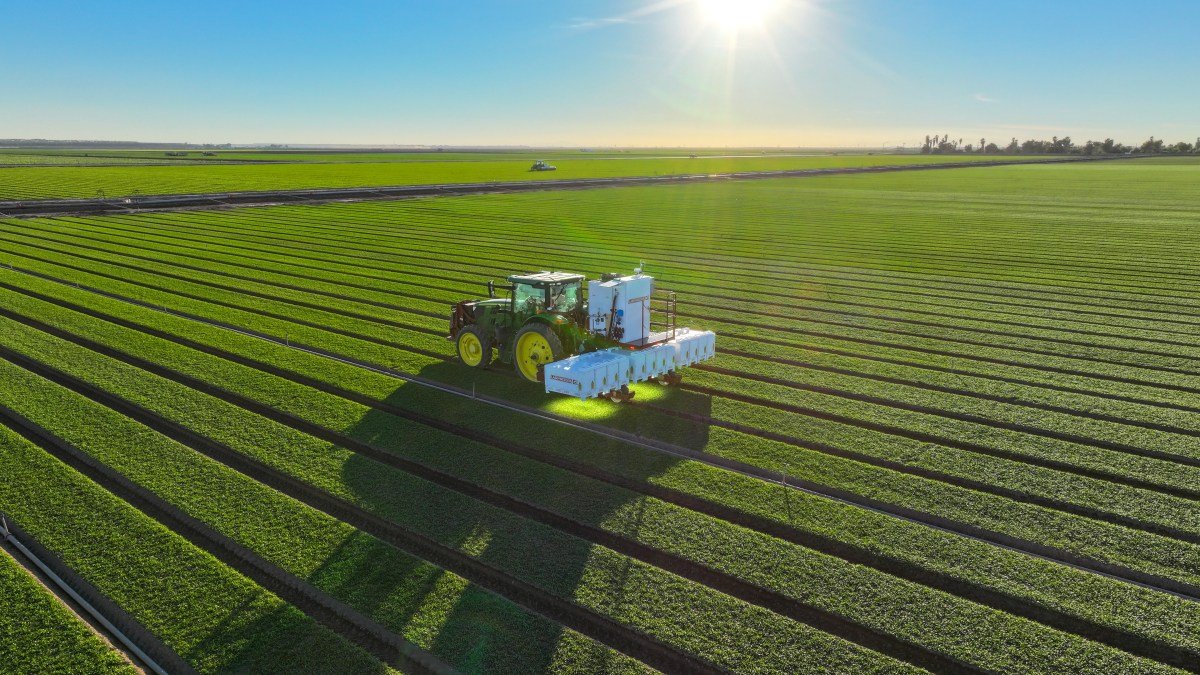
What is and isn’t a weed to eradicate in the field is determined by the eyes of the farmer — and now, increasingly, by a new AI model from Carbon Robotics.
based in Seattle Carbon Roboticswhich makes the LaserWeeder — a fleet of robots that use lasers to kill weeds — announced a new artificial intelligence model, the Large Plant Model (LPM), on Monday. This model recognizes plant species instantly and allows farmers to target new weeds without having to retrain the robots.
LPM is trained on more than 150 million photos and data points collected by the company’s machines on more than 100 farms in 15 countries where the robots currently operate. The model now powers Carbon AI, the AI system that serves as the brain inside the company’s autonomous weed-killing robots.
Paul Mikesell, founder and CEO of Carbon Robotics, told TechCrunch that before LPM, every time a new type of weed appeared on a farm — or even the same type of weed in different terrain or with a slightly different appearance — the company would have to generate new data tags to retrain its machines to recognize the plant.
That process took about 24 hours at a time, Mikesell said. Now, LPM can learn a new weed instantly, even if you’ve never seen it before.
“The farmer can live in real time and say, ‘Hey, this is a new weed. I want you to kill it,’ and that was something that had never been done before,” Mikesell said. “There’s no re-tagging or re-training because the Large Plant model understands, at a much deeper level, what it’s looking at and the type of plant.”
Mikesell said the company, which was founded in 2018, began developing this model shortly after it began shipping its first machines in 2022. Mikesell has years of experience building this type of neural network from previous roles at Uber and working on Meta’s Oculus virtual reality headset.
Techcrunch event
Boston, MA
|
June 23, 2026
This new model will reach the company’s existing systems through a software update. From there, farmers can tell the machine what to kill and what to protect by selecting photos the machine has collected in the robot’s user interface.
Carbon Robotics has raised more than $185 million in venture capital from backers including Nvidia NVentures, Bond and Anthos Capital, among others. Now, the company will look to continue to improve the model as the machines continue to feed new data into the LPM.
“We have over 150 million labeled plants now in our training set,” Mikesell said. “We have enough data now that we should be able to look at any image and decide what kind of plant it is, what species it is, what it’s related to, what its structure is like, without ever even having seen that particular plant before, because we have so much data going into the neural network.”
