

Close Menu
TechTost
  • AI
  • Apps
  • Crypto
  • Fintech
  • Hardware
  • Media & Entertainment
  • Security
  • Startups
  • Transportation
  • Venture
  • Recommended Essentials
What's Hot

Tesla adds ‘ribs’, other stats to track how often drivers use Full Self-Driving software

Microsoft is working on yet another OpenClaw-like agent

X brings voice memos back to X Chat

Facebook X (Twitter) Instagram
  • About Us
  • Contact Us
  • Privacy Policy
  • Terms and Conditions
  • Disclaimer
Facebook X (Twitter) Instagram
TechTost
Subscribe Now
  • AI

    Microsoft is working on yet another OpenClaw-like agent

    14 April 2026

    OpenAI has acquired AI personal finance startup Hiro

    14 April 2026

    Largest orbital computing cluster is open for business

    13 April 2026

    Anthropic restricts Mythos traffic to protect the Internet — or does Anthropic?

    12 April 2026

    Sam Altman responds to ‘inflammatory’ New Yorker article after his home was attacked

    12 April 2026
  • Apps

    X brings voice memos back to X Chat

    14 April 2026

    Avec’s Tinder-style email app lets you swipe through your inbox

    14 April 2026

    Roblox introduces ‘Kids’ and ‘Select’ accounts for age-appropriate access to games and chats

    13 April 2026

    You can now edit your comments on Instagram

    13 April 2026

    Meta AI app climbs to No. 5 in App Store after release of Muse Spark

    12 April 2026
  • Crypto

    British cryptographer Adam Back denies NYT report that he is Bitcoin creator Satoshi Nakamoto

    9 April 2026

    Hackers stole over $2.7 billion in crypto in 2025, data shows

    23 December 2025

    New report examines how David Sachs may benefit from Trump administration role

    1 December 2025

    Why Benchmark Made a Rare Crypto Bet on Trading App Fomo, with $17M Series A

    6 November 2025

    Solana co-founder Anatoly Yakovenko is a big fan of agentic coding

    30 October 2025
  • Fintech

    Cash app launches ‘pay later’ feature for P2P transfers

    3 April 2026

    Doss raises $55 million for AI inventory management that connects to ERP

    24 March 2026

    Despite stiff competition, Kalshi, Polymarket CEOs back $35m VC fund projections

    23 March 2026

    Amid legal turmoil, Kalshi is temporarily banned in Nevada

    20 March 2026

    Nominations for the Startup Battlefield 200 are still open

    19 March 2026
  • Hardware

    Amazon is ending support for older Kindle devices

    9 April 2026

    Intel signs Elon Musk’s Terafab chip project

    8 April 2026

    The Xiaomi 17 Ultra has some impressive extras that make taking photos really fun

    6 April 2026

    In Japan, the robot doesn’t come for your job. fills the one no one wants

    6 April 2026

    Peter Thiel’s big bet on solar-powered cow collars

    5 April 2026
  • Media & Entertainment

    X says he’s reducing payouts to clickbait accounts

    12 April 2026

    TechCrunch is headed to Tokyo — and it’s bringing the Startup Battlefield with it

    10 April 2026

    Spotify now allows everyone to turn off videos in its app

    9 April 2026

    As YouTube expands into TV, it sees more interactive video across all formats

    9 April 2026

    Tubi is the first streamer to launch a native app on ChatGPT

    8 April 2026
  • Security

    Anodot hack leaves over a dozen compromised companies facing extortion

    14 April 2026

    Booking.com confirms that hackers accessed customer data

    13 April 2026

    Convicted spyware maker Bryan Fleming avoids jail time on conviction

    12 April 2026

    The Trump administration plans to cut the cybersecurity agency’s budget by $700 million

    11 April 2026

    Russian government hackers broke into thousands of home routers to steal passwords

    11 April 2026
  • Startups

    Walmart-owned Flipkart, Amazon are squeezing India’s e-commerce startups

    12 April 2026

    This founder helped build SpaceX’s most powerful rocket engine. Now he’s building a “fighter for orbit.”

    12 April 2026

    Sierra’s Bret Taylor says the era of button-clicking is over

    11 April 2026

    After the data breach, the $10 billion startup Mercor is one month old

    11 April 2026

    What founders can learn from Anjuna’s layoffs and recovery

    10 April 2026
  • Transportation

    Tesla adds ‘ribs’, other stats to track how often drivers use Full Self-Driving software

    14 April 2026

    Uber and Nuro begin testing premium robotaxi service in San Francisco

    14 April 2026

    Slate Auto raises $650 million to fund its affordable EV truck plans

    13 April 2026

    TechCrunch Mobility: Who’s chasing all the self-driving talent?

    13 April 2026

    Slate Auto: Everything you need to know about the Bezos-backed EV startup

    12 April 2026
  • Venture

    Vercel CEO Guillermo Rauch signals IPO readiness as AI agents drive revenue

    14 April 2026

    Nvidia-backed SiFive hits $3.65 billion valuation for open AI chips

    11 April 2026

    How to make the Startup Battlefield Top 20 — and what each company gets regardless

    10 April 2026

    Collide Capital Raises $95M to Back Future-of-Work Fintech Startups

    9 April 2026

    VC Eclipse has a new $1.3 billion fund to back — and build — “natural AI” startups

    8 April 2026
  • Recommended Essentials
TechTost
You are at:Home»Hardware»How Sleepbuds maker Ozlo is building a platform for sleep data
Hardware

How Sleepbuds maker Ozlo is building a platform for sleep data

techtost.comBy techtost.com9 January 202607 Mins Read
Share Facebook Twitter Pinterest LinkedIn Tumblr Email
How Sleepbuds Maker Ozlo Is Building A Platform For Sleep
Share
Facebook Twitter LinkedIn Pinterest Email

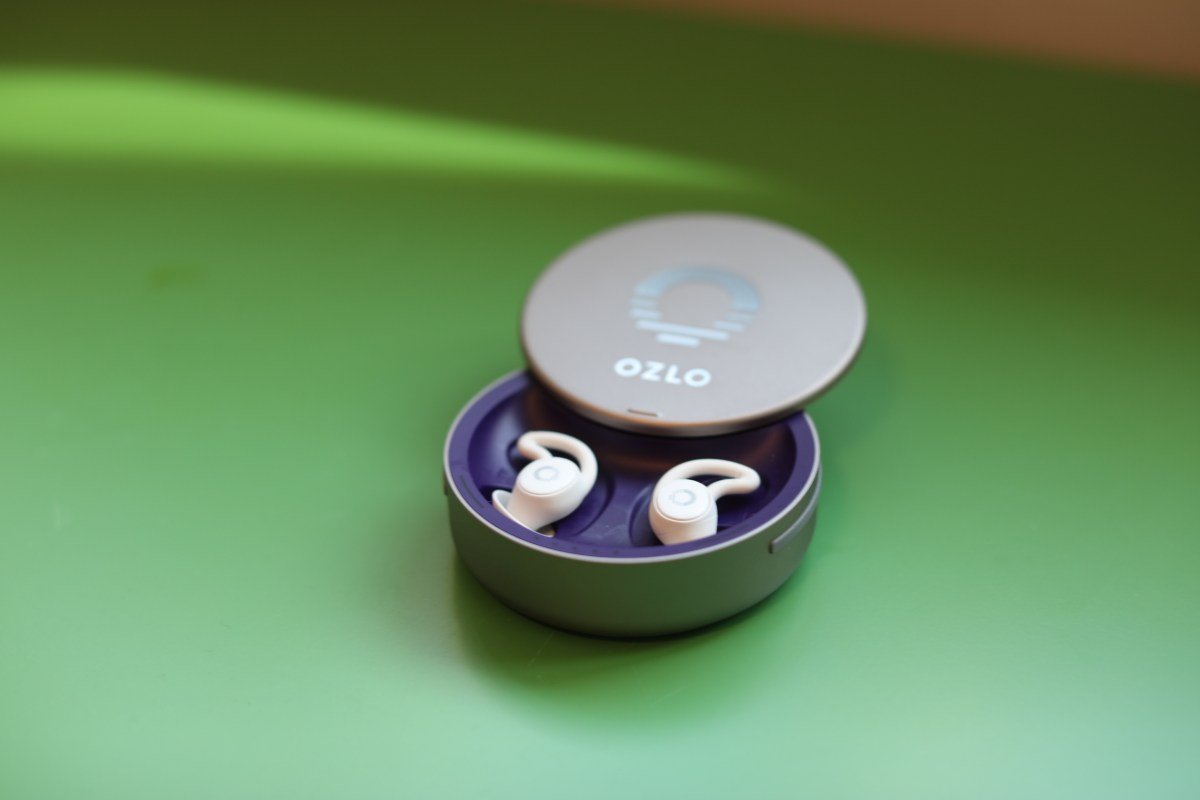
Oslothe maker of comfortable, easy-to-use “sleepbups” that drown out outside noise so you can rest better is turning its product into a platform.

The company’s plan began to take shape last month with the announcement of a collaboration between Ozlo and the Calm meditation app. But it opened up its pace at the Consumer Electronics Show in Las Vegas this week, as the company met with prospective partners to expand its reach.

These new partners could help Ozlo attract new audiences and create a revenue model beyond consumer-focused hardware and the high-margin world of software subscriptions and healthcare. For example, software features that use artificial intelligence or are designed to provide relief to users with tinnitus could be offered as premium subscriptions. And a recent acquisition of a neurotech startup will help Ozlo expand beyond being a consumer product and into the medical device market.

How Ozlo’s platform ambitions begin

Founded by former Bose employees, Ozlo was always about building an ecosystem, Ozlo co-founder and CEO NB Patil explained on the sidelines of CES.

“The way we did this from the beginning was we built the iOS and Android SDK — so our first-party app actually runs on that SDK. That means everything you see in our app can be made available to anyone,” Patil said.

Mental wellness company Calm, for example, uses the SDK to tell whether its sleep and meditation content is really resonating with its customers. While Calm can’t tell from its own app whether customers have fallen asleep, Ozlo’s sensors can. The device detects how body movements and breathing rates change and this data is sent to the Ozlo charging case. There, a machine learning algorithm determines whether someone is asleep or relaxed.

Ozlo’s smart case has other sensors as well, including a temperature sensor and a light sensor that can add more data.

Now, this information can be shared with apps like Calm and others.

For example, if a user started playing a breathing exercise, Ozlo could sense if their breathing rate had decreased and share that data with their partner. If the exercise is unsuccessful, the partner will know to change the pattern or do something different.

“So there are two parts,” notes Patil. “Take real-time action when the customer achieves the desired state [which Ozlo does with its feature that can shut off sounds after the user falls asleep] and the other part, which is really important, actually—which content creators don’t think about enough—is, are they investing in the right content?”

Patil explains that content creators for these types of meditation and sleep aid apps tend to invest in volume without measuring whether their content is effective or not.

“They don’t really understand how it works in the field because there’s no data,” he says.

This relationship could also add another revenue stream to Ozlo’s business beyond selling hardware. For example, if a customer is asked to upgrade their subscription to the partner’s product, Ozlo could take part of that transaction.

Patil told TechCrunch that the company is already in discussions with other sleep and meditation apps, but this closed-loop feedback system could be used with any type of content, including therapy or even audiobooks.

Ozlo is also working on tinnitus treatment tools to address the headphone problem that affects 15% of its customer base. The company partnered with Walter Reed Hospital last year to begin a clinical study on the problem and found that playing the correct masking frequency overnight for several weeks can trick the brain into stopping the stimulus signals that produce the ringing sounds.

Patil says the tinnitus treatments will be available via subscription and will be released in the second quarter of 2026.

An AI to help you sleep better

Ozlo is also working to expand the knowledge it provides to its customers, and artificial intelligence is an increasingly important part. The company released Sleep Patterns in its app in November to help clients understand how long and well they slept, what their patterns are over the past few weeks, and what factors could disrupt their rest.

This year, Ozlo plans to introduce an AI agent that customers can text and use as a “sleeping buddy.” (The company revealed the name “buddy” for its AI agent in an in-app Easter egg. The app displays an animated character — “buddy” — that runs across the top of the screen when you open and close the case five times in a row.)

By integrating with other wearables and Apple’s HealthKit, Ozlo will be able to better understand a user’s patterns and what they need to sleep better. It also wants to be able to connect to IoT devices, such as smart thermostats, to set the right sleeping temperature for users once they open the case at night.

AI features are expected in the second quarter.

New material, EEG insights on the way

Ozlo’s next-gen case will address the issue of earphones sometimes not fitting properly into the charger.

“We changed the contours inside the case — when you mount [the sleepbud]it’s perfect. And then we’ll have a Bluetooth button to do the pairing,” says Patil.

In addition, the new device will include a redesigned antenna and extension for improved range and add an amplifier to boost how loud the headphones can be to drown out plane and train noise when needed. This updated hardware will also arrive in Q2.

In terms of products, Ozlo will launch a bedside speaker in Q2 that will offer similar functionality to the Sleepbuds, but won’t need to go in the ear. A 4×6-inch speaker will also have its own sensor, allowing it to do things like track how many times you’ve woken up for bathroom breaks or alert others if you’ve fallen.

The speaker would allow the company to market to families with children under 13, as children are not recommended to wear headphones at night. It could also make sense for older people who aren’t as tech-savvy and don’t want to deal with in-ear devices.

Like the popular Hatch alarm clockOzlo is working on adding a light to a product in the future to gently wake you up. (The time frame for the launch is still to be determined.)

The acquisition game

Acquisitions are also part of Ozlo’s growth strategy.

The 60-person Boston-based company just acquired Segotia, a neurotechnology company from Ireland focusing on EEGwhich has created “audible” technologies. Ozlo believes this will allow him to bring brain-level insights to his consumer device and later develop tools to do real-time sleep intervention.

“Basically, we’re custom-designing the headset that will measure the electrical signals from your ear. From that, you can actually pull the delta signals from the brain, and you should be able to tell what your brain is doing when it comes to sleep or when it comes to awareness and all that,” Patil explained.

A product incorporating EEG technology will be released in 2027, allowing the company to move into medical products as well.

With a busy year ahead, Ozlo will need to execute each new feature and product well at a fast pace in order to maintain its current pace and grow its customer base. It will also require additional capital. Patil told TechCrunch that the company is in the process of closing a Series B round now, with more details to come next month.

building CES ces 2026 computer machinery data Knot maker Ozlo platform sleep Sleepbuds
Share. Facebook Twitter Pinterest LinkedIn Tumblr Email
Previous ArticleInternet crashes in Iran amid protests over financial crisis
Next Article CES 2026: Everything revealed, from Nvidia’s debut to AMD’s new chips to Razer’s AI oddities
bhanuprakash.cg
techtost.com
  • Website

Related Posts

Booking.com confirms that hackers accessed customer data

13 April 2026

Convicted spyware maker Bryan Fleming avoids jail time on conviction

12 April 2026

This founder helped build SpaceX’s most powerful rocket engine. Now he’s building a “fighter for orbit.”

12 April 2026
Add A Comment

Leave A Reply Cancel Reply

Don't Miss

Tesla adds ‘ribs’, other stats to track how often drivers use Full Self-Driving software

14 April 2026

Microsoft is working on yet another OpenClaw-like agent

14 April 2026

X brings voice memos back to X Chat

14 April 2026
Stay In Touch
  • Facebook
  • YouTube
  • TikTok
  • WhatsApp
  • Twitter
  • Instagram
Fintech

Cash app launches ‘pay later’ feature for P2P transfers

3 April 2026

Doss raises $55 million for AI inventory management that connects to ERP

24 March 2026

Despite stiff competition, Kalshi, Polymarket CEOs back $35m VC fund projections

23 March 2026
Startups

Walmart-owned Flipkart, Amazon are squeezing India’s e-commerce startups

This founder helped build SpaceX’s most powerful rocket engine. Now he’s building a “fighter for orbit.”

Sierra’s Bret Taylor says the era of button-clicking is over

© 2026 TechTost. All Rights Reserved
  • About Us
  • Contact Us
  • Privacy Policy
  • Terms and Conditions
  • Disclaimer

Type above and press Enter to search. Press Esc to cancel.