

Close Menu
TechTost
  • AI
  • Apps
  • Crypto
  • Fintech
  • Hardware
  • Media & Entertainment
  • Security
  • Startups
  • Transportation
  • Venture
  • Recommended Essentials
What's Hot

Struggling startup Delve has ‘parted ways’ with Y Combinator

Anthropic says Claude Code subscribers will have to pay extra to use OpenClaw

Peter Thiel’s big bet on solar-powered cow collars

Facebook X (Twitter) Instagram
  • About Us
  • Contact Us
  • Privacy Policy
  • Terms and Conditions
  • Disclaimer
Facebook X (Twitter) Instagram
TechTost
Subscribe Now
  • AI

    Anthropic says Claude Code subscribers will have to pay extra to use OpenClaw

    5 April 2026

    OpenAI executive shuffle includes new role for COO Brad Lightcap to lead ‘special projects’

    4 April 2026

    Anthropic is having a moment in the private markets. SpaceX could crash the party

    4 April 2026

    Google now lets you direct avatars via messages in the Vids app

    3 April 2026

    Microsoft takes on AI rivals with three new flagship models

    3 April 2026
  • Apps

    Cameo works with TikTok to boost popularity

    4 April 2026

    ElevenLabs releases a new AI-powered music production app

    3 April 2026

    Flipboard’s new ‘social sites’ help publishers and creators tap into the open social web

    3 April 2026

    Exclusive: Beehiiv expands into podcasting, targeting Patreon

    2 April 2026

    A new dating app, Sonder, has a deliberately annoying sign-up process (and it works)

    2 April 2026
  • Crypto

    Hackers stole over $2.7 billion in crypto in 2025, data shows

    23 December 2025

    New report examines how David Sachs may benefit from Trump administration role

    1 December 2025

    Why Benchmark Made a Rare Crypto Bet on Trading App Fomo, with $17M Series A

    6 November 2025

    Solana co-founder Anatoly Yakovenko is a big fan of agentic coding

    30 October 2025

    MoviePass opens Mogul fantasy league game to the public

    29 October 2025
  • Fintech

    Cash app launches ‘pay later’ feature for P2P transfers

    3 April 2026

    Doss raises $55 million for AI inventory management that connects to ERP

    24 March 2026

    Despite stiff competition, Kalshi, Polymarket CEOs back $35m VC fund projections

    23 March 2026

    Amid legal turmoil, Kalshi is temporarily banned in Nevada

    20 March 2026

    Nominations for the Startup Battlefield 200 are still open

    19 March 2026
  • Hardware

    Peter Thiel’s big bet on solar-powered cow collars

    5 April 2026

    Nothing’s AI device design reportedly includes smart glasses and headphones

    2 April 2026

    Cognichip wants AI to design the chips that power AI, and it just raised $60 million to test

    2 April 2026

    Meta launches two new Ray-Ban glasses designed for prescription wearers

    1 April 2026

    Whoop’s valuation just tripled to $10 billion

    1 April 2026
  • Media & Entertainment

    OpenAI acquires TBPN, the popular founder-led business talk show

    2 April 2026

    Roku is launching a standalone app for Howdy, its $2.99 ​​streaming service

    31 March 2026

    SXSW is making a comeback as a premier networking, ideas festival for founders and VCs

    30 March 2026

    ‘Project Hail Mary’ becomes Amazon MGM’s biggest box office hit

    30 March 2026

    Sora’s shutdown could be a reality check moment for video AI

    29 March 2026
  • Security

    After fighting malware for decades, this cybersecurity veteran is now hacking drones

    4 April 2026

    ICE says it bought Paragon’s spyware to use in drug-trafficking cases

    4 April 2026

    The European cyber agency blames hacker gangs for massive data breach and leak

    3 April 2026

    Telehealth giant Hims & Hers says its customer support system was breached

    3 April 2026

    Money transfer app Duc has exposed thousands of driver’s licenses and passports to the open web

    2 April 2026
  • Startups

    Struggling startup Delve has ‘parted ways’ with Y Combinator

    5 April 2026

    Nomadic raises $8.4 million to untangle the data pouring out of autonomous vehicles

    4 April 2026

    Yupp shuts down after raising $33 million from a16z crypto’s Chris Dixon

    4 April 2026

    Facebook’s Insider Content Moderation for the Age of Artificial Intelligence

    3 April 2026

    Commonwealth Fusion Systems relies on magnets for short-term revenue

    3 April 2026
  • Transportation

    The final days of the Tesla Model X and S are here. All bets are on Cybercab.

    4 April 2026

    Lucid blames drop in first-quarter sales on seat supplier issue

    4 April 2026

    Waymo launches robotaxi services at San Antonio International Airport

    3 April 2026

    United’s mobile app now shows TSA wait times at select airports

    3 April 2026

    Tesla’s cheaper vehicles aren’t helping its declining sales

    2 April 2026
  • Venture

    Toyota’s Woven Capital appoints new CIO and COO in push to find ‘future of mobility’

    1 April 2026

    Exclusive: Runway Launches $10M Fund, Builders Program to Back Early-Stage AI Startups

    31 March 2026

    Former Coatue Partner Raises Massive $65M Seed Fund for Enterprise AI Agent Startup

    31 March 2026

    From Moon Hotels to Cattle Grazing: 8 Startup Investors Hunted at YC Demo Day

    28 March 2026

    16 of the most interesting startups from the YC W26 Demo Day

    27 March 2026
  • Recommended Essentials
TechTost
You are at:Home»Hardware»Peter Thiel’s big bet on solar-powered cow collars
Hardware

Peter Thiel’s big bet on solar-powered cow collars

techtost.comBy techtost.com5 April 202606 Mins Read
Share Facebook Twitter Pinterest LinkedIn Tumblr Email
Peter Thiel's Big Bet On Solar Powered Cow Collars
Share
Facebook Twitter LinkedIn Pinterest Email

Founders Fund has made its name supporting what Peter Thiel calls “zero-to-one” companies — businesses that don’t just improve on existing ideas but create something completely new. Its portfolio includes Facebook, SpaceX and Palantir. Her latest bet is a New Zealander putting smart solar-powered collars on cows.

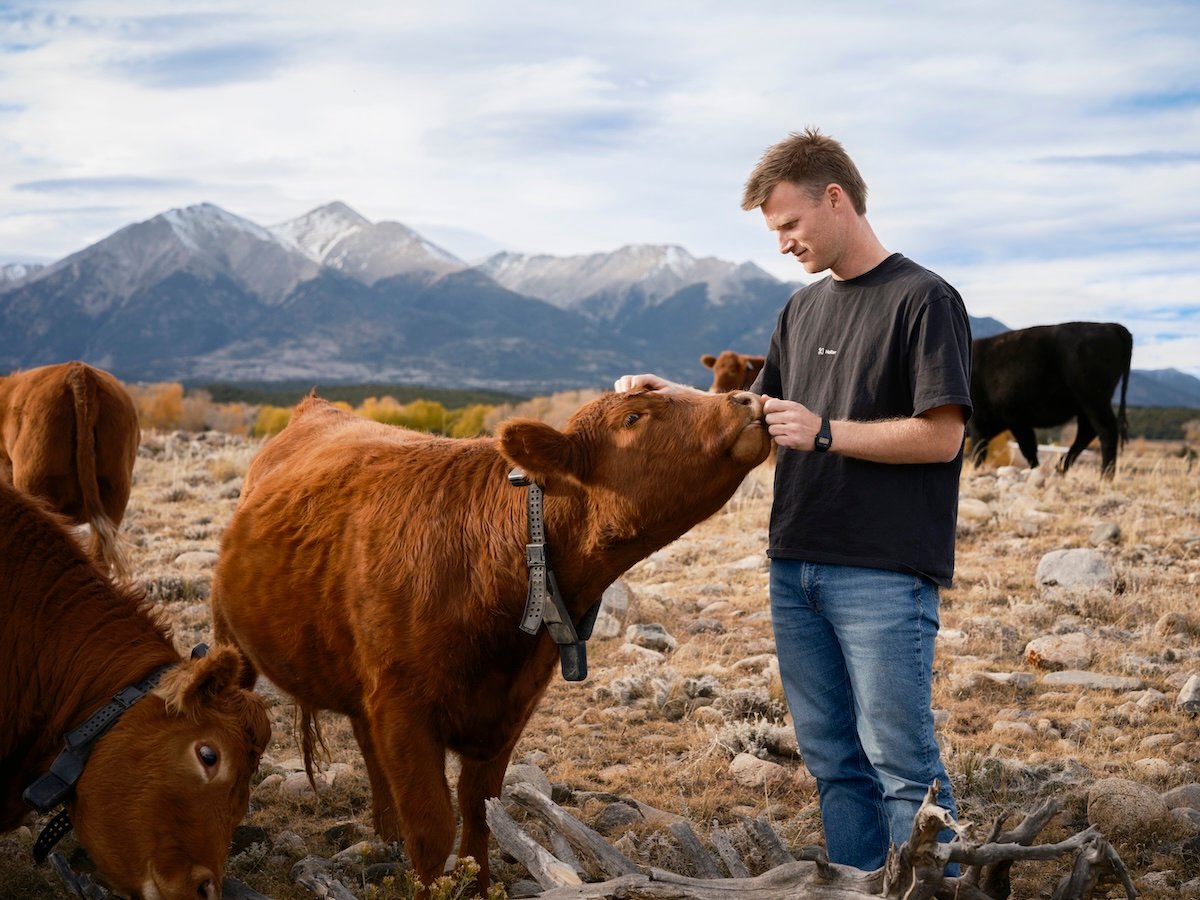
Halterwhich closed a $220 million Series E at a $2 billion valuation last month, with Founders Fund leading the round, isn’t the kind of company that tends to dominate tech headlines. No artificial intelligence agency involved, no humanoid robots. There is, however, one very big and largely unsolved problem: How do you manage cattle spread across some of the most remote terrain on earth, without dogs, horses, motorbikes or helicopters?

Craig Piggott, the 30-year-old founder and CEO of Halter, spent nine years working on an answer. “If you’re running a pasture-based farm, whether it’s dairy or beef, the most important variable is how you manage the productivity of your land,” Piggott told TechCrunch in a recent interview. “Fences are the lever – they control where the animals graze and how you rest the land. Being able to do that actually made a lot of sense.”

The system Halter built combines a solar-powered collar, a network of low-frequency towers, and a smartphone app to allow farmers to create virtual fences, monitor each animal around the clock, and move their herds without ever leaving the farmhouse. Cattle are trained to respond to sound cues and vibrations from the collar — a process Piggott likens to the way a car makes a sound as it approaches a wall while parked. Most animals, he says, learn within three interactions with a virtual fence. “Then you can guide them and move them with just sound and vibration.”

The collar does more than the herd. Because it’s always on and collecting behavioral data, it also monitors animal health, tracks fertility cycles and pinpoints when individual animals might be sick, capabilities that Piggott says have improved dramatically as Halter has amassed the world’s largest set of cattle behavioral data. The company is now on its fifth generation of hardware, and its player is currently in beta with customers in the US.

“The product farmers are using today is radically different to what they bought a year ago,” Piggott said. “Every week, we release new things to our customers.”

Piggott grew up on a dairy farm in New Zealand before studying engineering and landing a brief stint at Rocket Lab, the rocket company that gave him his first glimpse of what a tech startup could be. “Rocket Lab was kind of my introduction to technology and startups and the venture capital world,” he said. “The realization that you could raise money, hire a team and pursue an ambitious mission was empowering. I wanted to do that in agriculture.” He started Halter at 21. “Probably a little naive in retrospect,” he acknowledged, “but it was okay.”

Techcrunch event

San Francisco, California
|
13-15 October 2026

Nine years later, Halter’s collar is on more than a million cattle on more than 2,000 farms in New Zealand, Australia and the United States, where the company operates in 22 states. The economic proposition for farmers is simple: by giving ranchers precise control over where their herds graze, Halter can increase the productivity of their land by up to 20% — not by saving on labor costs (although that happens, too), but by ensuring cattle graze more efficiently and leave less grass. “In some cases, we’re seeing customers literally double the production from their land,” Piggott said. “The cap on returns is very, very strong.”

Halter is not alone in spying the opportunity. Pharmaceutical giant Merck is already building its own virtual fencing system for cattle, called Vence, and newer entrants are also on the way—at Y Combinator’s most recent “demo day,” a startup called Grazemate presented a vision for cattle grazing with autonomous drones (no collars needed).

Pigott seems unfazed by either. Asked about drones, he says: “Can I see drones playing some small role in the future? Possibly. But I don’t think a drone is the right form factor for the basic fencing element of virtual fencing. A collar will probably be the right form factor for a very long time.” And in terms of the bigger competitive picture, he argues that the real obstacle isn’t competing technology at all. “The biggest competition is just not changing anything,” he said. “He’s doing what you did last year.”

What sets Halter apart, Piggott argues, is the sheer mechanical difficulty of what he’s spent nine years solving—a system that manages a thousand animals must be reliable over many nine runs, because even a 1% failure rate means ten animals out at any given time. “Chasing those many credibility nines takes time,” he said, “and that long tail is what we proved in New Zealand for many years before we started expanding globally.”

Halter is also something of an outlier in the ag-tech sector, which has retreated in recent years as startups try to convince farmers to adopt new products while managing high operating costs. Piggott attributes Halter’s appeal to its relentless focus on financial performance. “Since day one, Halter has been built around a really strong financial return on investment,” he said. “If you can increase the productivity of the land by 20%, that flows through the whole business.”

Unlike most tech companies, Halter doesn’t see the United States as the center of its universe. “The US market is important to us, but it’s not the biggest market in the world,” Piggott said. “Agriculture is spread all over the world and we have to get there too.” The company has now raised about $400 million in total and is prioritizing expansion in the US, South America and Europe.

But the scale of the remaining opportunity is perhaps best captured in a single number – one that no doubt resonated with both Founders Fund and Halter’s previous backers. The halter collar is on a million cattle, while there are a billion more in the world. With less than 10% penetration in its home market of New Zealand alone, “We have a long way to go and a lot of product to build,” Piggott said.

You can hear our conversation with Piggott in this newest episode of the series Download StrictlyVC podcast, which comes out Tuesday.

bet big collars Cow Peter solarpowered Thiels
Share. Facebook Twitter Pinterest LinkedIn Tumblr Email
Previous ArticleAfter fighting malware for decades, this cybersecurity veteran is now hacking drones
Next Article Anthropic says Claude Code subscribers will have to pay extra to use OpenClaw
bhanuprakash.cg
techtost.com
  • Website

Related Posts

Nothing’s AI device design reportedly includes smart glasses and headphones

2 April 2026

Cognichip wants AI to design the chips that power AI, and it just raised $60 million to test

2 April 2026

Meta launches two new Ray-Ban glasses designed for prescription wearers

1 April 2026
Add A Comment

Leave A Reply Cancel Reply

Don't Miss

Struggling startup Delve has ‘parted ways’ with Y Combinator

5 April 2026

Anthropic says Claude Code subscribers will have to pay extra to use OpenClaw

5 April 2026

Peter Thiel’s big bet on solar-powered cow collars

5 April 2026
Stay In Touch
  • Facebook
  • YouTube
  • TikTok
  • WhatsApp
  • Twitter
  • Instagram
Fintech

Cash app launches ‘pay later’ feature for P2P transfers

3 April 2026

Doss raises $55 million for AI inventory management that connects to ERP

24 March 2026

Despite stiff competition, Kalshi, Polymarket CEOs back $35m VC fund projections

23 March 2026
Startups

Struggling startup Delve has ‘parted ways’ with Y Combinator

Nomadic raises $8.4 million to untangle the data pouring out of autonomous vehicles

Yupp shuts down after raising $33 million from a16z crypto’s Chris Dixon

© 2026 TechTost. All Rights Reserved
  • About Us
  • Contact Us
  • Privacy Policy
  • Terms and Conditions
  • Disclaimer

Type above and press Enter to search. Press Esc to cancel.