


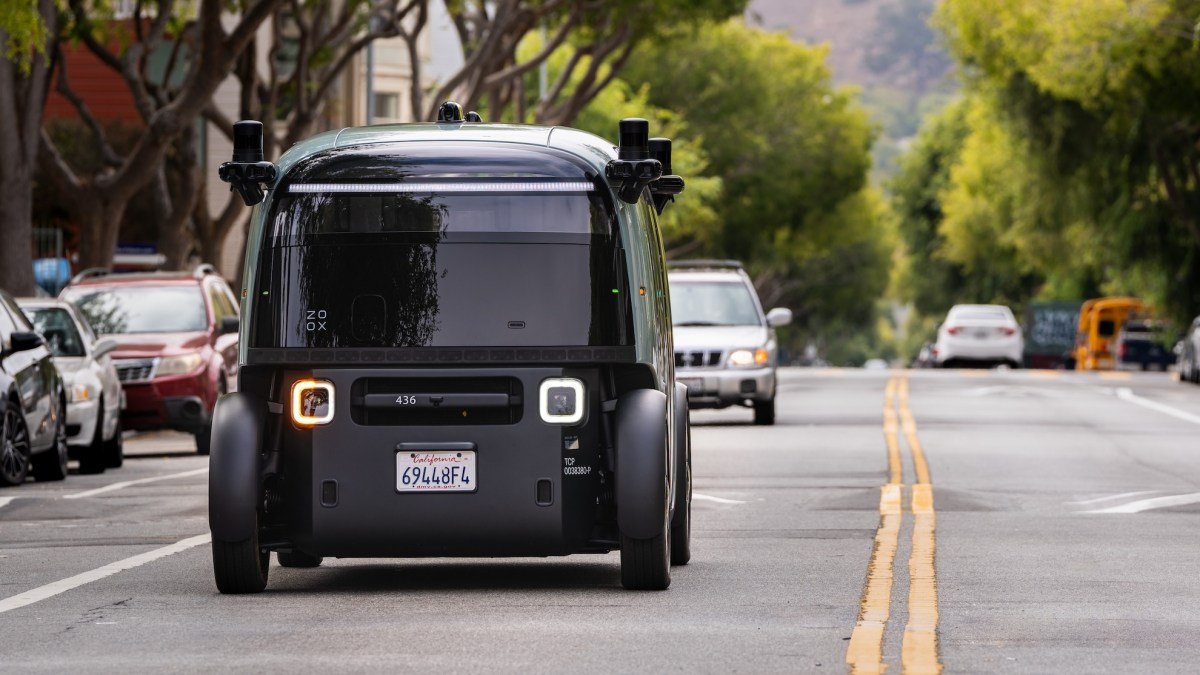
Zoox, which is owned by Amazon, issued a recall on Tuesday over concerns that its self-driving system was causing vehicles to cross over the center lane line near intersections or block crosswalks. Its voluntary software recall affected 332 vehicles, according to documents filed with the National Highway Traffic Safety Administration (NHTSA).
While there have been no crashes related to the issue, Zoox noted in the NHTSA filing that it could increase the risk of a crash. The company provides free rides to the public on its driverless Zoox vehicles in parts of San Francisco and Las Vegas.
A Zoox spokesperson told TechCrunch that the company has identified some instances in which its vehicles made maneuvers that, while common to human drivers, did not meet its standards. For example, in an effort to avoid blocking certain intersections at a red light, the robot taxi may stop at a crosswalk. In other cases, the robotaxi made a late turn, resulting in a large turn, according to an emailed statement from a spokesperson.
The problem was first identified on Aug. 26 when a Zoox robotaxi made a large right turn, partially crossed into the opposing lane and stopped temporarily in front of the oncoming travel lane, according to the NHTSA filing.
Zoox monitored its data for additional lane crossings near intersections, ultimately identifying 62 cases between August 26 and December 5. The company said in the filing that it was in “ongoing conversations with NHTSA regarding the frequency, severity and root causes of these incidents.”
The company updated its software on November 7 and again in mid-December to address all issues.
“We have successfully identified and developed targeted software improvements to address the root causes of these incidents,” the statement said. “Today, we are issuing a voluntary software recall because transparency and security are fundamental to Zoox, and we want to be open with the public and regulators about how we improve and continually improve our technology.”
The software recall affected Zoox vehicles operating on public roads between March 13 and December 18, according to the filing.
Zoox has issued several software recalls this year, including one in March to address unexpectedly strong braking. This recall followed a preliminary investigation by NHTSA that was opened after the agency received two reports of motorcyclists crashing into the rear of Zoox vehicles.
In May, Zoox issued two software recalls to address concerns about the system’s ability to predict the movement of other road users.
