


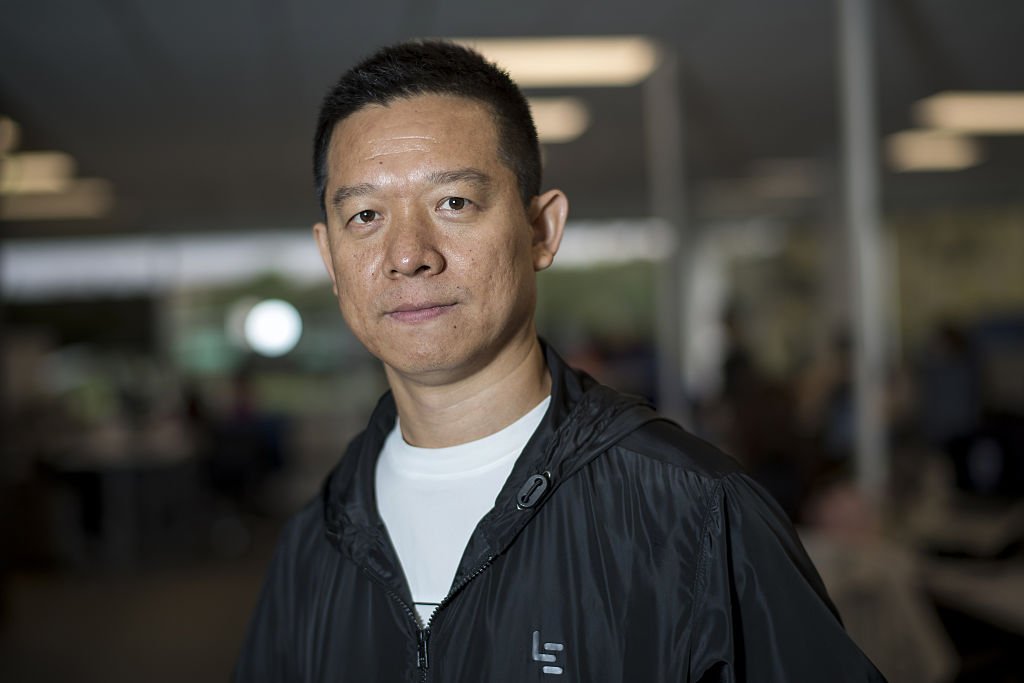
Faraday Future paid about $7.5 million to a company controlled by its founder Jia Yueting in 2025, according to a new regulatory filing archiving.
The long-running electric vehicle startup made the payments in a year when it delivered just four vehicles and lost nearly $400 million. The company has shifted to selling cheaper trucks and robots imported from China.
The payments were made while Faraday Future was still under investigation by the Securities and Exchange Commission (SEC), which investigated what are known as “related party transactions” between the company and entities related to or controlled by Jia, Faraday’s own filings show. The SEC also investigated whether Faraday Future correctly represented the level of control Jia had in the company when it went public in 2021 and whether it lied about early sales of its electric vehicles in 2023.
The SEC dropped its four-year investigation in March, as TechCrunch first reported, despite sending notices to Faraday Future, Jia and other executives last year saying investigators were recommending enforcement action. The conclusion of the investigation comes amid a historic drop in white collar crime enforcement; during the second Trump administration.
The new transactions were disclosed in Faraday Future’s annual proxy filing published on Thursday. It shows that Faraday Future paid a mix of $100,000 in monthly “consultancy,” a $2 million “bonus payment” and $1.7 million to repay loans from the company, which is called FF Global Partners LLC. The company did not explain the remaining $2.6 million in the filing.
Faraday Future did not respond to a request for comment.
Faraday Future describes FF Global as a “subsidiary” of Jia in its proxy filing and has said in previous filings that it exercises “significant influence” over the LLC. FF Global has five “voting managers,” one of whom is Jia, while the others include business associates and a family member — his nephew Jerry Wang.
Techcrunch event
San Francisco, California
|
13-15 October 2026
Wang, who is president at Faraday Future, earns a six-figure salary from FF Global, according to the filing. So does his wife, who heads FF Global’s legal department. FF Global also has a similar “consulting agreement” with a crypto holding company run by Wang (and consulted by Jia) called AIXC. (Wang’s wife’s law firm is also consulting on AIXC.)
FF Global is also a major shareholder in Faraday Future and — along with Jia — controls nearly every aspect of the EV company, to the point that Faraday singled it out as a risk factor in its most recent annual filing.
“Jia and FF Global, over which Mr. Jia exercises significant influence, have control over our management, business and operations and may use that control in ways that are not aligned with our business or financial goals or strategies or otherwise inconsistent with our interests,” the company wrote earlier this year.
FF Global also helped restore Jia to power after the company went public in 2021. Shortly after Faraday Future merged with a special-purpose buyout firm, the public company’s new board opened an investigation into Jia’s movement of money in and out of the company and disclosures made during the merger process.
In early 2022, the board restricted Jia, who has been blacklisted by China for financial fraud, after finding that Faraday Future had misrepresented the level of control it had in the company. They then referred their findings to the SEC, which opened its investigation shortly thereafter.
FF Global, meanwhile, spent all of 2022 scrambling to replace some board members with Jia-friendly members. This campaign became so intense that many board members received death threats. Those board members eventually resigned partly because they feared for their lives. Jia was reinstated as co-CEO last year and is now the sole CEO of Faraday Future.
FF Global isn’t the only Jia-related company that Faraday Future has paid or plans to pay money to. The company said in its proxy filing that it paid $700,000 to a loan company associated with him last year. He also owes $8.5 million to Leshi Information Technology Co. Ltd., one of the companies associated with failed Chinese technology group LeEco, for “advertising services.”
When you purchase through links in our articles, we may earn a small commission. This does not affect our editorial independence.
