


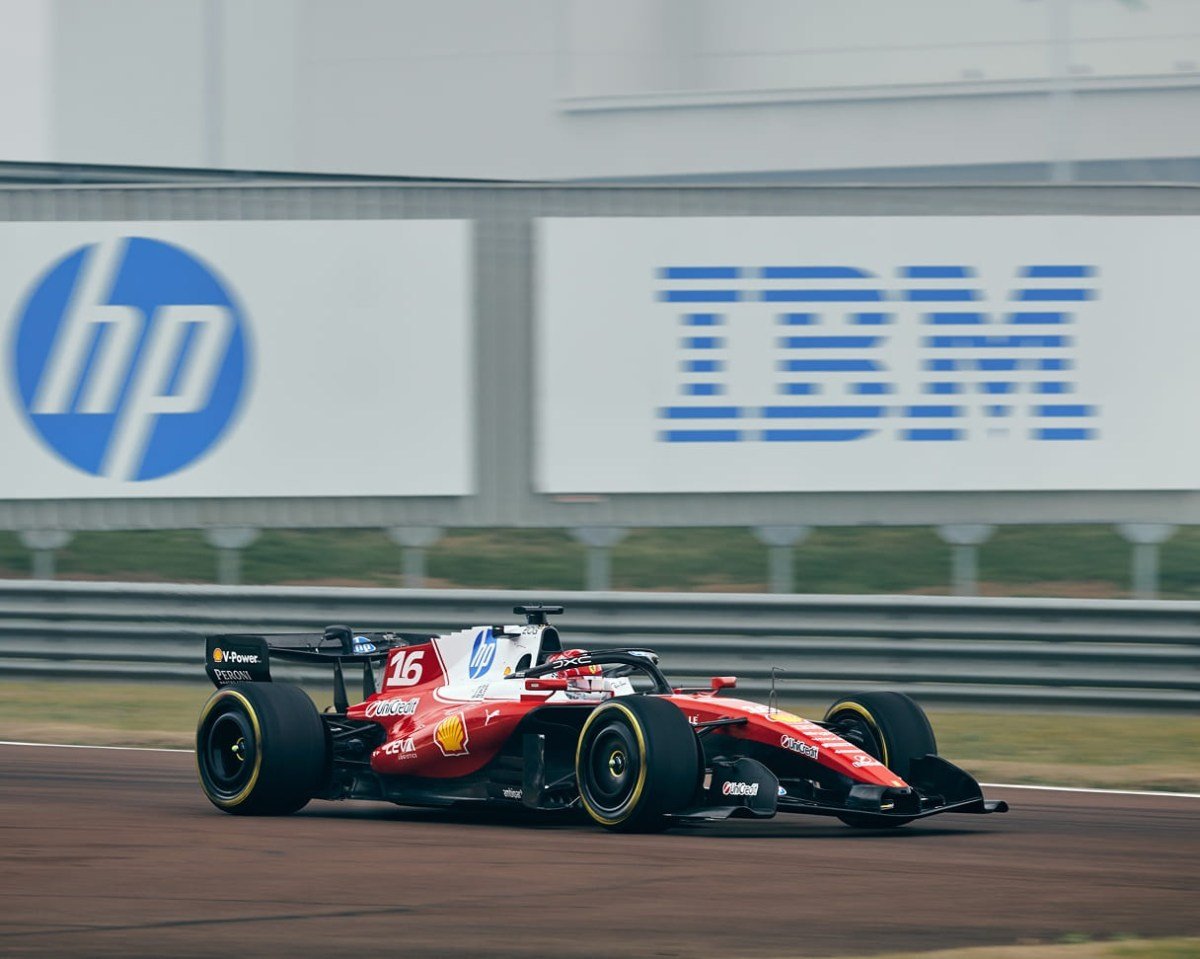
Two years ago, IBM realized there was a glaring omission from its roster of sports partnerships: Formula 1.
Formula 1 has become one of the most popular sports in the world, especially in the US, where Netflix’s “Drive to Survive” chronicled the professional lives of F1 drivers and turned them into mainstream celebrities. The tech sport has also become a hot ticket for tech companies like AWS, Oracle and Anthropic, which work with teams to showcase sponsorships and provide analytics and AI tools that can provide a competitive edge.
So when IBM started looking for its next big sports partnership, it’s no wonder the company chose F1 and one of its most iconic teams, Scuderia Ferrari HP.
“They’re the winningest team in history,” Kameryn Stanhouse, IBM’s Vice President of Sports and Entertainment Partnerships, told TechCrunch.
At the heart of this partnership, however, is what has led other teams to start working with tech giants: access to more sophisticated technology solutions that can help them get the most out of, in particular, artificial intelligence. In fact, one of the best parts of sports, Stanhouse said, is how much data is available and can be used to help people get comfortable with AI.
“They’re really seeing how it serves them,” he said of how AI is being used in sports storytelling.
The IBM-Ferrari collaboration focuses on this idea of storytelling, enhancing fan engagement by overhauling the technology that powers Ferrari’s fan app. To help with this, Ferrari hired Stefano Pallard in the newly-titled role of “head of fan development”, who said the challenge the team wanted to tackle was not just reaching out to fans, but “making each one of them feel that we know them”.
“That starts with taking the data we get from the track and turning it into content that’s easy to follow and engaging,” he told TechCrunch.
Teams processing millions of data points per second during every race, capturing every movement of the driver and the car. Turning this into content that fans can engage with is just one way advanced business AI can help businesses better engage with their consumers.
Among the 11 teams, Ferrari is one of the few (along with McLaren and Williams) to have a stand-alone fan app strategy rather than relying on social media or official F1 platforms, showing how the sport is slowly starting to capitalize on its growing global fandom.
Some of the changes to the Ferrari app were simple, such as offering it in Italian. Although Ferrari is an Italian company and many of its fans are Italian, its fan app was not available in Italian until IBM’s collaboration.
Stanhouse said the old Ferrari fan app was a place where people went to find race details and then left. This new app features games where fans can play with others in the app, new AI-written match summaries, more behind-the-scenes stories about the team and drivers, a place to make predictions and an AI companion for fans to ask questions.
“There are two drivers, but did you know it takes 24 people working simultaneously in two seconds to change a tire?” Stanhouse said, adding that storytelling helps fans feel closer to the team.
Unlike other sports apps IBM has built, Stanhouse said Ferrari’s app focuses primarily on storytelling because it wants fans to stay engaged with it year-round, rather than just a few weeks a year, as is the case with tournaments like the Masters. Engagement data for the app has been trending upward since IBM came on board, Stanhouse said, citing a 62 percent increase in engagement on game weekends as an example.
Pallard said the team then uses AI to analyze signals of engagement in the app, such as what content people like to read and the sentiment of messages sent by fans.
“This helps us understand what resonates most with Tifosi [the fan nickname for Ferrari] and it directly informs how we shape our narrative and how we deliver content,” he said.
The team hopes to dive deeper into personalization and create more immersive fan experiences.
App developers also took into account Ferrari’s fan base, which is much more diverse than it was five years ago. F1 was released last year’s statistics show that 75% of new fans were women, many of whom were Gen Z. A particular draw for women is the F1 Academy, an all-female racing series aimed at developing the next generation of female drivers. But these new fans, like the old ones, are looking for one thing – more.
“They want more data, more information, more capabilities, and we need to be able to provide that,” Pallard said. “With IBM, the vision for the next five years is to make every fan feel like the experience was created for them, whether they’ve been with us for 30 years or 30 days. That’s how you build lasting loyalty.”
When you purchase through links in our articles, we may earn a small commission. This does not affect our editorial independence.
