


Tesla no longer plans to reach “volume production” of three of its newest products – the Cybercab, the Tesla Semi and the Megapack 3 commercial energy storage solution – in 2026, according to second quarter shareholder letter published on Wednesday. The company also removed language from its first-quarter letter about the Optimus robot reaching “volume production.”
The company said Wednesday that it is trying to ramp up battery production, specifically around the company’s 4680 cell, in order to begin manufacturing the Cybercab and Tesla Semi at scale. He gave no reason for delaying production of the new Megapack, but Tesla CEO Elon Musk warned of Optimus’ challenges.
“This is going to be the most difficult production-scale product we’ve ever built at Tesla because everything in the robot is new,” Musk said of Optimus on a conference call Wednesday.
Tesla began building the first production Cybercabs at its plant in Austin, Texas, earlier this year, but said in the letter that it is still building the production lines for the Semi and Optimus. The company had said as recently as January that the Cybercab, Semi and Megapack 3 would reach “volume production” this year.
The withdrawal comes as the company plows money into its next generation of products while trying to transition from an EV maker to an artificial intelligence and robotics company. Tesla’s results, which showed net income fell 5% year over year to $1.1 billion, capital spending more than doubled and negative free cash flow, were slightly boosted by a rise in revenue.
However, this revenue boost was not enough to offset operating costs and Tesla’s push to develop and launch new products, which Tesla CFO Vaibhav Taneja previously said would lead to negative cash flow for the rest of the year.
The company reported revenue of $28.2 billion, a 26% increase from the $22.5 billion it generated in the second quarter of 2025. Tesla’s second quarter revenue was also up from $22.38 billion in the previous quarter.
Most of its revenue came from the sale and lease of its electric vehicles — and those results improved significantly this quarter.
The company reported $20.5 billion in auto revenue in the second quarter, up from $16.6 billion in the same period last year. Tesla delivered more than 480,000 vehicles in the second quarter, an increase of more than 120,000 from the first quarter.
It was Tesla’s best result for total sales since the third quarter of last year, when it delivered nearly 500,000 vehicles. The increase was driven by record sales in several markets outside the US, including South Korea, Australia, Colombia, Japan, Taiwan, Thailand, Portugal, the Philippines, Chile, Slovenia and Lithuania, the company said in its shareholder letter.
Tesla’s second-quarter earnings results improved from a year ago, when the company suffered from a combination of falling EV sales, lower average selling prices, less cash from regulatory credits and falling solar and energy revenue.
Energy storage and solar sales also proved to be standouts, improving 13% to $3.1 billion. And subscriptions to Tesla’s advanced driver assistance system known as Full Self-Driving (Supervised) continue to grow. The company reported 1.48 million subscriptions, up 56% from the same period last year.
However, Tesla’s bottom line fell as it poured money into new products and saw its gross margins squeeze.
Tesla reported net income of $1.1 billion, down 5% from the same period last year. At the same time, its operating expenses rose 47% to $4.3 billion. Meanwhile, Tesla had negative free cash flow of $1 billion in the second quarter, a significant change from the $1.44 billion in positive free cash flow it reported last quarter and the $146 million it had in the same period last year.
The company’s operating income was $398 million, down 57% from the $932 million it reported in the same period last year.
A year ago, Tesla called the second quarter of 2025 a “pivotal point” in the company’s history and the beginning of its transition from a company selling electric vehicles, solar power and energy storage to a company leading “artificial intelligence, robotics and related services”.
That transition is still ongoing, and Musk said the company will ramp up spending to meet its goal. Tesla said its capital spending will be $25 billion in 2026, about three times what it has spent historically.
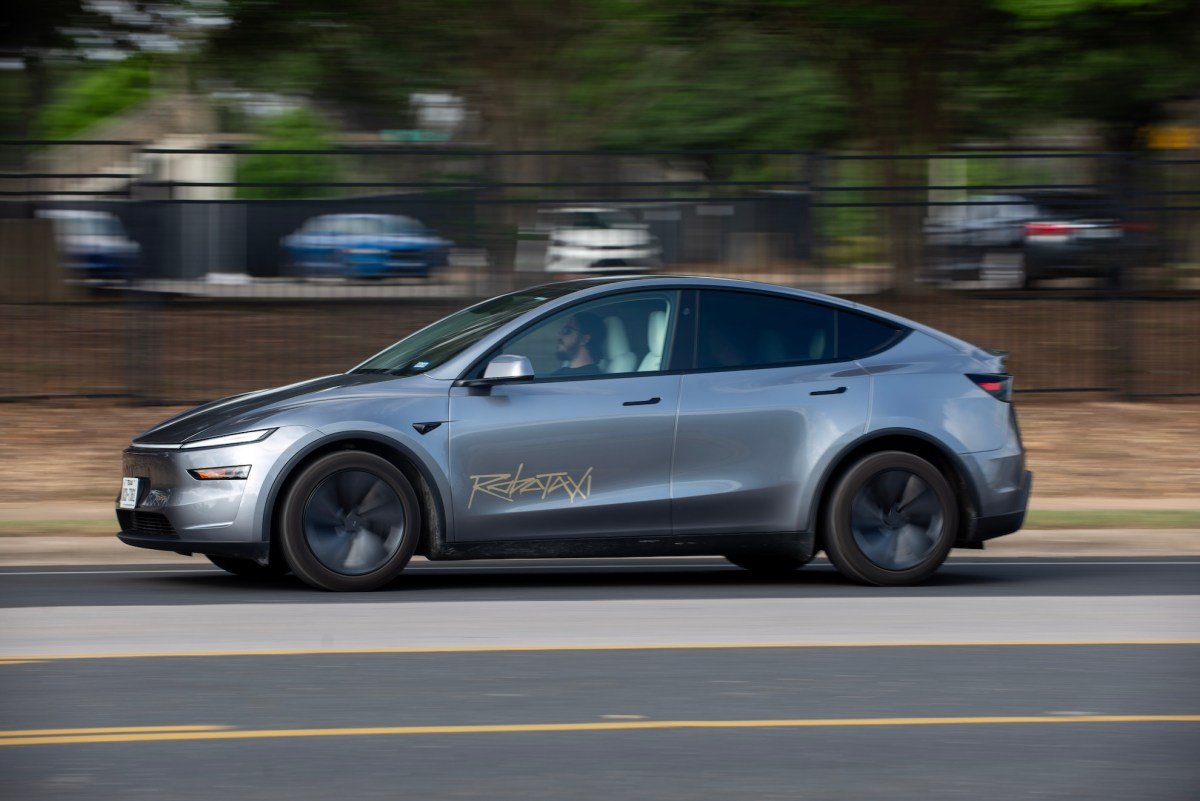
This spring, the company ended production of its flagship Model S sedan and Model X SUV at its Fremont, Calif., plant to make way for the Optimus humanoid robot. It’s also bringing the Tesla Robotaxi service to new cities, albeit with a limited number of vehicles. And it’s still pushing to sell owners on Full Self-Driving (Supervised) and eventually make that product capable enough to handle all driving without the need for a human.
This story has been updated with information from Tesla’s earnings call.
When you purchase through links in our articles, we may earn a small commission. This does not affect our editorial independence.
