


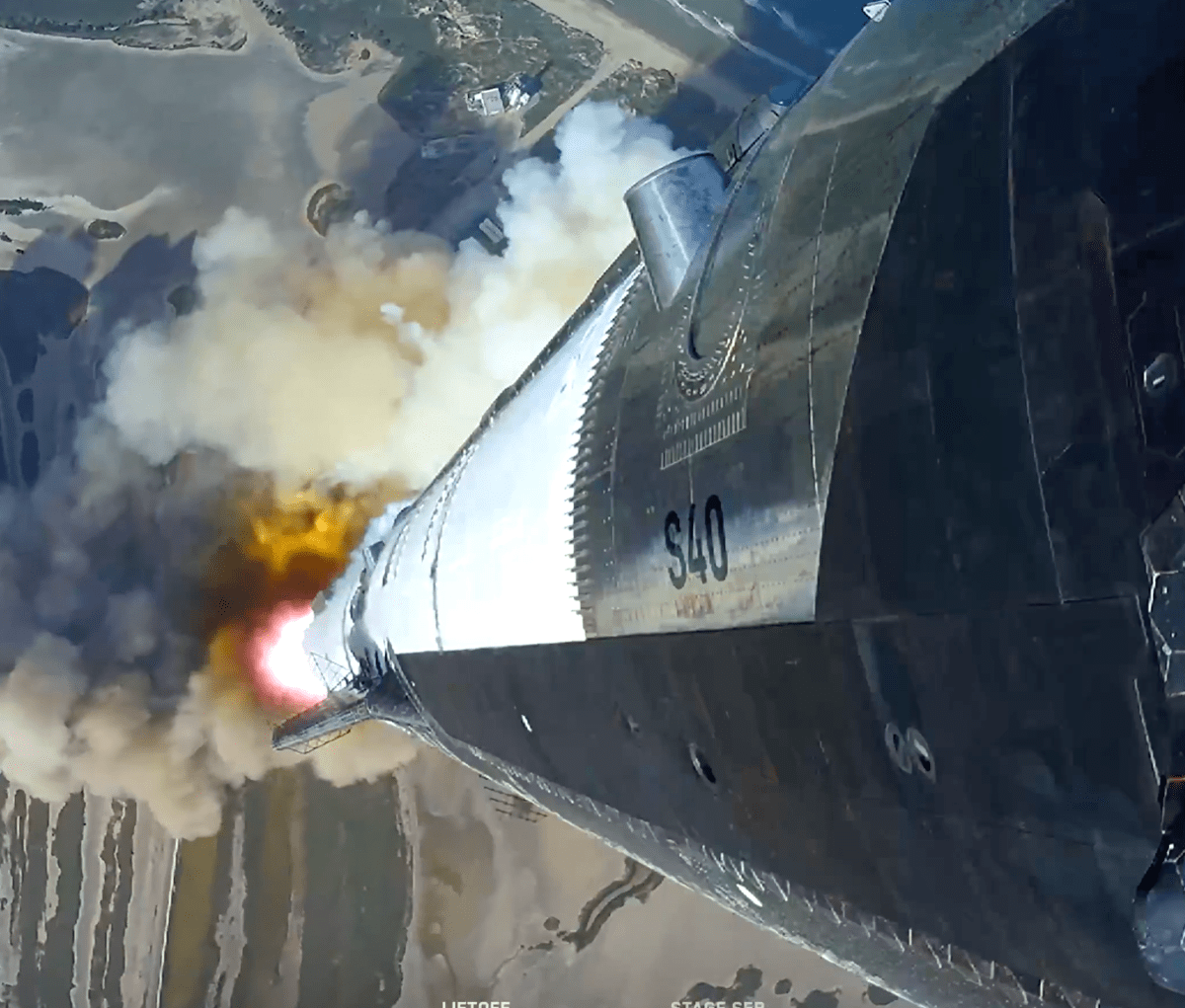
SpaceX successfully deployed the first third-generation Starlink satellites on Friday using an upgraded version of its Starship prototype — the 13th test flight of its large rocket to date. But the company suffered another failure with the Super Heavy booster during a planned simulated landing in the Gulf of Mexico.
This is the second time the company has had a problem with the Super Heavy booster in this V3 version of the Starship. In May, on the first Starship V3 flight, SpaceX experienced a failure of the Starship’s Super Heavy booster as it separated from the rocket’s upper stage. SpaceX was able to perform a simulated landing of the Starship upper stage during Friday’s launch after deploying the Starlink satellites.
The launch came just over a week after SpaceX attempted its 13th Starship launch. This attempt had to be aborted shortly after ignition due to a series of rocket engine failures. SpaceX said it replaced six engines before Friday’s flight to fix the problem.
On Friday’s launch, the booster made it farther into its planned flight, but was unable to properly fire all the engines needed to simulate a landing. The booster exploded after a faster than expected impact with the water.
This was the first Starship launch since SpaceX floated in June in the largest IPO in history. In a test of SpaceX’s “fly, fail, fix” approach to Starship development, the company saw its stock tumble last week the day after the launch was aborted. The drop is part of a larger downward trend since the IPO that has seen the company’s stock fall from a high of more than $200 per share to $115 at the close on Friday. In after-hours trading, SpaceX shares fell another 2% after the booster failed, before paring some of those losses.
SpaceX had better luck with the Starship V3 upper stage during Friday’s launch. The upper stage lost a rocket motor during the first V3 launch in May. That didn’t happen this time, as the Starship ran into no problems on its way to deploying the new Starlinks. The ship, as the company calls it, managed to survive the harsh forces of atmospheric re-entry and perform a simulated landing in the Indian Ocean about an hour after liftoff.
Unlike previous Starship missions, the ship did not explode when it capsized in the water. Instead the ship floated in the watergiving SpaceX the opportunity to use a drone to closely examine the heat shield tiles in its belly.
The new Starlink satellites burned up in the atmosphere about 20 minutes after deployment, as the Starship is still unable to reach Earth orbit. SpaceX was able to communicate with all of them while in space, marking a step forward for this program, which is the only profitable part of the company’s operations.
The ability to deploy the more capable V3 Starlink satellites improves the economics of the capital-hungry company’s space internet network. SpaceX said launching 60 of the new satellites aboard Starship is a “potential twentyfold increase” in downlink capacity being deployed over those flown by a single Falcon 9.
However, it is unclear whether SpaceX can realize these gains if Starship spends the Super Heavy booster instead of reusing it. SpaceX’s S-1 said that without a fully reusable Starship, progress on Starlink “would be at a slower pace and higher cost.”
With help from Tim Fernholz.
When you purchase through links in our articles, we may earn a small commission. This does not affect our editorial independence.
