


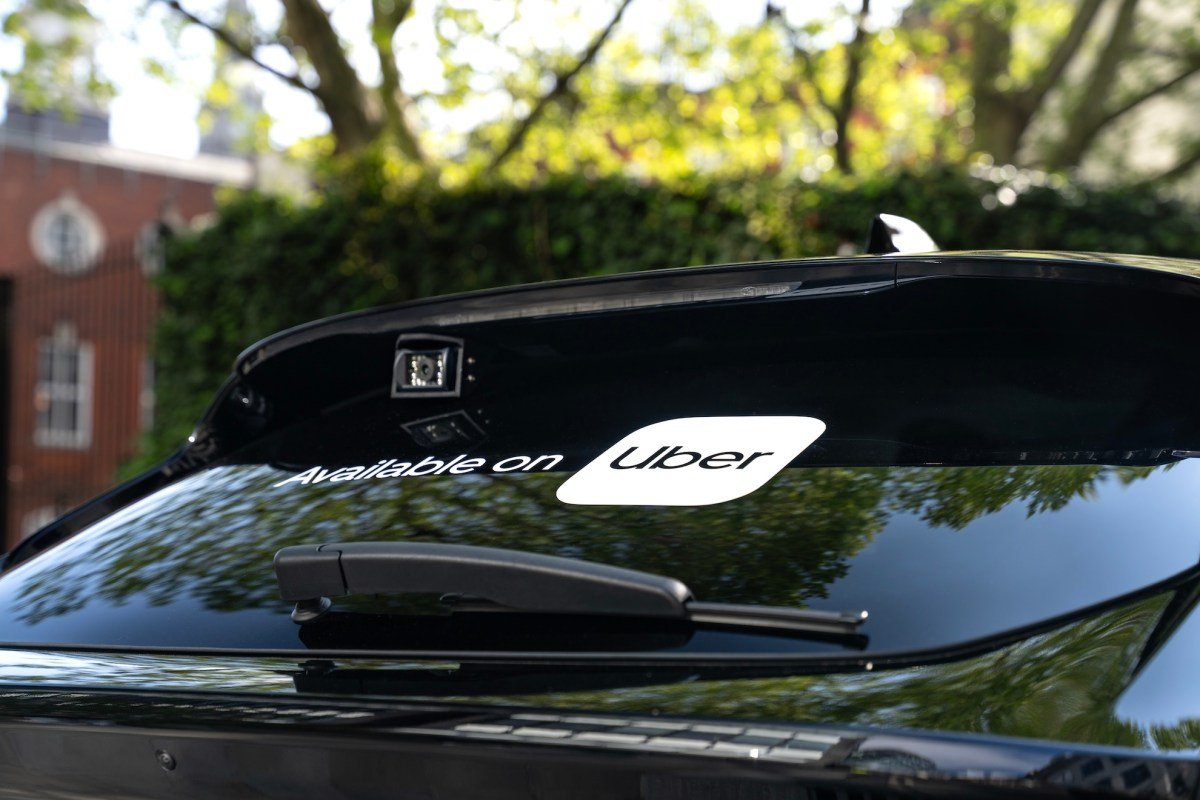
Uber customers in the UK can now join an interest list to increase their chances of being matched with a Wayve autonomous vehicle – another sign that the two companies are preparing to launch a robotaxi service in London. When that launch happens, Uber will compete directly with Waymo, Alphabet’s self-driving company that is considered the robotaxi leader in the United States.
Uber announced the interest list Monday in London along with a branded, black Ford Mustang Mach-E equipped with Wayve’s self-driving system. While Wayve handles the autonomous vehicle technology, Uber has designed what happens inside, including how riders will interact with the vehicle via interactive touchscreens that support 64 languages.
Uber has teased its upcoming robotaxi service, but has yet to give an official date, saying only that it will launch in the coming months, pending regulatory approval. After launch, Uber customers who request a ride with the app can be matched with a Wayve vehicle at no additional cost compared to a traditional human-powered vehicle.
Riders can increase their chances of getting a robotaxi by going to their account settings, clicking on rider preferences and selecting autonomous vehicles. If matched with an AV, riders will be able to decline it and opt for a human driver. The Wayve robotaxi will initially have a human safety operator behind the wheel before going fully driverless in the future, Uber said.
Meanwhile, Waymo is also on the streets of London. In April, Waymo began testing its autonomous vehicles with human safety operators. The company is testing about 100 of its self-driving Jaguar I-Pace vehicles in a 100-square-mile area of the city.
The looming showdown is complicated by Uber and Waymo’s existing partnership in the United States — one that is already showing signs of wear and tear. The two companies, once rivals in a trade secrets lawsuit, agreed to work together in 2023 when Waymo put its autonomous vehicles on Uber’s app in Phoenix. However, that partnership has been relatively limited, given that Waymo allows Phoenix customers to directly hail a robotaxi through its own app as well.
The pair expanded the partnership in March 2025, when Waymo agreed to put its vehicles on the Uber app in Austin and later in Atlanta. In both of those cities, would-be customers can’t hail a robotaxi directly through the Waymo app and must use the Uber app and hope for a match.
The two companies’ relationship has continued even as they appear to be drifting apart in other areas. Uber has spent the past two years investing in and partnering with dozens of autonomous vehicle companies, including Wayve.
Uber executives have also taken direct shots at Waymo, an unorthodox way of dealing with a business partner. For example, Uber CTO Praveen Neppalli posted a video and comment on X saying unsafe behavior of a Waymo robotaxi, calling it “scary.”
The ride-hailing giant has launched two new business divisions — a data play called AV Labs and an operations-focused unit called Uber Autonomous Solutions — that illustrate the company’s broader ambitions to gain market share in the nascent autonomous vehicle industry.
Uber has placed several bets on autonomous vehicle companies that could compete with Waymo, most notably Wayve. In February, the British startup raised $1.2 billion from various strategic backers, including Uber as a return investor. The total increase could reach $1.5 billion thanks to another $300 million from Uber that depends on the development of robotaxis, starting in London.
There is a regulatory issue that will delay the appearance of the robotaxi, at least for a while. The UK government is in the process of creating regulations for autonomous vehicles and it doesn’t look like it will be finished anytime soon. The government’s transport ministry opened applications in May for companies interested in it AV pilot program. The department said it will take what it learns from the pilot program and apply it to the development of its regulations.
When you purchase through links in our articles, we may earn a small commission. This does not affect our editorial independence.
