


Mobileye introduced itself as a supplier of autonomous vehicle technology. Now it also wants the operator tag.
The publicly traded Intel subsidiary announced on Tuesday that it plans to launch a robotaxi service in a US city in 2027, marking an expansion beyond its supplier strategy. Mobileye did not name the US city. However, the Israel-based company said it will have an initial fleet of 100 autonomous vehicles, which will be in service throughout 2027.
If successful, Mobileye said it plans to scale to about 17,000 robotaxis within the next five years.
“The robotaxi revolution has just begun, and its potential to transform the way we travel around the world continues to grow,” said Mobileye founder and CEO Amnon Shashua, noting that the industry is increasingly dependent on a small number of technology providers and business models.
Mobileye rose to prominence by supplying automakers with millions of computer vision chips designed to support automotive safety features and advanced driver assistance systems. The company later began developing chips and software that could handle autonomous driving and tested the technology in several cities. It now supplies the autonomous driving system to Volkswagen and its subsidiary MOIA.
But Mobileye apparently wants to own a piece of the robotaxi market, even if that puts it in direct competition with companies it supplies its self-driving system to.
These robotaxi ambitions are not entirely new. In a 2020 interview with TechCrunch, Shashua said he believed the “Holy Grail” was passenger car autonomy — in which consumers could buy a car that could operate completely without a driver. But to get there he needed to follow the robotaxis.
“The realization is that you can’t get to that Holy Grail unless you go through the robotaxi business,” Shashua said at the time.
Mobileye said it will create a new operating business for its robotaxi service, which will use the self-driving system. Mobileye plans to manage the fleet and will leverage Moovit, its transit and mobility app, for the consumer side.
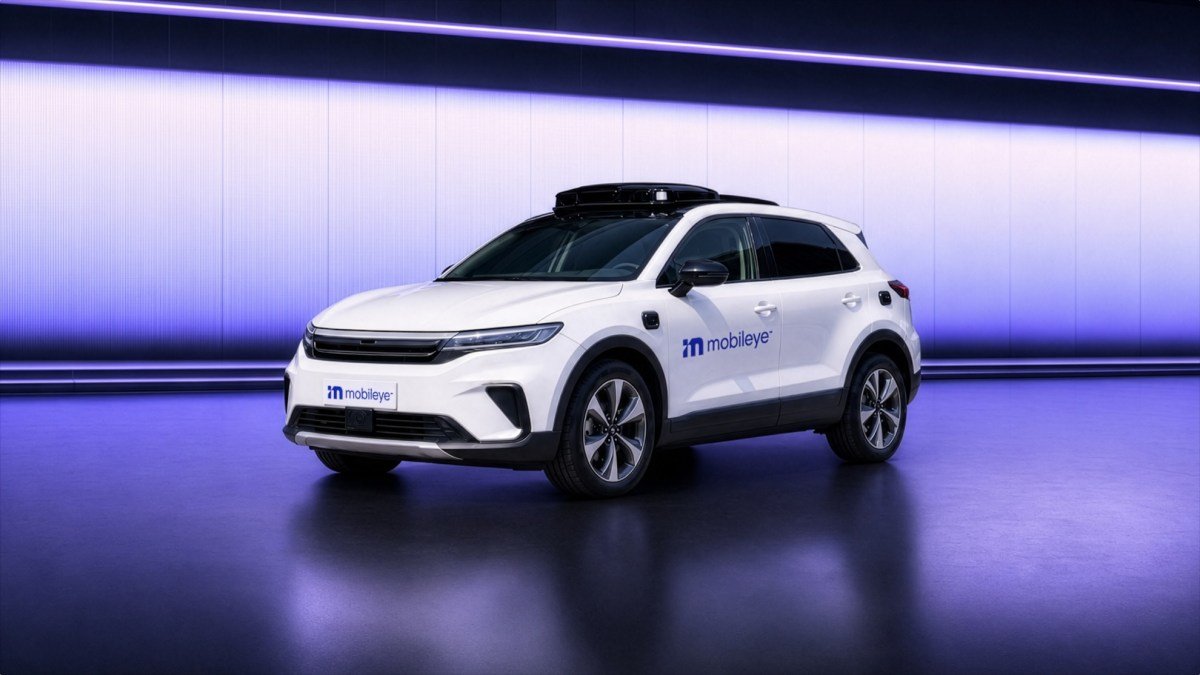
Mobileye said this new business will complement its supplier business. The company did not name which vehicle will be used in its fleet, noting only that it will work with “AV-ready vehicle platform manufacturers.” However, the company’s press release announcing the partnership shows a photo rendering of what appears to be a modified Ora iQ, the electric crossover produced by Chinese automaker Great Wall Motors.
“This initiative does not replace our existing partnerships, it is an extension of them,” said Shashua. “We remain deeply committed to enabling automakers and mobility providers with Mobileye Drive. At the same time, running our own service allows us to accelerate adoption, gain immediate operational experience and unleash the full potential of autonomous mobility.”
When you purchase through links in our articles, we may earn a small commission. This does not affect our editorial independence.
