


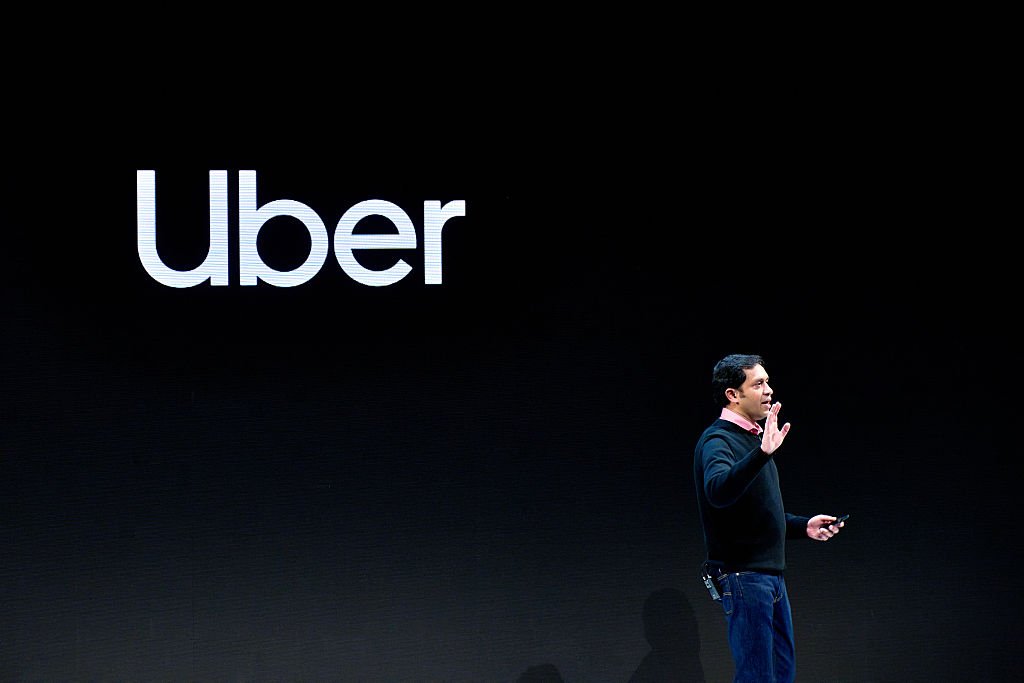
Uber has spent the last year quietly pushing beyond the two businesses most people associate it with. There’s the ride and delivery, of course, but spend some time in the app and you’ll now find Expedia-powered hotel bookings, shop-for-me concierge features and boat rentals in Europe.
Under the hood, so to speak, there is also a lot going on. Consider debit cards for drivers, a variant of data tags for those same drivers who earn more money, and a six-month-old venture called AV Labs, which is developing a fleet of sensor-equipped vehicles that are separate from Uber’s regular network of drivers and designed to collect ever-increasing amounts of driving data. Uber is framing the initiative as a way to strengthen its relationships with autonomous vehicle partners, several of which it also owns stock in, but it certainly feels like a hedge, too. Uber competes directly with some of those same partners, chief among them Waymo, and owning the data layer gives Uber both leverage and discretion.
Whether Uber becomes an all-in-one “app for everything” similar to some Asian super-apps like Grab remains an open question. But in this conversation, Uber Chief Product Officer Sachin Kansal walks TechCrunch through the company’s financial services ambitions, its increasingly complicated relationship with Waymo, its new AV Labs data operation, and how AI is starting to show up in ways that riders and drivers will actually notice.
This interview has been edited for length and clarity.
TC: You revealed hotels, boat rentals and more shopping options earlier this year. How did this list come about and what didn’t make the cut?
SK: Every year our teams obviously build a lot of stuff and a subset of what we decide is worth sharing with the world on the bigger stage. This year the theme we focused on was really travel. 1.5 billion trips on the Uber platform each year are actually made outside of a user’s home city, so we know that travel is something that is a very common use case for Uber users. Our main announcement this time was actually bringing hotels to Uber as a partnership with Expedia. But traveling is much more than that – you need rides to get from the airport to the hotel, and you need food. We heard from many of our users that many of them had stopped using room service and were just using the Uber Eats app. With “shop for me,” the goal was to allow you to shop from any local store, even if that store isn’t available on Uber Eats with its entire catalog. Travel is really, in my opinion, the third leg of the stool — we did rides, then we added food, and now we’re adding travel.
Is Uber moving towards offering its own financial services like the ‘everything apps’ are doing in Asia?
Financial services for us cuts across many different actors — consumers, but also drivers and couriers and merchants. We have a lot of products today that are mainly focused on drivers and couriers, where we have what we call the Uber Pro card, which they can use as a debit card and transfer all their earnings. Right now, we’re starting to experiment with some of these products for merchants in certain parts of the world. In terms of consumers, we’ll see if that makes sense for us in the long run. Right now there’s a currency that consumers can use—we call them Uber credits—and that’s tied to our membership program. At hotels, for example, members get 10% cash back on a $1,000 transaction, which is $100 back in credit that you can then use on rides and dining.
Would Uber ever offer its own buy now, pay later product?
I’m not sure, because we want to make sure that experts do what experts do. We’ve already announced partnerships with others in the industry who already provide this service, so at checkout you’ll be able to do this. In terms of our overall product strategy, we’re not trying to be everything to everyone.
With boat rentals, in Europe, tapping the tab takes users to a partner’s booking feed instead of checking out within Uber. Is this delivery model a template for what’s to come?
There are definitely some cases, especially when we’re doing something new, to rely on our partners, because a two-way integration takes a lot of time and in some cases it’s good to try before we integrate deeply. In Expedia’s case, we decided it made sense to integrate deeply — we built the entire user interface ourselves in partnership with Expedia. But in some cases it might make sense to hand over the rest of the experience to the experts in that field, and if you have a lot of traction, we can always embed them in depth.
Your Uber One subscription product now has 51 million members and accounts for around half of bookings. Do you have data that shows that cross-selling actually works — that a drop-off user later starts making more rides?
On the delivery side, it takes two to three orders to break even on the monthly fee you pay. As members become more familiar with the program, their frequency within the line of work they already use increases. And it’s also driving more use of the other sides of the business — we’re seeing mobility-only people also starting to use delivery, and delivery-only people also starting to use mobility.
Delivery has been one of the most difficult businesses in technology to make profitable. Is Uber Eats still relying on ride-hailing to stay healthy?
In the early years of Uber Eats it was not yet profitable, but over the past several quarters, Uber Eats has independently been a profitable business for us and is generating a lot of profit.
A story I wrote this spring framed Uber as unexpectedly more directly competitive with Airbnb, which now offers airport transfers through a partner. Do you see it that way? Who are they you more focused?
There is no shortage of competitors – Lyft in the US, Didi and 99 in Latin America, Bolt, Ola worldwide and on delivery, DoorDash, Delivery Hero. But I only spend a very small percentage of my time thinking about it. The biggest percentage of my time, or what keeps me up at night, is providing our users with all the value we can.
You recently shot down the Waymo pilot in Phoenix while scaling up elsewhere. How do you keep the experience consistent when you’re working with — and in some cities competing with — the same vendor?
Phoenix was the first city we launched with Waymo, with about a dozen cars, but our scale launches have been in Austin and Atlanta, where we have hundreds of cars with them. When we recently watched the Phoenix pilot, we mutually decided there was no point in continuing. Waymo is a great partner of ours, but in many cities it’s also a competitor. We’re not racing to be an L4 autonomy provider — what we’re focusing on is getting the racetracks in place so we can work with multiplayer. We believe in the hybrid network, human drivers as well as autonomous vehicles in the same city, because it allows us to balance demand and supply.
When it comes to AV Labs, what can Uber offer its autonomy partners that it doesn’t already have?
We will equip hundreds of cars with sensors, deployed through our fleet partners, and through this we will collect millions of miles worth of driving data. This really helps with the long tail problem — you want to see all the extreme cases, not just the P95, P99 level. Beyond the data itself, there’s so much expertise from our 10 million earners about how pickups and deliveries work. We handle 25 million lost items every year — how do you handle that operationally in the world of autonomy? That’s the kind of business expertise we can bring.
Is Uber Selling Driver and Rider Data to Gen AI Companies?
I would split it into two parts. In terms of generational AI companies, we’re able to flag data for them using our profit base or through audio collection, and yes, we have commercial relationships with them and sell it to them — that’s a part of the business that’s new and we’re extremely positive about it. AV Labs is separate and we are still looking for these models to share this data with partners. It’s a bit early.
Do drivers record conversations with riders for this data project?
No, no, no — I want to be very clear, no conversation is recorded as part of this while on a ride. When they are not travelling, they are not driving or delivering, they are just talking or listening to a piece of audio and transcribing it. By the way, they get paid to do this.
Where has artificial intelligence actually appeared in ways that a rider or driver would notice?
If you’re profitable on our platform, we have an earnings assistant — the number one question on their mind is how can I earn more money and they’ll say, look, it’s really light in the South Bay, but you might want to go five miles away where there’s a lot of demand. On the Eats side, there is a cart assistant where you can say “I want milk, eggs, bread” and it creates the cart very quickly. And on rides, you can use voice to request a ride – say “I’m looking for a ride to the airport, I have six bags, six people.”
So, is a fully representative Uber — “plan and book my entire trip” — on the horizon?
I can’t put a date and I can’t tell you exactly what the feature set will be, but I think AI will be a huge factor in that, where I can leave the complexity to the platform and just tell an agent exactly what I want. Easier said than done — we want to make sure we’re not just checking a box by sending an agent that might not work that well.
As a CPO, how do you personally prioritize with so many ideas on the fly?
I’d say I spend 70% to 80% of my time making sure our existing products, or the products we’re about to launch, are as stable as possible. All new ideas are like shiny objects — if you have 100 ideas, maybe five of them are good, and those five need a lot of cultivation and conviction. So probably 20% of the time is on new ideas — including, by the way, going out, driving and delivering myself, just to see our product from the other side firsthand.
When you purchase through links in our articles, we may earn a small commission. This does not affect our editorial independence.
