


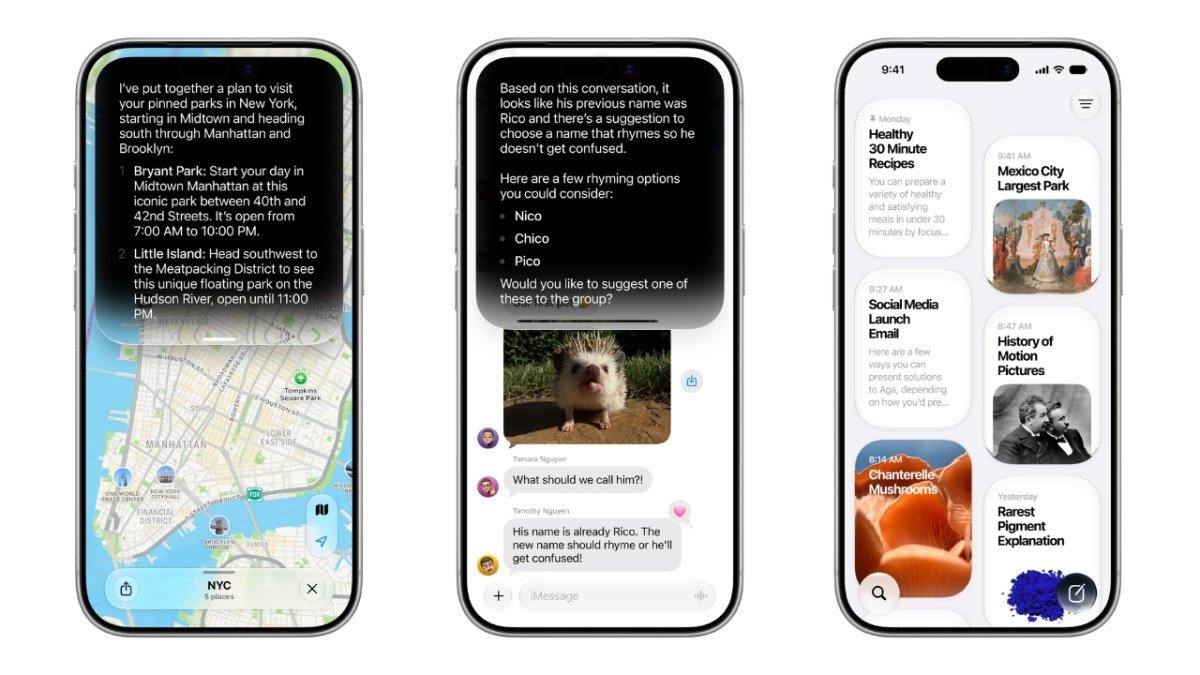
Apple is opening its biggest overhaul of Siri to a wider audience with the release of the iOS 27 public beta, giving everyday users a chance to try out the new AI assistant before its wider release later this fall.
The public beta marks the first time Apple has made its AI-powered Siri widely available beyond developers. With around 2.5 billion active devices worldwide, even if only a fraction of users install the public beta, it will still be the biggest test of Apple’s redesigned AI assistant and its answer to ChatGPT, Gemini, Claude and others.
The Siri AI update, which was officially announced at Apple’s Worldwide Developers Conference in June, turns Apple’s aging voice assistant into a more capable AI-powered tool that can access information on a user’s device, including emails, photos and messages, as well as respond to what’s on the screen and ground its responses in world-class tech knowledge, similar to any modern chat-bot.
It is also more deeply integrated into the operating system. You can access it by saying “Hey Siri” or pressing the side button, as before, as well as by swiping down from the Dynamic Island (the black bar at the top of the screen). Plus, it’s integrated into iPhone’s built-in search engine tool, Spotlight, making it more powerful than before because it can search for answers to almost any question.
For the first time, Siri also got its own standalone app, a user experience that people already comfortable with chatbots like ChatGPT or Gemini might prefer. However, because Siri is so deeply integrated throughout the iPhone, accessing it through an app seems somewhat redundant.
In addition to iOS 27 on iPhone, the upgraded Siri is available on all other Apple products, including iPad, Mac, Apple Watch, CarPlay, AirPods, Apple TV and Vision Pro.
Under the hood, Siri AI leverages Apple Intelligence, including Apple’s new Foundation models running on the device and using its Private Cloud Compute. Apple built its Foundation Models in collaboration with Google and its Gemini model, but these models aren’t just some new version of Gemini. Instead, Apple’s models were built specifically for Apple Silicon using proprietary data and distilled Google’s Gemini — a process Gemini uses to create smaller, highly efficient models embedded in iOS and other Apple software. Meanwhile, Private Cloud Compute ensures that users’ personal data is not stored or accessible to Apple.
In early tests of the developer version of Siri AI, the assistant was able to better handle basic phone tasks, such as finding specific photos in your photo library, summarizing group texts, adding a text-sent meeting to your calendar, and looking up nutritional information about what’s in your camera roll. It was also better at answering questions you’d normally have to search the web to answer, like when an upcoming local event is happening or what’s happening in the news.
In the developer beta, Siri would sometimes send error messages or get confused. (For example, I once asked Siri for the latest news on Iran, and she searched my contacts for someone with that name.)
Still, it’s easy to see Siri becoming a bigger part of your everyday digital life, especially since it doesn’t require you to open an app to use it.
Overall, the developer betas this year have been pretty solid, which makes it much easier to recommend the public beta this time around. Of course, installing a beta should always be approached with caution. If your device needs to run perfectly smoothly and never crash, then you might want to wait until the public release of iOS 27, which is expected in September.
When you purchase through links in our articles, we may earn a small commission. This does not affect our editorial independence.
