



Consumer lapel microphones are one of the most interesting consumer electronics trends of recent years. Prior to this, microphones and their ilk were largely the domain of professional film crews. While some plug-in solutions have appeared for smartphones over the years, it was only recently that one could buy an affordable set to record a two-way conversation with good fidelity.
The category has been successful and has consequently gone from one or two competitors to around a dozen. However, few audio brands are as trusted as Shure. In fact, much of the competition consists of companies like Anker and DJI, which aren’t traditionally known for their microphones. Shure, on the other hand, makes some of the most beloved microphones in many industries.
The nearly 100-year-old Chicago-based audio manufacturer becomes the latest to join the fray with the MoveMic. It’s not the first high-end microphone manufacturer to enter the space, as Rode is a direct competitor in several different categories. That said, the latter has been greeted with mixed reviews.
Image Credits: Shure
I plan to spend some time with the MoveMic on the ground next week at Modex in Atlanta. Conventions like this are a good testing ground for this kind of thing, since they’re both noisy and have a ton of potential wireless interference. I’ll comment on that performance, but I will say that I was looking for a good solution for both job interviews and recording personal podcasts like I did in the pre-Covid era. My bar for the latter is high. While you’re not going to match the fidelity of a good desk mic, it should be good enough that it’s not a chore to listen to an hour-long audio-only conversation.
The category has been hit or miss recently, so I’m excited to see what Shure has to offer here. The system starts at $249 for a clip-on microphone. A pair will run you $249 or $499 with the receiver. Alternatively, the receiver can be purchased separately for $499. Unfortunately, the receiver doesn’t slide into the charging case like some of the competition do.
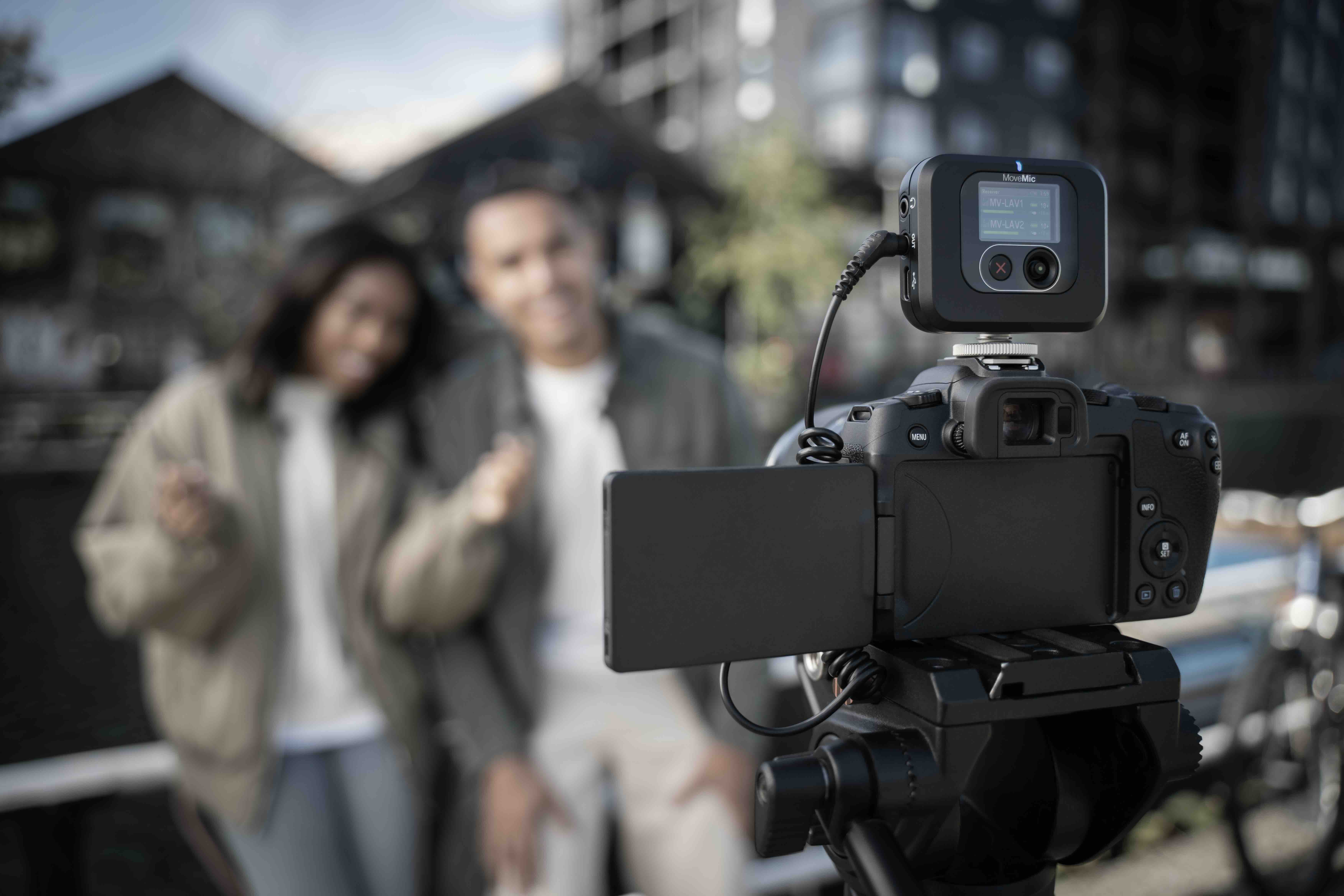
Image Credits: Shure
Microphones connect to a phone without the need for a receiver. You’ll want it, though, if you plan to connect to a camera, computer, or even non-Shure apps. Currently, it can only handle two microphones at a time, which is currently the standard for them. The company adding a third microphone could win me over forever. Also, a key feature that the DJI unit has that they don’t have is the ability to connect a wired lav mic directly to the clip-on, making it more camera ready.
