


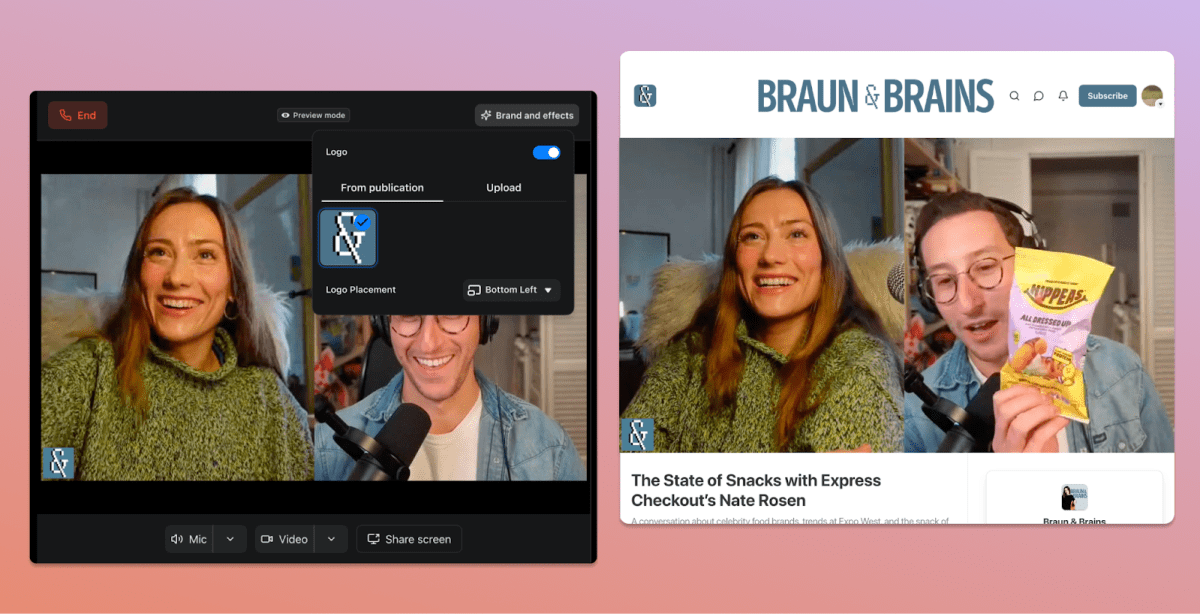
Publishing platform Substack continues to invest in video content as it is released Substack Recording Studioa built-in mechanism for creators to pre-record and publish videos.
Studio, which is only available on desktop, can support solo videos as well as chats with up to two guests. Creators can add custom watermarks to their videos and share their screen with co-hosts. Once recording is complete, Substack automatically generates clips and thumbnails for sharing.
“Until now, creating videos in Substack meant going liveor assembling a separate toolset: a recording platform, a way to create and distribute clips, and something to draw a thumbnail,” the company shared in a blog post. “Substack Studio brings all these tools in one place.”
The post also notes that creators who have used audio or video on Substack in the past 90 days have grown revenue 50% faster than creators who haven’t.
Although Substack is primarily known as a newsletter platform, the company has taken a strong interest in video in recent years, prioritizing updates that position it more as a competitor to Patreon, encouraging creators to explore multimedia.
While Substack has allowed creators to upload videos since 2022, it began allowing creators to live stream and monetize videos last year, and then launched a $20 million Creator Accelerator Fund to help creators transition from other platforms to Substack.
Like Instagram, Substack also recently launched a TV app, which is available on Apple TV and Google TV. The app allows viewers to watch video posts and live streams on TV and includes a TikTok-style “For You” series that provides further recommendations.
Despite the popularity of watching short-form videos on a phone, people seem to be turning to television screens to watch longer-form content. Netflix has made significant investments in bringing video podcasts to television. On YouTube, viewers watched 700 million hours podcasts each month on living room devices (such as TVs) in 2025, up from 400 million per month the previous year.
