


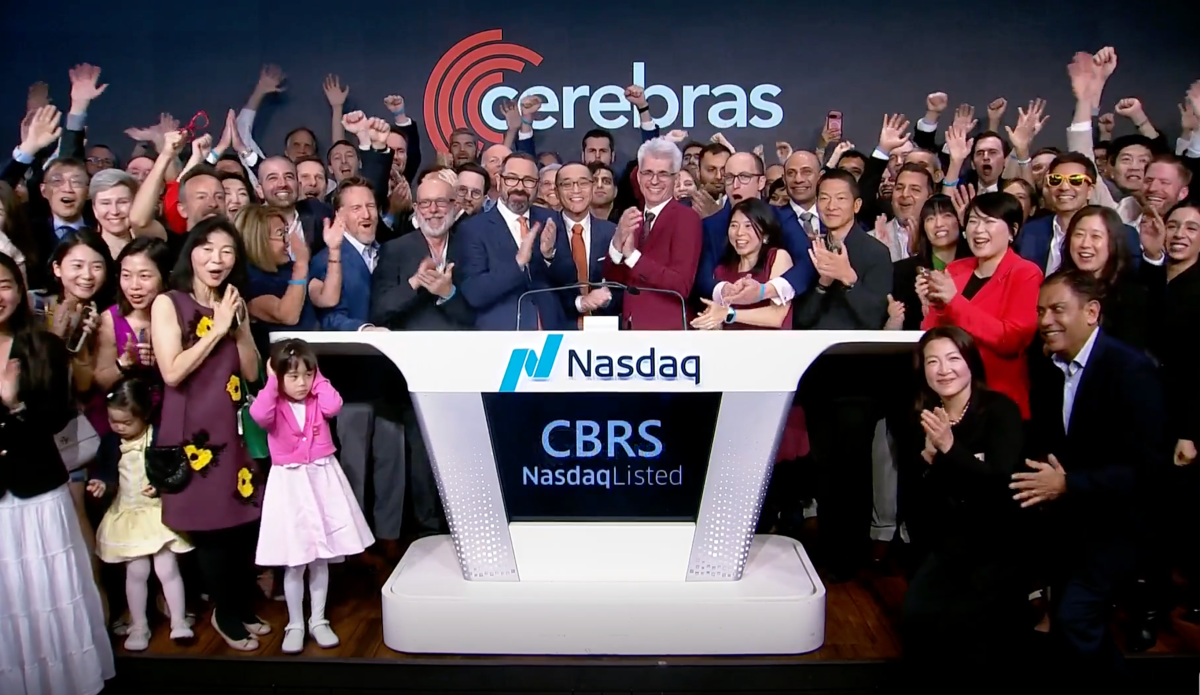
Cerebras Systems raised $5.5 billion in its IPO on Thursday, pricing shares at $185 on Wednesday night, well above its range ($115 to $125, later increased to $150 to $160), even as it increased the size of the offering to 30 million shares.
It then opened in public trading at $385, more than doubling (up 108%) as retail investors priced in to grab shares. The stock cooled off a bit soon after, trading midday above $330. It closed the day at $311 and a valuation of $66 billion, according to Yahoo Finance. But the price was rising again in after-hours trading.
Even at the IPO price of $185, the company entered the first day of trading at a fully diluted valuation of $56.4 billion (ie, accounting for all shares). Co-founder, CEO Andrew Feldman’s stake at $185/share was worth nearly $1.9 billion, while co-founder and CTO Sean Lie’s stake weighed in at around $1 billion.
And obviously, if the price of $300 above is true, the company and the founders are worth a lot more than that.
A year ago, it seemed like this day would never happen for Cerebras. Rival Nvidia, which designed its giant chip from the ground up specifically for artificial intelligence, had been listed for the first time in 2024. But concerns about a big investment from Abu Dhabi-based Group 42 plunged the IPO into an open-ended review by the Committee on Foreign Investment in the United States (CFIUS). Investors were also cool about its financials: Group 42 accounted for almost all of Cerebras’ revenue. So those IPO plans were shelved.
IPO ambitions resurfaced in earnest in April when the company was able to report roughly double the revenue: $510 million in 2025 (76% year-over-year growth) and from a few customers. It also reported a huge turnaround to profits — to $237.8 million in net income — compared with a loss of nearly half a billion the previous year.
Investors started salivating.
Cerebras has now emerged as a leading candidate to provide chips for inference – the continuous computing required for models to respond to prompts – and counts OpenAI (in a complex circular agreement relationship), G42, Saudi Arabia’s Mohamed bin Zayed University of Artificial Intelligence and Amazon Web Services as customers.
When you purchase through links in our articles, we may earn a small commission. This does not affect our editorial independence.
