


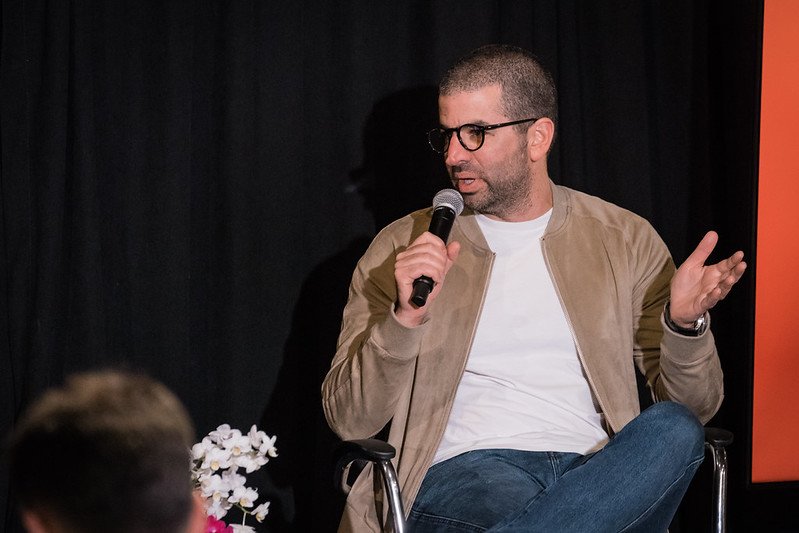
When Lior Susan started Eclipse Ventures in 2015, the company’s thesis of digitizing the physical world was not particularly popular in Silicon Valley.
“It was the era of enterprise software and SaaS, and it felt pretty lonely the first couple of years,” Susan said on stage at a recent StrictlyVC event in San Francisco.
More than a decade later, Eclipse is at the center of the tech world’s action. The company’s $6.5 million Series A investment in Cerebras Systems in 2016 paved the way for a total return of $2.5 billion when the semiconductor company went public this week. The company invested a total of $147 million in Cerebra over time, a bet that returned 17 times its IPO price of $185 per share, according to Eclipse.
For Susan, the Cerebras windfall is just the beginning of reaping big rewards from a long-held belief that because 85% of global GDP is connected to the physical world, investing in companies beyond pure software could be extremely lucrative.
Public markets and startup founders seem to recognize the value of physical technology now. Susan noted that shares of TSMC and Micron recently hit all-time highs, while a growing group of elite founders are eager to create startups at the intersection of hardware and software.
“I think people are realizing that the real moat in software is gone. You can code almost anything you want,” he said.
Susan echoed the public market sentiment that earlier this year sent many SaaS stocks tumbling on the belief that businesses can use Anthropic’s Claude Code or OpenAI’s latest models to build their own custom software tools.
“What you can’t do with the ‘vibe code’ is make wafers, because you need machines and silicon and they need clean rooms and a lot of other things,” Susan said.
When it comes to technology that touches the physical world, it’s not just semiconductors that are suddenly catching the attention of investors and founders.
Eclipse’s portfolio companies spanning fields such as robotics, energy and defense raised nearly $15 billion from outside backers last year, and that late-stage momentum is on track to reach $4.5 billion in the first quarter of 2026 alone, Susan said. This investor enthusiasm is in stark contrast to the company’s early track record: in its first eight years, its portfolio companies raised a total of less than $4 billion.
Indeed, recent follow-on rounds in Eclipse’s portfolio show a track record that any venture capital firm would envy. Led by a string of huge late-stage deals this year, the takeover includes $1.2 billion for Wayve, $650 million for True Anomaly, $270 million for Bedrock Robotics and $200 million for Oxide Computer. Additionally, Eclipse was the Series A investor for all four companies.
At first glance, it might appear that investor enthusiasm for real-world technology is driven solely by AI, either as infrastructure input like chips and data centers, or through AI’s power to eventually make robotics viable. However, Susan argues that there are other strong tailwinds driving the momentum.
In addition to technology—in this case, artificial intelligence—what’s important for this market to thrive is capital, customer demand, talent, and policy. Susan means that along with investors and engineers moving away from SaaS in fields like robotics, semiconductors, space and mining, the US government is also encouraging these industries through subsidies and favorable regulations.
“It’s the first time I believe in America, since Henry Ford and Carnegie, these five forces are aligned,” Susan said. “For builders like us, this is the best time to build these companies.”
When you purchase through links in our articles, we may earn a small commission. This does not affect our editorial independence.
