


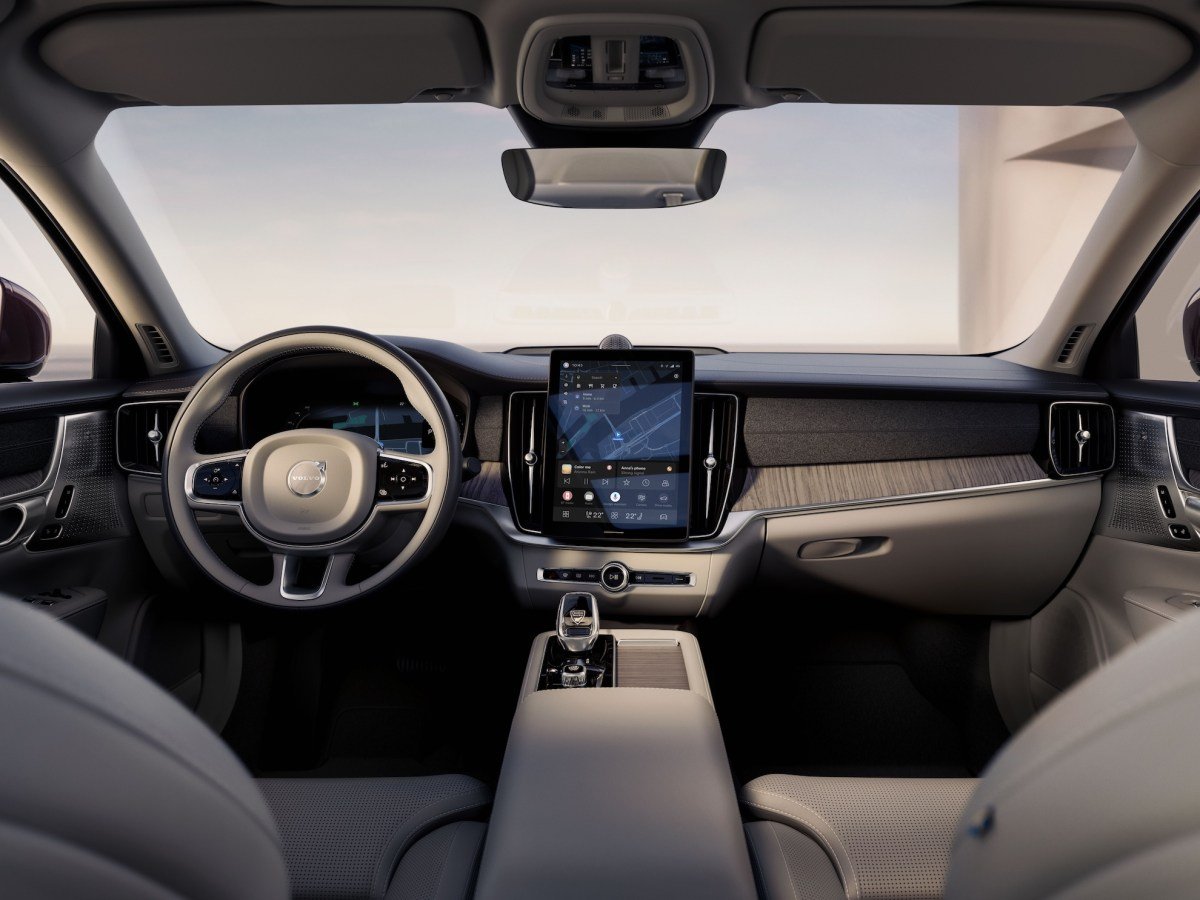
Volvo Cars has reached a deal with the Trump administration that exempts the automaker from a crackdown on vehicle technology linked to China.
The Swedish automaker, which is majority-owned by China’s Geely Holding, said on Tuesday it had received special permission from the US Commerce Department to continue importing and selling vehicles with Chinese connected car technology in the United States. Connected car technology includes the software that covers everything from syncing with phones to certain self-driving functions. Bloomberg was the first to report the special authorization.
Volvo was banned under rules finalized by the Biden administration in January 2025 that barred vehicles equipped with software and hardware developed and maintained by Chinese companies for national security reasons. THE rules started with 2027 model year vehicles equipped with software developed and maintained by Chinese companies. Another ban prohibiting the importation of vehicle-connected hardware begins with 2030 model year vehicles.
Volvo vehicles are primarily manufactured in Sweden and imported into the United States, with the exception of the EX90, which is assembled at the company’s plant in South Carolina. However, Volvo’s ties to China’s Geely – and its manufacturing operations in the country – meant it would be banned under the new rules.
Volvo said the approval followed “constructive discussions” with the Commerce Department and other US officials about the company’s governance, technology and data security. The automaker said it can now move forward with its expansion plans in the United States.
The automaker announced in September 2025 that it plans to bring two additional vehicles — the XC60 midsize SUV and a new hybrid vehicle — into production at the South Carolina plant. In March, Volvo said it would also bring all of its production Polestar 3an EV from its sister company Polestar, in the US factory. The Polestar 3 is also currently produced in Chengdu, China.
THE ruleknown as “Information and Communications Technologies and Services Supply Chain Security: Connected Vehicles,” spends significant time on the threat posed by vehicles with automated driving systems developed by companies with Chinese ties.
Under the rules, Chinese companies would be barred from testing autonomous vehicles in the United States. Today, several of these companies, including Baidu’s Apollo Autonomous Driving LLC, Pony.ai and WeRide, have permits to test their autonomous vehicle technology (with a human safety operator behind the wheel) in California. TechCrunch reached out to the Department of Motor Vehicles, the agency that regulates AVs in the state, to find out if those licenses will be revoked.
When you purchase through links in our articles, we may earn a small commission. This does not affect our editorial independence.
