

Close Menu
TechTost
  • AI
  • Apps
  • Crypto
  • Fintech
  • Hardware
  • Media & Entertainment
  • Security
  • Startups
  • Transportation
  • Venture
  • Recommended Essentials
What's Hot

Are brain waves the next unlock for natural artificial intelligence?

Anthropic updates Claude voice mode with more capable models

Music streamer Deezer says more than 50% of daily uploads are generated by AI

Facebook X (Twitter) Instagram
  • About Us
  • Contact Us
  • Privacy Policy
  • Terms and Conditions
  • Disclaimer
Facebook X (Twitter) Instagram
TechTost
Subscribe Now
  • AI

    Are brain waves the next unlock for natural artificial intelligence?

    27 July 2026

    Librarians host viral ‘Avoid AI’ workshops for people fed up with big tech

    26 July 2026

    I tested OpenAI’s new AI keyboard — which will be fun for some coders and a little overwhelming for everyone else

    25 July 2026

    Anthropic Launches Opus 5 | TechCrunch

    24 July 2026

    How AI guardrails are hindering the work of aggressive cybersecurity researchers

    24 July 2026
  • Apps

    Anthropic updates Claude voice mode with more capable models

    27 July 2026

    Bluesky’s AI assistant Attie expands into an open social research tool

    26 July 2026

    Why Cognition bought Poke: AI personality becomes a competitive advantage

    26 July 2026

    Vietnam seeks to restrict social media for children. Here are the growing number of other countries doing the same

    25 July 2026

    India’s move against Jack Dorsey’s Bitchat sparks legal debate

    24 July 2026
  • Crypto

    Sam Altman’s biometrics startup World raises $52.5 million through crypto sale

    24 July 2026

    Venice AI goes unicorn with $65M Series A as first privacy AI platform takes off

    1 July 2026

    Crypto Exchange OKX wants AI agents to hire and pay each other

    30 June 2026

    Startup Battlefield 200 applications close today

    27 May 2026

    5 days left: Save up to $410 on Disrupt 2026 passes

    25 May 2026
  • Fintech

    TechCrunch Disrupt 2026’s new Smart Money Stage explores fintech, payments, artificial intelligence and everything

    25 July 2026

    Don’t want to invest in Elon Musk? Two new ETFs expressly exclude him

    10 July 2026

    India’s payments chief believes artificial intelligence will play a big part in the next era of digital payments development

    28 June 2026

    Early Bird pricing ends tonight for the Founder Summit

    26 June 2026

    4 days left to save up to $190 on Founder Summit 2026

    23 June 2026
  • Hardware

    AI chip startup Etched defies skeptics, hits $10.3 billion valuation from big-name investors

    24 July 2026

    After a shocking quarter, IBM insists that artificial intelligence is not killing the mainframe

    23 July 2026

    Light made a flip phone — it’s colorful and cheap

    22 July 2026

    Apple is partnering with Klarna to launch a rental program for iPhones, iPads and Macs

    22 July 2026

    The Xteink X4 Pro could be the tiny e-reader of your dreams

    21 July 2026
  • Media & Entertainment

    Music streamer Deezer says more than 50% of daily uploads are generated by AI

    27 July 2026

    Substack’s new tool lets you know who’s writing their newsletters with AI

    26 July 2026

    Kalshi demands Netflix take down trailer for ‘Prediction Games’ documentary.

    26 July 2026

    Amazon brings games to Prime Video

    24 July 2026

    SoundCloud acquires decentralized music platform Nina Protocol months after its shutdown

    23 July 2026
  • Security

    The hacker who humiliated spyware makers and was never caught

    25 July 2026

    Hugging Face confirms breach of internal datasets and credentials, prompts users to take action

    25 July 2026

    US accuses American of allegedly wiping his phone using a passcode ‘forcibly’ during border search

    24 July 2026

    If you pay a hacker’s ransom, chances are they’ll come back for more

    24 July 2026

    The US government says hackers linked to Iran are disrupting US water and energy providers

    23 July 2026
  • Startups

    Insurance startup Corgi reportedly raises more money to $4 billion – its third round in 8 weeks

    26 July 2026

    Build publicly, fail publicly: what it’s like to be a founder under 20 right now

    25 July 2026

    Prentis, new AI lab co-founded by Reid Hoffman and Mark Pincus in talks to raise $100 million

    25 July 2026

    Meet the judges who will crown Australia’s next startup

    24 July 2026

    AegisAI, founded by ex-Google security execs, raises $36M to stop AI-based spearfishing

    23 July 2026
  • Transportation

    TechCrunch Mobility: Uber is betting on its former CEO

    26 July 2026

    Volkswagen engineers charged with insider trading linked to the Rivian consortium

    25 July 2026

    SpaceX launches new V3 Starlink satellites but suffers another booster failure

    25 July 2026

    Tesla’s door handles may prompt new safety rules in the US

    24 July 2026

    Tesla’s robotaxis moves in reverse

    23 July 2026
  • Venture

    Edtech platform raises $4.5 million to help teach students how to code vibe

    23 July 2026

    Travis Kalanick’s robotics company raises $1.7 billion, led by a16z

    23 July 2026

    Cascade raises $3.5 million to help construction companies find and win projects

    22 July 2026

    StrictlyVC returns to New York on September 10 to celebrate a huge year for the city’s startup community

    21 July 2026

    Startup Inference Infinity raises $15 million from researchers Touring Capital, OpenAI and Anthropic

    20 July 2026
  • Recommended Essentials
TechTost
You are at:Home»Startups»Glass supercharges smartphone cameras with AI — minus the hallucinations
Startups

Glass supercharges smartphone cameras with AI — minus the hallucinations

techtost.comBy techtost.com11 February 202405 Mins Read
Share Facebook Twitter Pinterest LinkedIn Tumblr Email
Glass Supercharges Smartphone Cameras With Ai — Minus The Hallucinations
Share
Facebook Twitter LinkedIn Pinterest Email

Your phone’s camera is both software and hardware, and Glass hopes to improve both. But while its wild anamorphic lens is on the market, the company (with $9.3 million in new money) has released an AI camera upgrade that it says significantly improves image quality — without any weird AI upgrade artifacts.

GlassAI is a purely software approach to enhancing images, what they call a neural image signal processor (ISP). ISPs are basically the ones that take the raw sensor output—often flat, noisy, and distorted—and turn it into the sharp, colorful images we see.

ISP is also increasingly sophisticated, as phone makers like Apple and Google like to show, by composing multiple exposures, quickly detecting and sharpening faces, adjusting for tiny movements, and more. And while many include some form of machine learning or artificial intelligence, they need to be careful: Using AI to create details can cause hallucinations or artifacts as the system tries to create visual information where none exists. Such “super-resolution” models are useful in their place, but must be watched carefully.

Glass builds a complete camera system based on an unusual lozenge-shaped front element and an ISP to back it up. And while the former is working on its presence in the market with some upcoming devices, the latter is, it turns out, a product worth selling on its own.

“Our restoration networks correct optical aberrations and sensor issues while effectively removing noise and outperforming traditional image signal processing pipelines in fine texture recovery,” explained CTO and co-founder Tom Bishop in their news release.

Concept animation showing the process of going from RAW to a glass processed image. Image Credits: Glass

The word “recovery” is key, because the details are not simply created but are exported from raw images. Depending on how your camera stack already works, you may know that certain artifacts or corners or noise patterns can be reliably resolved or even exploited. Learning how to turn these implied details into real ones — or combine details from multiple exposures — is a big part of any computational photography stack. Co-founder and CEO Ziv Attar says their neural ISP is better than anyone else in the industry.

Even Apple, he pointed out, doesn’t have a full neural imaging stack, only uses it in specific cases where it’s needed, and their results (in his opinion) aren’t great. He provided an example of Apple’s nervous ISP misreading text, with Glass doing much better:
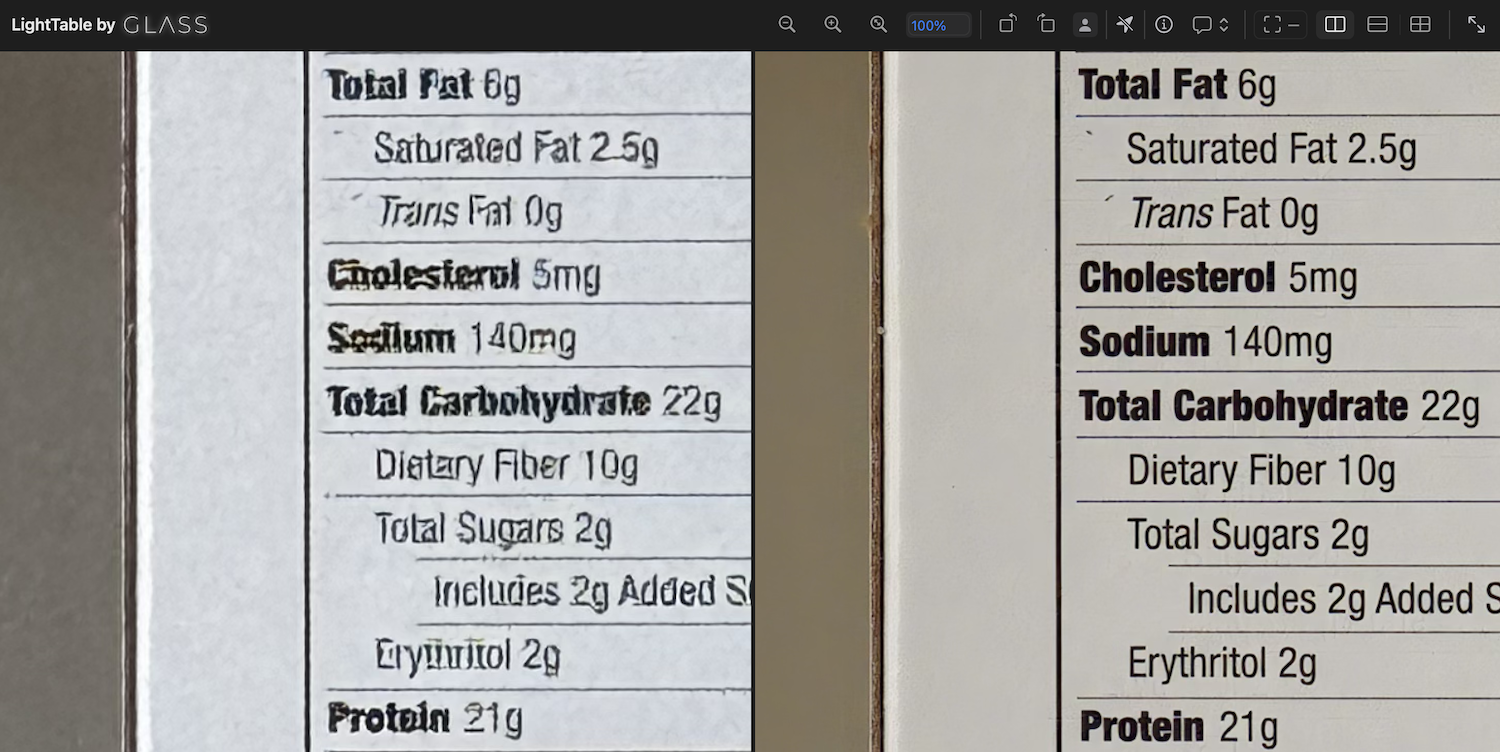
The photo provided by Ziv Attar shows an iPhone 15 Pro Max with 5x zoom and the Glass-edited version of the phone’s RAW images. Image Credits: Ziv Attar

“I think it’s fair to assume that if Apple hasn’t been able to get decent results, it’s hard to solve the problem,” he said. “It’s less about the actual stack and more about how you train. We have a very unique way of doing it that was developed for anamorphic lens systems and is effective on any camera. Basically, we have training labs that include robotics systems and optical calibration systems that manage to train a network to characterize lens aberration in a very comprehensive way and essentially reverse any optical distortion.”

As an example, he provided a case study where they had DXO evaluate the camera on a Moto Edge 40 and then do it again with GlassAI installed. Glass-processed images are all clearly improved, sometimes dramatically so.
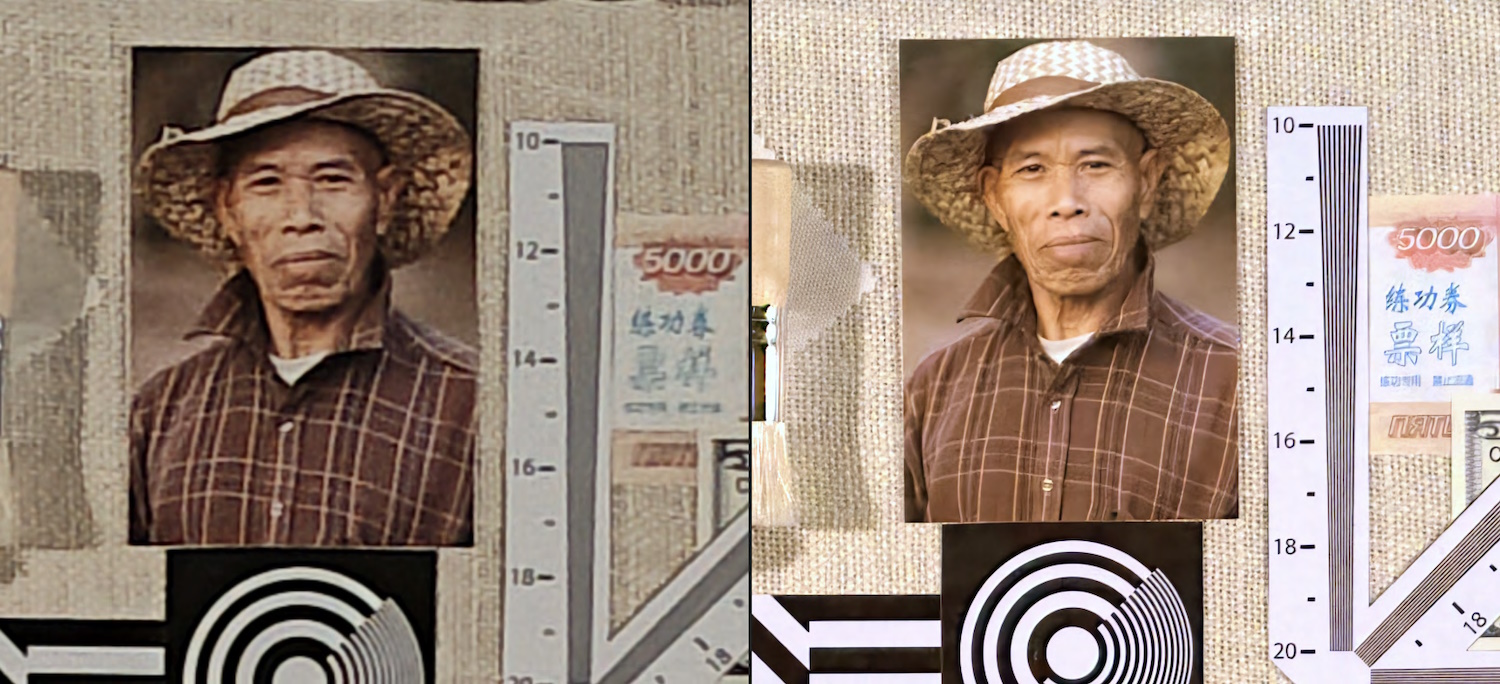
Image Credits: Glass / DXO

At low light levels, the built-in ISP tries to differentiate the fine lines, textures and details of the face in its night mode. Using GlassAI, it’s as sharp as with half the exposure time.

You can see the pixels in some test photos provided by Glass alternating between primes and finals.

Companies that assemble phones and cameras have to spend a lot of time tuning the ISP so that the sensor, lens and other pieces work together properly to make the best possible image. It seems, however, that Glass’s one-size-fits-all process can do a better job in a fraction of the time.

“The time it takes us to train shippable software from the time we get our hands on a new type of device … varies from a few hours to a few days. For reference, phone manufacturers spend months fine-tuning picture quality, with huge teams. Our process is fully automated so we can support multiple devices in a matter of days,” Attar said.

Neural ISP is also end-to-end, meaning that in this context it goes straight from the RAW sensor to the final image without requiring additional processes such as de-noise, sharpening and so on.
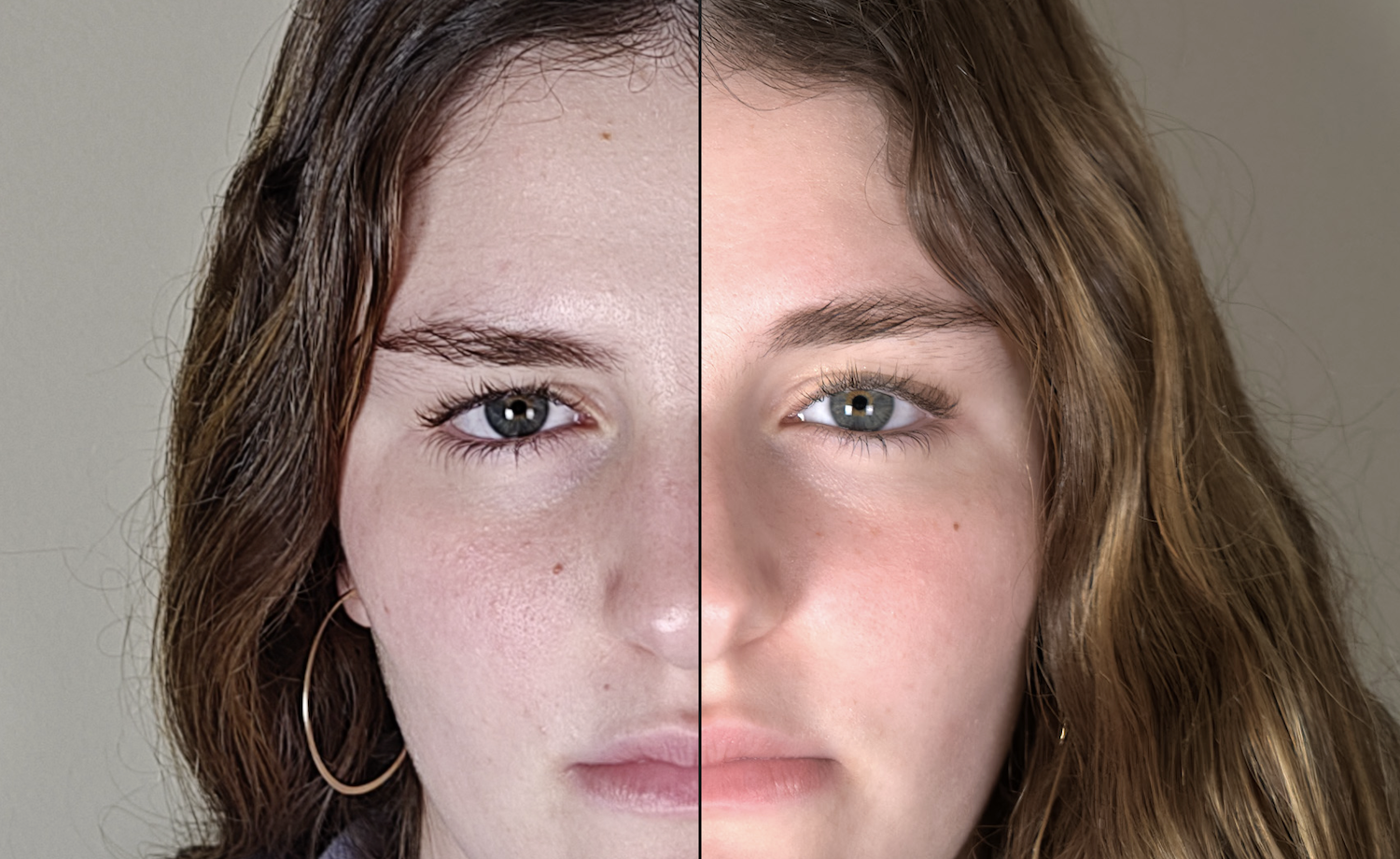
Left: RAW, right: Processed on glass. Image Credits: Glass

When I asked, Attar was careful to differentiate his work from hyper-resolution AI services, which take a complete picture and scale it up. These are often not “retrieving” details so much as inventing them where appropriate, a process that can sometimes produce undesirable results. Although Glass uses artificial intelligence, it is not productive like many image-related AIs.

Today marks the product’s widespread availability, presumably after a long period of testing with partners. If you’re building an Android phone, it might be a good idea to at least give it a try.

On the hardware side, the phone with the odd lozenge-shaped anamorphic camera will have to wait until this manufacturer is ready to release it to the public.

While Glass is developing its technology and testing customers, it’s also busy fearing funding. The company just closed an “extended seed” of $9.3 million, which I put in quotes because the seed round was in 2021. The new funding was led by GV, with participation from Future Ventures, Abstract Ventures and LDV Capital.

cameras Exclusive glass GV hallucinations photo Smartphone supercharges
Share. Facebook Twitter Pinterest LinkedIn Tumblr Email
Previous ArticleStartup EV Arrival wants to sell assets, intellectual property of UK division
Next Article Thoma Bravo takes critical event management software company Everbridge private in $1.5 billion deal
bhanuprakash.cg
techtost.com
  • Website

Related Posts

Are brain waves the next unlock for natural artificial intelligence?

27 July 2026

Insurance startup Corgi reportedly raises more money to $4 billion – its third round in 8 weeks

26 July 2026

Build publicly, fail publicly: what it’s like to be a founder under 20 right now

25 July 2026
Add A Comment

Leave A Reply Cancel Reply

Don't Miss

Are brain waves the next unlock for natural artificial intelligence?

27 July 2026

Anthropic updates Claude voice mode with more capable models

27 July 2026

Music streamer Deezer says more than 50% of daily uploads are generated by AI

27 July 2026
Stay In Touch
  • Facebook
  • YouTube
  • TikTok
  • WhatsApp
  • Twitter
  • Instagram
Fintech

TechCrunch Disrupt 2026’s new Smart Money Stage explores fintech, payments, artificial intelligence and everything

25 July 2026

Don’t want to invest in Elon Musk? Two new ETFs expressly exclude him

10 July 2026

India’s payments chief believes artificial intelligence will play a big part in the next era of digital payments development

28 June 2026
Startups

Insurance startup Corgi reportedly raises more money to $4 billion – its third round in 8 weeks

Build publicly, fail publicly: what it’s like to be a founder under 20 right now

Prentis, new AI lab co-founded by Reid Hoffman and Mark Pincus in talks to raise $100 million

© 2026 TechTost. All Rights Reserved
  • About Us
  • Contact Us
  • Privacy Policy
  • Terms and Conditions
  • Disclaimer

Type above and press Enter to search. Press Esc to cancel.