


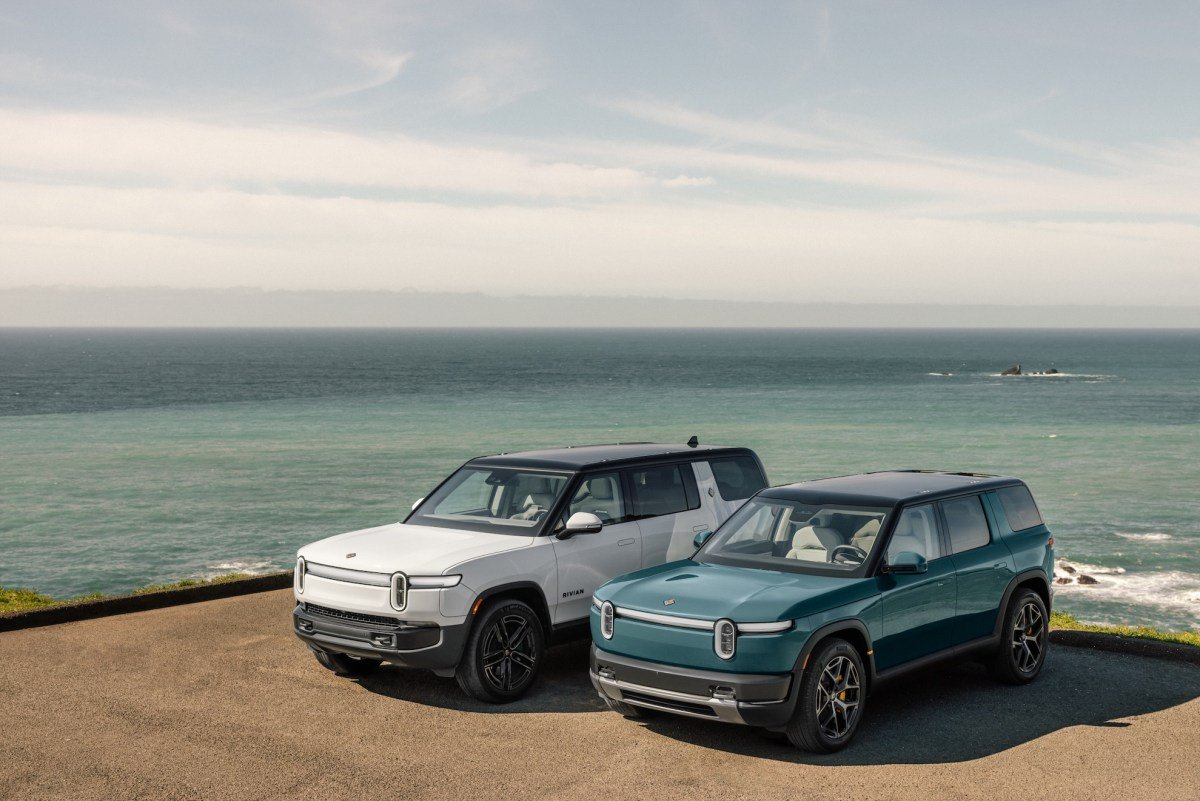
Rivian officially began delivering the first R2 SUVs to paying customers on Tuesday, marking the start of a new chapter for the busy automaker as it strives to reach mass-market scale.
Rivian founder and CEO RJ Scaringe said the R2 is “perhaps the most important thing we’ve launched to date” and is particularly critical to the company’s ambitions in the world of autonomous vehicles.
Starting at around $58,000, the R2 takes much of what Rivian did with the R1 SUV and condenses it into a more affordable and accessible form factor. The company plans to offer a version of the R2 for under $50,000 starting in 2027. An even more stripped-down model will be available for “around $45,000” later that year — matching a price Rivian has teased since revealing the R2 in 2024.
The company is looking to ramp up both production and deliveries of the R2 by the second half of 2026. And Rivian plans for the R2 to be very successful from the jump: The company has said it will deliver between 20,000 and 25,000 R2 SUVs by the end of the year. If it achieves this feat, Rivian’s R2 would be one of the fastest EV launches in US history.
From there, Rivian wants to build and sell hundreds of thousands of R2 SUVs annually. The company has started production at its plant in Normal, Illinois, and is building a new plant in Georgia that will come online in late 2028.
The R2 reaches a turning point for electric vehicles in America. The Trump administration has weakened environmental regulations that pressure the auto industry to move away from gas engines. Congress also eliminated a $7,500 federal tax credit that made new electric cars more affordable. Most of the legacy automakers have abandoned or canceled plans for electric vehicles in the U.S. Even industry leader Tesla’s sales are falling.
But sales of electric vehicles are growing elsewhere around the world, and China is churning out ultra-cheap sedans and crossovers that have some countries clamoring to get them off the ground. Earlier this year, Canada dramatically cut the import tax on Chinese-made electric vehicles in an effort to combat rising new car prices.
Scaringe has painted this environment as an opportunity for his company. With fewer new electric vehicles on the market in the U.S., the R2 has a chance to become one of the most exciting options available, he said in recent interviews.
Rivian also makes a lot of promises about the range in the R2. In December, the company laid out its vision for increasing the SUV’s autonomous capabilities in the coming years, and Rivian expects the R2 to eventually be able to drive itself. In March, Uber struck a deal with Rivian worth up to $1.25 billion that would allow up to 40,000 R2 models to be used as robo-taxis on the giant’s network.
When you purchase through links in our articles, we may earn a small commission. This does not affect our editorial independence.
