

Close Menu
TechTost
  • AI
  • Apps
  • Crypto
  • Fintech
  • Hardware
  • Media & Entertainment
  • Security
  • Startups
  • Transportation
  • Venture
  • Recommended Essentials
What's Hot

Evotrex raises $30 million to build RV that doesn’t need a charging station

Top Lucid Motors executive exits amid new CEO shakeup

How Justin Ernest invested nearly $500 million in hot startups without a traditional VC fund

Facebook X (Twitter) Instagram
  • About Us
  • Contact Us
  • Privacy Policy
  • Terms and Conditions
  • Disclaimer
Facebook X (Twitter) Instagram
TechTost
Subscribe Now
  • AI

    Google just fired a warning shot in the AI ​​subscription price wars

    10 June 2026

    Sandstone raises $30M to bring AI to in-house legal teams

    9 June 2026

    Because Apple’s slow and steady AI bet is starting to look pretty smart

    9 June 2026

    Amazon now lets you design custom merchandise using AI

    8 June 2026

    Mira Murati comes back to the fore, cautiously

    8 June 2026
  • Apps

    iOS 27 features we didn’t see on stage

    10 June 2026

    Apple says it can remove some apps from the App Store if they don’t attract users

    9 June 2026

    Apple’s WWDC AI demos seemed more real after $250 million false ad settlement

    9 June 2026

    The new update of NotebookLM will help you to create source repository from chat

    8 June 2026

    X caters to creators with the new “React with Video” feature.

    8 June 2026
  • Crypto

    Startup Battlefield 200 applications close today

    27 May 2026

    5 days left: Save up to $410 on Disrupt 2026 passes

    25 May 2026

    As crypto cools, a16z crypto raises $2.2 billion in capital

    6 May 2026

    Coinbase to lay off 14% of staff as part of broader restructuring

    5 May 2026

    British cryptographer Adam Back denies NYT report that he is Bitcoin creator Satoshi Nakamoto

    9 April 2026
  • Fintech

    Ramp raises $750M at $44B valuation as investors thirst for fintechs with AI history

    5 June 2026

    Last 24 hours to save up to $410 on your Disrupt 2026 ticket

    29 May 2026

    2 days left: Lock in up to $410 in ticket savings for Disrupt 2026

    28 May 2026

    Robinhood now allows your AI agents to trade stocks

    28 May 2026

    Disrupt 2026 Early Bird ticket savings expire in 3 days

    27 May 2026
  • Hardware

    WWDC 2026: What to expect, from Siri’s long-awaited revamp to Apple Intelligence and iOS 27

    9 June 2026

    What to expect from WWDC 2026: The long-awaited Siri refresh and Apple Intelligence updates

    7 June 2026

    What to expect from WWDC 2026: The long-awaited Siri refresh and Apple Intelligence updates

    5 June 2026

    Oura Ring 5 review: Thinner, lighter, better

    4 June 2026

    Meta mercifully released the VR fitness game Supernatural instead of just killing it

    4 June 2026
  • Media & Entertainment

    Plex adds new social features ahead of major price hike for its lifetime pass

    6 June 2026

    Startup Battlefield 200 applications officially close in 3 days

    5 June 2026

    Founders Fund Launches Series of Games Starring Sam Altman, Palmer Luckey and Other Tech Elites

    5 June 2026

    Meet Wander, a StumbleUpon-inspired tool for discovering the ‘small web’

    4 June 2026

    Publishers will be able to opt out of AI Search, thanks to the new setting

    4 June 2026
  • Security

    Massachusetts votes in favor of new privacy bill that bans sale of precise location data

    9 June 2026

    WhatsApp says it has detected new spyware attacks linked to the NSO group in violation of a court order

    9 June 2026

    Microsoft’s open source tools hacked to steal AI developers’ passwords

    8 June 2026

    Hacked, leaked and held for ransom: the worst breaches of 2026 so far

    7 June 2026

    Google and FBI warn of ransomware group sending fake IT workers to hack victims in person

    6 June 2026
  • Startups

    Evotrex raises $30 million to build RV that doesn’t need a charging station

    10 June 2026

    Zepto’s IPO filing reveals fast growth, bigger losses and a valuation question no one has yet answered

    9 June 2026

    How to apply to Startup Battlefield 2026, what you need before today’s June 8 deadline

    8 June 2026

    Sam Altman-backed fusion startup Helion raises $465M to build power plant for Microsoft

    6 June 2026

    Supabase doubles valuation to $10 billion in 8 months

    5 June 2026
  • Transportation

    Top Lucid Motors executive exits amid new CEO shakeup

    10 June 2026

    Rivian begins deliveries of its all-important R2 SUV

    9 June 2026

    Waymo bought Apple’s self-driving car for $220 million

    9 June 2026

    Uber, Wayve and Waymo are heading for a robot showdown in London

    8 June 2026

    TechCrunch Mobility: Inside GM’s $900 Million EV Battery Bet

    7 June 2026
  • Venture

    How Justin Ernest invested nearly $500 million in hot startups without a traditional VC fund

    10 June 2026

    Mercor’s Brendan Foody calls out Sequoia, accusing it of “double pricing” valuation tricks.

    9 June 2026

    Founders share VC horror stories and some name names

    6 June 2026

    Defense technology, artificial intelligence and fundraising take center stage at StrictlyVC Los Angeles

    5 June 2026

    Benchmark raises its first growth capital as part of $2 billion capital raising

    4 June 2026
  • Recommended Essentials
TechTost
You are at:Home»Hardware»The HTC Vive became a corporate product when you weren’t looking for it
Hardware

The HTC Vive became a corporate product when you weren’t looking for it

techtost.comBy techtost.com28 February 202407 Mins Read
Share Facebook Twitter Pinterest LinkedIn Tumblr Email
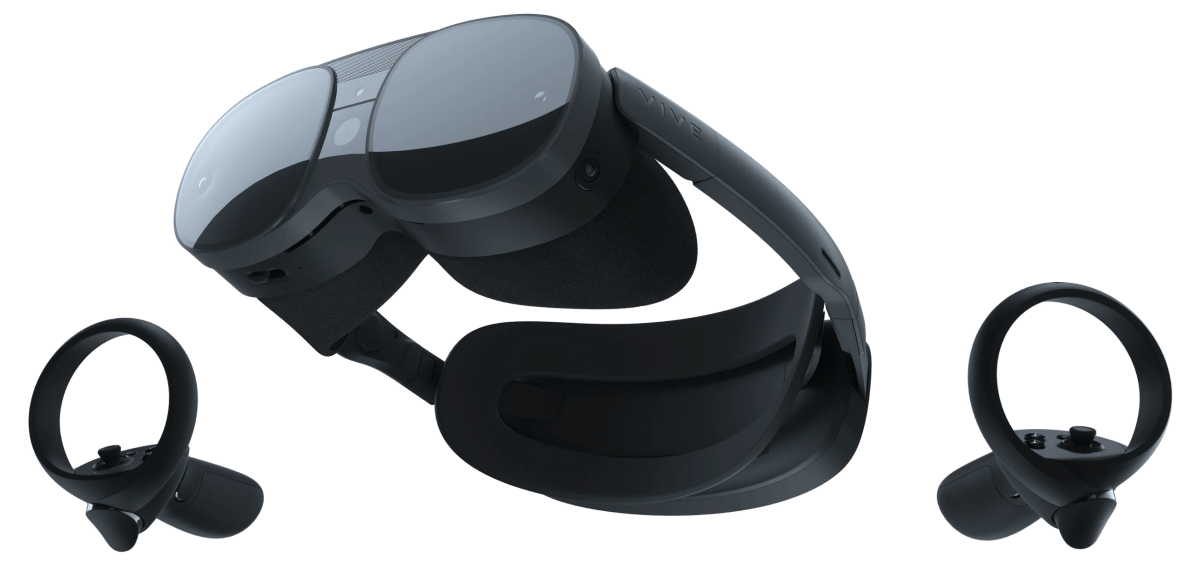
The Htc Vive Became A Corporate Product When You Weren't
Share
Facebook Twitter LinkedIn Pinterest Email

They have many changed at HTC in the decade since a small team broke out to form the mixed reality division. In fact, it is a fundamentally different business in many essential ways. For one thing, you can no longer call HTC a phone company. Contrary to popular belief, the Taiwanese company still makes handsets — mostly mid-range devices for the Asian market.

These days, the mixed-reality business makes up the “vast majority” of HTC’s global business, says Dan O’Brien. We sat down with Vive’s general manager at MWC earlier this week, along with John Dabill, the brand’s head of Product Operations. Just like last year, HTC got it right with the stand. It’s big and white, with several demo stations scattered throughout.

To get to the conference rooms in the back, you have to walk between the dancer and the group of half a dozen men aiming plastic guns in all directions. Beyond that, a number of third-party representatives discuss their own products, including Nord Space ApS, which helped customize an HTC headset for Danish ISS crew member Andreas Mogensen. The startup’s CTO notes that gravity plays a role in the tracking capabilities of many systems. It’s one of many things to address before spending the tens of thousands of dollars per kilo to ship it.

It’s perhaps telling that the two front demos are based on entertainment. Sure, watching someone play a wacky dance game is far more appealing to conference showcase buyers than, say, a business education app. Ultimately, however, the consumer business has shrunk dramatically relative to its business offerings.

“We were 50/50,” says O’Brien, “but now we’re getting closer to 70% [enterprise].” The executive notes that the seeds for a shift toward enterprise were planted near the beginning of Vive’s existence. In 2015, HTC shipped 27,000 headsets to developers in an effort to boost the Vive ecosystem. About 30% of that rate went to business developers. The company was ahead of the curve in this regard, internalizing a lesson that Magic Leap would learn the hard way years later.

“[Magic Leap was] confused about what the market could really bear,” O’Brien says. “They went so heavy on consumers and spent $10 million on a content deal. It launched with about 12 pieces of content for a $3,000 handset. It didn’t solve any problem. It was just for fun. You argue about free time. It’s a really tough battle. You have the Xbox and the PlayStation, your phone — you’re fighting for the time that people have to be entertained, and I think they quickly caught on and changed everything in the business. But even then, this is a really tough business.”

HTC’s initial focus on gaming was born in part from its early partnership with Valve. When the Vive team first came together, they started working on augmented reality prototypes. Steam’s parent company was also instrumental in the company’s shift to VR.

“When we met with Valve, we said, ‘Hey, we can work together, because you know content and developers,'” says O’Brien. “That wasn’t HTC’s core competency in 2014. We were a smartphone company. We thought we could create something special and come together here. So we made a deal and started working together.”

Gaming continues to be the key application on the consumer side, although the segmentation is a drop in the bucket compared to business — a gap that will likely continue to widen. In recent years, HTC hasn’t been in the headset conversation for most potential buyers. The Meta currently dominates the space, while Apple has more recently grabbed the spotlight with the Vision Pro (whether the $3,500 AVP can really be considered a consumer device, however, is another question).

Image Credits: Brian Heater

Meta, in particular, has sucked a lot of air out of the room. “I think Meta has adjusted the market’s perception of the cost of this technology,” says O’Brien. “Losing $12 billion a year in a business it certainly doesn’t feel like success. In 2021, Mark Zuckerberg confirmed that Meta was losing money on Quest headsets, noting: “We plan to continue to either subsidize our devices or sell them at cost to make them available to more people.

This is a game that you can play when you have a huge advertising business that supports the mixed reality game. For now, at least, Meta can continue to lose money on its handsets, and will do so as flooding the market with devices is fundamental to the wider game of conversion. HTC is now an augmented reality company, first and foremost. His income comes from the headphones, not in spite of them.

However, the company recognized the shortcomings of the consumer market early enough to take a significant lead over the likes of Magic Leap.

Education continues to be a long way from mainstream applications on the business side. Buying headphones in bulk is a big upfront cost, but some companies can see savings in the long run. There are a wide range of categories that could see potential benefits, including aerospace and healthcare. Fittingly, the company has received FDA certification for two of its headphones and FAA clearance for one.

In recent years, the Vive has expanded from a virtual reality focus to mixed reality, using passthrough technology similar to that found in the Vision Pro. It’s a move that also relies on augmented reality, the category the company abandoned early on. O’Brien insists this combination of technology is the only way forward for the industry.

“I’ve been very clear with the Magic Leap team and anyone else who asks that the future of wearables is a headset that can do VR, can do mixed reality, can do AR,” he explains. “This whole argument about who’s going to win, AR or VR, is based on the same technology going forward, but you’re going to make that stupid argument. We’re starting to see mixed reality applications where people can collaborate on a design in a physical space with a digital overlay of an object. This is just the beginning of mixed reality.”

Meta has impacted the industry in another key way. When you imagine the metaverse, what does it look like? There’s a good chance it’s an AI chat. Facebook has made the two inseparable for most people. However, HTC’s definition of the term is much broader, and corresponds to any virtual space where people connect with headsets or other hardware.

O’Brien cites a meeting with Wells Fargo as an example of metaverse applications on the business side. “It was like, ‘we’re just throwing 380 people into a town hall in Charlotte.’ We were like, ‘yeah, you can use one of those Mars Camtracks and instead of 300, you’ve got 300,000 people. You could have invited everyone and paid a few thousand dollars per person.”

Like the rest of the world, HTC is currently exploring how genetic AI can be integrated into its ecosystem.

“I think it’s a given,” says Dabill. “It already helps very quickly with 2D images and videos. We’re not there yet, but we’re definitely seeing it help grow the VR space. You don’t need the artistic and technical skills, you can just talk to the AI ​​and create the space.”

This functionality is believed to be coming in the very near future. It will likely have a dramatic impact on VR’s ability to create virtual environments, including the ability to create infinite scenery on the fly.

Read more about MWC 2024 at TechCrunch

AR Ask corporate HTC HTC Vive mwc mwc 2024 product Vive VR werent
Share. Facebook Twitter Pinterest LinkedIn Tumblr Email
Previous ArticleLoanDepot Says About 17 Million Customers Had Personal Data and Social Security Numbers Stolen During Cyber ​​Attack
Next Article Spain’s Embat, which has raised $16 million, plans to compete with Trovata in real-time accounting
bhanuprakash.cg
techtost.com
  • Website

Related Posts

WWDC 2026: What to expect, from Siri’s long-awaited revamp to Apple Intelligence and iOS 27

9 June 2026

What to expect from WWDC 2026: The long-awaited Siri refresh and Apple Intelligence updates

7 June 2026

What to expect from WWDC 2026: The long-awaited Siri refresh and Apple Intelligence updates

5 June 2026
Add A Comment

Leave A Reply Cancel Reply

Don't Miss

Evotrex raises $30 million to build RV that doesn’t need a charging station

10 June 2026

Top Lucid Motors executive exits amid new CEO shakeup

10 June 2026

How Justin Ernest invested nearly $500 million in hot startups without a traditional VC fund

10 June 2026
Stay In Touch
  • Facebook
  • YouTube
  • TikTok
  • WhatsApp
  • Twitter
  • Instagram
Fintech

Ramp raises $750M at $44B valuation as investors thirst for fintechs with AI history

5 June 2026

Last 24 hours to save up to $410 on your Disrupt 2026 ticket

29 May 2026

2 days left: Lock in up to $410 in ticket savings for Disrupt 2026

28 May 2026
Startups

Evotrex raises $30 million to build RV that doesn’t need a charging station

Zepto’s IPO filing reveals fast growth, bigger losses and a valuation question no one has yet answered

How to apply to Startup Battlefield 2026, what you need before today’s June 8 deadline

© 2026 TechTost. All Rights Reserved
  • About Us
  • Contact Us
  • Privacy Policy
  • Terms and Conditions
  • Disclaimer

Type above and press Enter to search. Press Esc to cancel.