


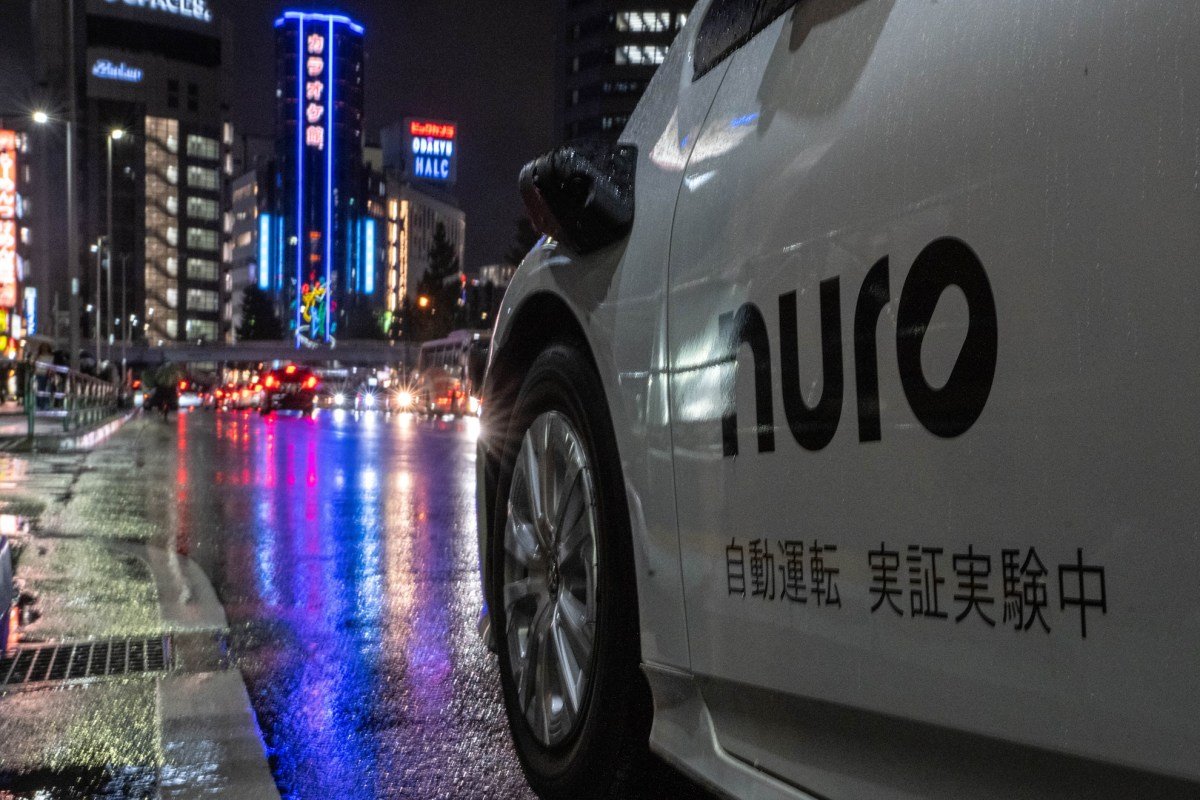
Nurothe Silicon Valley-based startup backed by Nvidia, Uber and SoftBank is testing its autonomous vehicle technology in Japan.
Toyota Prius vehicles equipped with Nuro self-driving software – and human safety operators behind the wheel as backup – began testing on public roads in Tokyo last month. The trials mark the first overseas expansion for the startup, which revamped its business model two years ago.
Nuro said that testing in Japan introduces a number of new challenges and different driving styles and rules. For example, vehicles drive on the left side of the road and the streets of Tokyo are heavily trafficked. Road markings and lane markings are also different in Japan. The company, which opened offices in Tokyo last August, did not disclose how many test vehicles are in its fleet or when it might remove the human safety operator from the vehicles.
The company suggested, in a blog post announcing the trial in Japan, that there will be future expansions.
“Our stand-alone operations in Tokyo are the beginning of compounding global growth advantages,” the company wrote.
Founded in 2016 by early Google self-driving program engineers Dave Ferguson and Jiajun Zhu, Nuro initially focused on developing and operating a fleet of low-speed delivery robots on the road. Nuro’s pitch and pedigree caught the attention of SoftBank Vision Fund, which invested $940 million in the startup in 2019.
Nuro had a strong start, but growth costs and a wave of consolidation forced the company to cut staff and evaluate its business model. In 2024, it abandoned low-speed robots and decided to license its technology to automakers and mobility providers such as transportation and distribution companies.
The company’s autonomy stack is built on an end-to-end AI foundation model that allows the system to learn as it drives, according to Nuro. This AI strategy, which it calls “zero-shot autonomous driving,” allowed Nuro’s software to autonomously navigate public roads in Tokyo without prior training on Japanese driving data, the company’s blog post said. UK-based startup Wayve, which recently raised $1.2 billion, has taken a similar end-to-end AI approach to its self-driving software.
Nuro says this AI approach, which is designed to be generally competent, doesn’t mean it ignores security. The company said it conducts closed-course testing for each new version of its universal autonomy model and evaluates performance and tests edge cases using simulation. Once autonomous vehicles are on the road, they are driven manually while Nuro’s software operates in “shadow mode.” Nuro said the basic AI model produces what the software would, but the commands are not sent to the vehicle’s controls.
Nuro checks the results to determine if the system is ready to operate autonomously on public roads.
Nuro has gained some traction and investors for its approach to self-driving software. Last year, Nuro raised $203 million in two tranches in a Series E round that included existing backer Baillie Gifford and new investors Icehouse Ventures, Kindred Ventures, Nvidia and Pledge Ventures. Also involved was Uber, which said it would make a “multi-hundred million dollar” investment in Nuro as part of a broader deal with electric car maker Lucid.
