


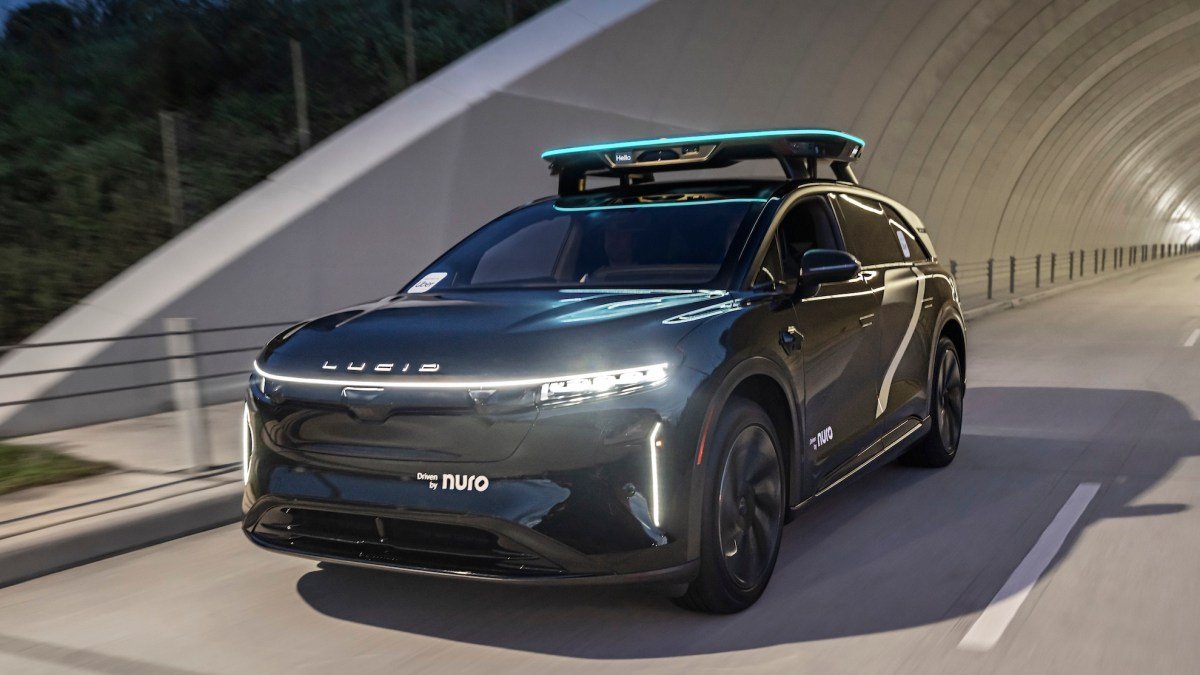
Uber plans to launch a premium robotaxi service in Houston by mid-2027, making it the second US market under its partnership with EV maker Lucid and autonomous vehicle startup Nuro.
The announcement follows a flurry of activity in the San Francisco Bay Area as the three companies prepare to offer a robotaxi service there later this year. Uber says it will eventually bring its robotaxi program to “dozens of cities” in the coming years.
For now, the focus is on San Francisco and then Houston — both markets where Uber will go head-to-head with rival Waymo, the Alphabet-owned self-driving vehicle company that currently operates commercial robotaxi services in both cities.
Nuro spent months testing Lucid Gravity SUVs equipped with the self-driving system in San Francisco and has made progress on that front, including giving Uber employees the ability to hail the Lucid robotaxis. But those vehicles still aren’t driverless, despite Nuro receiving a permit last month from the California Department of Motor Vehicles that would allow him to remove the safety driver from the vehicle.
Uber and Nuro’s combined mechanical fleet of 100 autonomous vehicles is testing on public roads with safety operators behind the wheel in Houston as well. Nuro also uses closed courses and simulation to validate its self-driving system before opening robotaxis to the public. The test fleet is expected to expand in the coming weeks as Lucid begins building the first production versions of the robotaxis at its Arizona factory.
Unveiled in January, the Lucid Gravity robotaxi is equipped with high-resolution cameras, solid-state lidar sensors, and radar that help the self-driving system perceive and operate within its real-world environment. Uber, which will own and manage the fleet, has focused its efforts on the in-cab experience, including how riders interact with the vehicle.
Uber is also expanding its physical footprint in Houston in preparation for the robotaxi launch there. The company now has a 50,000 square foot warehouse and dedicated charging pit stop that will act as its operational hub in the city.
The robotaxi deal gave a boost to Nuro, a buzzing self-driving startup that in 2024 made a major shift from building its own delivery robots to licensing its self-driving technology to automakers and other partners. It also helped Lucid, which has struggled to sell its EVs at scale — a challenge familiar to most EV startups competing in a market still dominated by Tesla.
Uber has made direct investments in both Nuro — about $500 million, as first reported by TechCrunch in May — and Lucid. The ride-hailing giant has pledged to invest $500 million in Lucid and buy at least 35,000 robotaxi-ready Lucid vehicles.
When you purchase through links in our articles, we may earn a small commission. This does not affect our editorial independence.
