

Close Menu
TechTost
  • AI
  • Apps
  • Crypto
  • Fintech
  • Hardware
  • Media & Entertainment
  • Security
  • Startups
  • Transportation
  • Venture
  • Recommended Essentials
What's Hot

How SpaceX prompted a $2 billion fundraising with a $60 billion takeover offer

Elon Musk Admits Millions of Tesla Owners Need Upgrades for True ‘Full Self-Driving’

Esther and Anne Wojcicki support new healthcare accelerator, fund

Facebook X (Twitter) Instagram
  • About Us
  • Contact Us
  • Privacy Policy
  • Terms and Conditions
  • Disclaimer
Facebook X (Twitter) Instagram
TechTost
Subscribe Now
  • AI

    Tesla just increased its spending plan to $25 billion — this is where the money is going

    23 April 2026

    OpenAI partners with Infosys to bring AI tools to more businesses

    22 April 2026

    Unauthorized group gained access to Anthropic’s proprietary Mythos cyber tool, report claims

    22 April 2026

    NSA Spies Reportedly Using Anthropic’s Mythos, Despite Pentagon Controversy

    21 April 2026

    It’s not just one thing – it’s another thing

    21 April 2026
  • Apps

    Keep up with X’s new AI-powered custom streams

    23 April 2026

    X makes it more expensive to publish links through its API

    22 April 2026

    Apple’s Cal AI crackdown signals it still controls the App Store

    22 April 2026

    GRAI believes that AI can make music more social, not replace artists

    21 April 2026

    WhatsApp is testing a premium subscription, but it’s mostly cosmetic

    21 April 2026
  • Crypto

    British cryptographer Adam Back denies NYT report that he is Bitcoin creator Satoshi Nakamoto

    9 April 2026

    Hackers stole over $2.7 billion in crypto in 2025, data shows

    23 December 2025

    New report examines how David Sachs may benefit from Trump administration role

    1 December 2025

    Why Benchmark Made a Rare Crypto Bet on Trading App Fomo, with $17M Series A

    6 November 2025

    Solana co-founder Anatoly Yakovenko is a big fan of agentic coding

    30 October 2025
  • Fintech

    Cash App targets a new type of customer: children aged 6 to 12 years

    22 April 2026

    Revolut eyes up to $200 billion valuation in potential IPO

    22 April 2026

    Once close enough for a takeover, Stripe and Airwallex are now going after each other

    18 April 2026

    Airwallex is set to take on Stripe and the rest of the payments industry — in the physical world

    16 April 2026

    Cash app launches ‘pay later’ feature for P2P transfers

    3 April 2026
  • Hardware

    Apple’s John Ternus will run one of the most powerful companies in the world. work is a minefield

    22 April 2026

    Tim Cook steps down as Apple CEO: Here’s a look at his 15-year legacy, from new products and services to China expansion

    22 April 2026

    Who is John Ternus, the new CEO of Apple?

    21 April 2026

    Tim Cook steps down as Apple CEO, while John Ternus takes over

    21 April 2026

    Amazon Unveils Slimmer Fire TV Stick HD, Opens Ember Artline TVs for Pre-Order

    16 April 2026
  • Media & Entertainment

    YouTube extends its AI similarity detection technology to celebrities

    21 April 2026

    Deezer says 44% of songs uploaded to its platform every day are created with artificial intelligence

    20 April 2026

    Netflix plans to add a vertical video stream, use AI for recommendations

    17 April 2026

    Netflix co-founder and chairman Reed Hastings is stepping down from the board

    17 April 2026

    All we like is soulfulness

    16 April 2026
  • Security

    Apple fixes bug used by police to extract deleted chat messages from iPhones

    22 April 2026

    As US spy laws expire, lawmakers divided over protecting Americans from warrantless surveillance

    22 April 2026

    Ransomware dealer pleads guilty to helping ransomware gang

    21 April 2026

    App host Vercel says it was hacked and customer data stolen

    21 April 2026

    Mastodon says its flagship server has been hit by a DDoS attack

    20 April 2026
  • Startups

    How SpaceX prompted a $2 billion fundraising with a $60 billion takeover offer

    23 April 2026

    Cathie Woods’ ARK makes first major investment in startup Lucra — and it’s not AI

    22 April 2026

    AI research lab NeoCognition offers $40 million to build agents that learn like humans

    22 April 2026

    You’ve heard of hybrid cars. Now meet a hybrid cement plant.

    19 April 2026

    Loop raises $95 million to build supply chain artificial intelligence that predicts disruptions

    18 April 2026
  • Transportation

    Elon Musk Admits Millions of Tesla Owners Need Upgrades for True ‘Full Self-Driving’

    23 April 2026

    Redwood Materials lays off 10% in restructuring to pursue energy storage business

    22 April 2026

    Amazon taps Sweden’s Einride for its electric big rigs

    21 April 2026

    The Rivian factory was hit by a tornado before the R2 was released

    20 April 2026

    TechCrunch Mobility: Uber enters the era of assetmaxxing

    20 April 2026
  • Venture

    Esther and Anne Wojcicki support new healthcare accelerator, fund

    23 April 2026

    Anthropic rejects VC funding that values ​​it at $800B+, for now

    16 April 2026

    Financial risk management platform Pillar raises $20 million in rounds led by a16z

    15 April 2026

    Vercel CEO Guillermo Rauch signals IPO readiness as AI agents drive revenue

    14 April 2026

    Nvidia-backed SiFive hits $3.65 billion valuation for open AI chips

    11 April 2026
  • Recommended Essentials
TechTost
You are at:Home»Fintech»Google deepens consumer loyalty drive in India with UPI-linked card
Fintech

Google deepens consumer loyalty drive in India with UPI-linked card

techtost.comBy techtost.com17 December 202506 Mins Read
Share Facebook Twitter Pinterest LinkedIn Tumblr Email
Google Deepens Consumer Loyalty Drive In India With Upi Linked Card
Share
Facebook Twitter LinkedIn Pinterest Email

Google is expanding its push into consumer finance in India with the launch of a UPI-linked credit card, betting on a country of more than 1.4 billion people where fewer than 50 million currently own a credit card.

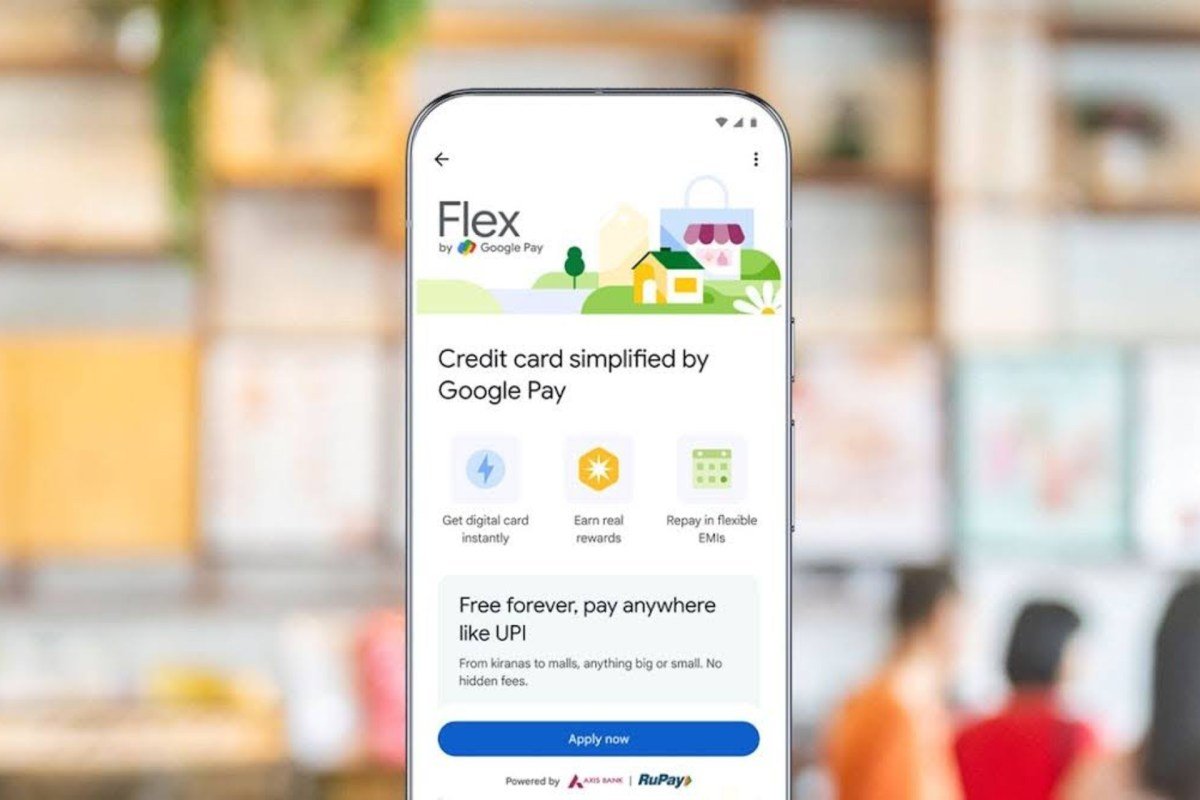
Google on Wednesday entered India’s growing co-branded credit card market with the launch of Flex by Google Pay, partnering with private lender Axis Bank to expand access to credit in the country’s UPI-based payments ecosystem.

India’s rapid adoption of digital payments through its government-backed Unified Payments Interface (UPI) has changed the way consumers pay, but has not translated into widespread access to credit. That gap has created an opportunity for tech companies and banks to integrate lending into widely used payment apps, helping to explain Google’s move into the space.

Flex by Google Pay is issued digitally through the Google Pay app and can be used both online and at brick-and-mortar merchants, the company said. Built on the Indian government-backed RuPay network, the card includes a rewards program that credits virtual “Stars” on transactions, with each star worth ₹1. Users can track spending and bills within the app, choose to pay off balances in full or in installments, and manage security settings such as blocking the card or resetting a PIN.

The launch builds on Google Pay’s broader effort to expand access to credit in India, where it has already partnered with banks and non-bank lenders to personal offer and gold loans through the app. As one of the country’s most widely used UPI platforms, Google Pay gives Axis Bank access to a large, digitally active user base at a time when lenders are increasingly looking to scale credit distribution through technology platforms rather than physical branches.

While Google has started with Axis Bank, it aims to add more issuers soon to expand its co-branded credit card offering in India.

Image Credits:Google

Pricing for the card, including interest and applicable fees, will vary based on user profile and credit profile, with no application fee, Google said, adding that fees associated with repayment options are displayed up front in the app. EMI conversions are subject to processing charges and late payment charges will be levied as per issuing bank’s policy.

Techcrunch event

San Francisco
|
13-15 October 2026

India’s credit card market has been expanding rapidly in recent years. The number of cards outstanding has grown at an annual rate of about 14% over the past three years to about 110 million, while the volume and value of transactions have grown close to 30%, per recent PwC report (PDF). The average annual spend per card has increased from about ₹132,000 (about $1,450) to about ₹192,000 (about $2,100).

Despite the increase in the number of outstanding cards and credit card spending in India, the expansion has been driven largely by existing users rather than a significant increase in the number of cardholders. Google aims to help address this gap by bringing new users into the credit system, particularly those wary of traditional card payment structures. “It’s the same users who are getting more and more credit,” said Sharath Bulusu, senior director of product management for Google Pay, adding that the flexible repayment options are designed to ease concerns about unexpected fees for first-time credit users.

“We think we now understand the problem, the space and the user well enough to solve something uniquely for them,” Bulusu told TechCrunch, explaining Google’s timeline.

Google’s move comes amid growing competition in India’s co-branded credit card market, where the likes of Amazon, as well as Walmart-owned Flipkart and PhonePe, already offer similar products. Online consumer platforms such as food delivery companies Swiggy and Zomato, along with online travel companies including MakeMyTrip and Yatra, have also entered the space in partnership with banks.

Name-brand credit cards accounted for about 12-15% of India’s total credit cards in the fiscal year ending 2024 and are expected to capture more than a quarter of the market by volume by 2028, growing at an annual rate of 35-40%, according to report (PDF) by consulting firm Redseer.

Alongside the launch of the co-branded card, Google is also rolling out “Pocket Money”, a feature in the Google Pay app that allows parents to give children limited access to digital payments. Based on the recently introduced UPI Circle functionality, the feature allows parents to set a monthly spending limit of up to ₹15,000 or approve individual transactions initiated by the child.

Parents receive notifications for each transaction and can view spending history or turn off access to the feature through their own Google Pay app, the company said. The move could also help Google expand the use of Google Pay and the addressable market in India, where it it competes closely with Walmart-backed PhonePe among the leading UPI platforms in the country.

Google’s Pocket Money feature follows earlier efforts by Indian fintechs such as FamPay and Junio, which tried to enable children’s digital spending through prepaid cards. However, unlike prepaid media, Google uses the UPI Circle framework to allow parents to retain control of funds until the time of a transaction, rather than loading funds upfront.

“With UPI Circle, the money stays in the parent’s account until it’s spent,” Bulusu said, adding that the approach makes it easier for families who already use Google Pay to introduce children to digital payments. He said the feature reflects a broader bet on familiar payment apps as a way to build financial confidence among younger users as digital payments become more pervasive.

Google is also upgrading the small business experience on Google Pay by allowing customers to rate merchants directly after a transaction, with those reviews syncing with the merchant’s Google Maps listing. The company also has an AI-powered advertising feature in the Google Pay for Business app that helps merchants create and run ads.

More than 530 million unique users have made at least one payment through Google Pay, while more than 23 million small merchants have signed up for the platform over the years, Bulusu said. That reach, he added, gives the company the confidence to introduce new financial products to users who are already comfortable transacting digitally.

Axis Bank card consumer Deepens Drive Google Google Pay India Loyalty UPIlinked
Share. Facebook Twitter Pinterest LinkedIn Tumblr Email
Previous ArticleAmazon reportedly in talks to invest $10 billion in OpenAI as circular deals remain popular
Next Article YouTube will pull music data from Billboard charts because it doesn’t like its ranking formula
bhanuprakash.cg
techtost.com
  • Website

Related Posts

Cash App targets a new type of customer: children aged 6 to 12 years

22 April 2026

Revolut eyes up to $200 billion valuation in potential IPO

22 April 2026

The App Store is booming again, and artificial intelligence may be the reason

18 April 2026
Add A Comment

Leave A Reply Cancel Reply

Don't Miss

How SpaceX prompted a $2 billion fundraising with a $60 billion takeover offer

23 April 2026

Elon Musk Admits Millions of Tesla Owners Need Upgrades for True ‘Full Self-Driving’

23 April 2026

Esther and Anne Wojcicki support new healthcare accelerator, fund

23 April 2026
Stay In Touch
  • Facebook
  • YouTube
  • TikTok
  • WhatsApp
  • Twitter
  • Instagram
Fintech

Cash App targets a new type of customer: children aged 6 to 12 years

22 April 2026

Revolut eyes up to $200 billion valuation in potential IPO

22 April 2026

Once close enough for a takeover, Stripe and Airwallex are now going after each other

18 April 2026
Startups

How SpaceX prompted a $2 billion fundraising with a $60 billion takeover offer

Cathie Woods’ ARK makes first major investment in startup Lucra — and it’s not AI

AI research lab NeoCognition offers $40 million to build agents that learn like humans

© 2026 TechTost. All Rights Reserved
  • About Us
  • Contact Us
  • Privacy Policy
  • Terms and Conditions
  • Disclaimer

Type above and press Enter to search. Press Esc to cancel.