


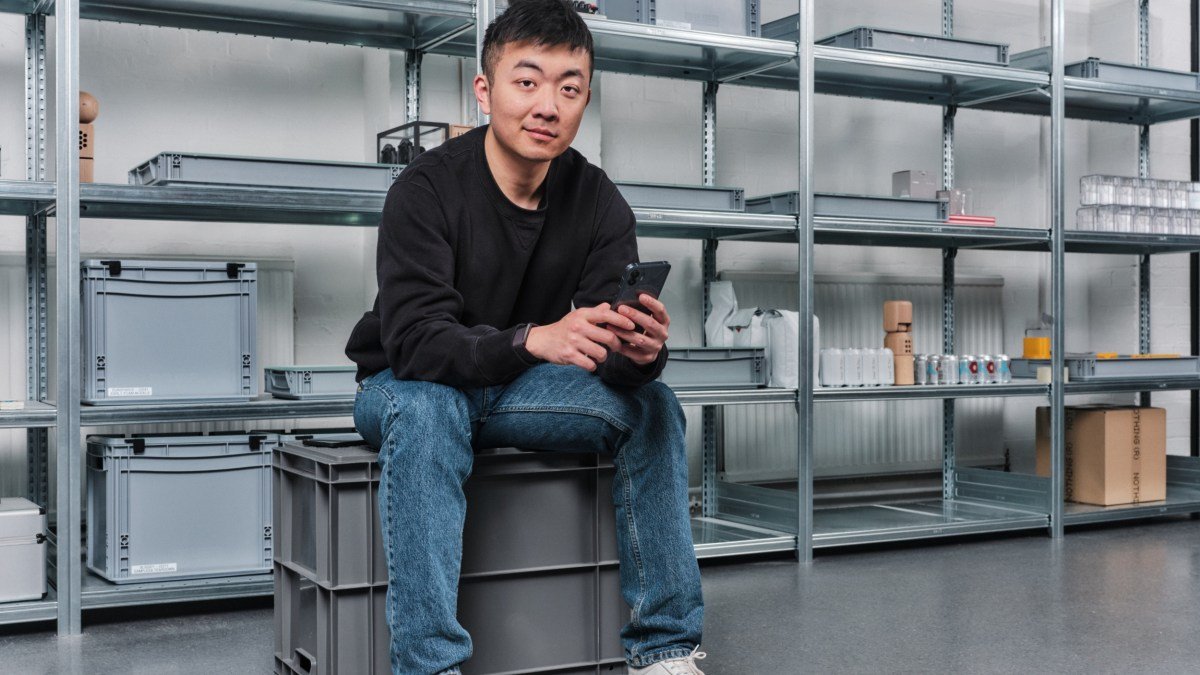
Carl Pei, its co-founder and CEO Nothingimagines a future beyond the iPhone — and it’s a device powered by AI agents, not apps.
“When it comes to artificial intelligence in software, I think people need to understand that apps are going to go away,” said Pei, whose consumer electronics brand makes unique smartphones and other accessories. “So if you’re a founder or a startup and your app is like where the core value is, that’s going to be disrupted whether you like it or not.”
Pei made these comments during a interview at the SXSW convention in Austin on Wednesday.
The founder has talked about an AI-first device before, as that vision helped the company close a $200 million Series C funding round last year. At the time, Nothing envisioned a new kind of smartphone that uses AI and personalization technology that’s accurate enough that its users don’t feel like they have to follow the AI and double-check its performance.
At SXSW, Pei expanded on his vision for the first AI device and the steps needed to get there.
The initial step, currently being tested by some companies, is an AI function that can execute a command on behalf of users, such as booking flights or hotels. Pei, however, dismissed the move as “absurd.”
The next step is where things could get more interesting, as AI begins to learn a user’s intentions over the long term. For example, if you want to be healthier, the device could give you nudges to help you reach your goals.
“I think it becomes even more powerful when it starts showing suggestions for you; you don’t have to manually think of an idea…when the system knows us so well, it will find things that we don’t even know about [know] we wanted,” Pei explained, comparing this idea to something like ChatGPT’s memory feature.
Describing how he envisioned a first AI smartphone, Pei said it would be a device that would do things for you without you having to tell it to.
“The way we use phones today is very old. It’s pre-iPhone… There were old Palm Pilots and PDAs. And if you think about the user experience, it’s still very similar,” Pei said. “You have lock screens, home screens, apps. You browse different apps. Each app is like a full-screen thing. There’s some kind of app store that lets you download more apps. So it hasn’t really changed in about 20 years.”
This frustrated him because the technology consumers use has evolved quite a bit, but the products we use have not. Even simple tasks make us jump through many steps, he explained.
“It’s very difficult to do things on a phone,” Pei said. “Let’s say we want to grab coffee. That’s an intent. But to execute that intent, we have to go through so many different steps and so many different apps. It’s probably like four apps to grab coffee with someone — some messaging app, some kind of maps, Uber, calendar.”
He continued: “I think the future of smartphones or operating systems should just be, ‘I know you very well and if I know your intent, I just do it for you,’ instead of having to go through all the apps manually.”
“It should only do it through AI,” he said.
This also means that the devices will have an interface that will not be focused on applications for human navigation, but will have an interface designed for use by the AI agent.
That doesn’t mean the apps will disappear anytime soon, Pei cautioned. Nothing’s own operating system allows users to code their own mini-apps today. But ultimately, the AI should be able to use the “app” in a frictionless way, without trying to mimic the human touch on smartphones by scrolling through menus and tapping options.
“That’s not the future. The future is not the agent using a human interface. You have to create an interface for the agent to use. I think that’s the safest way to do it,” Pei said.
