


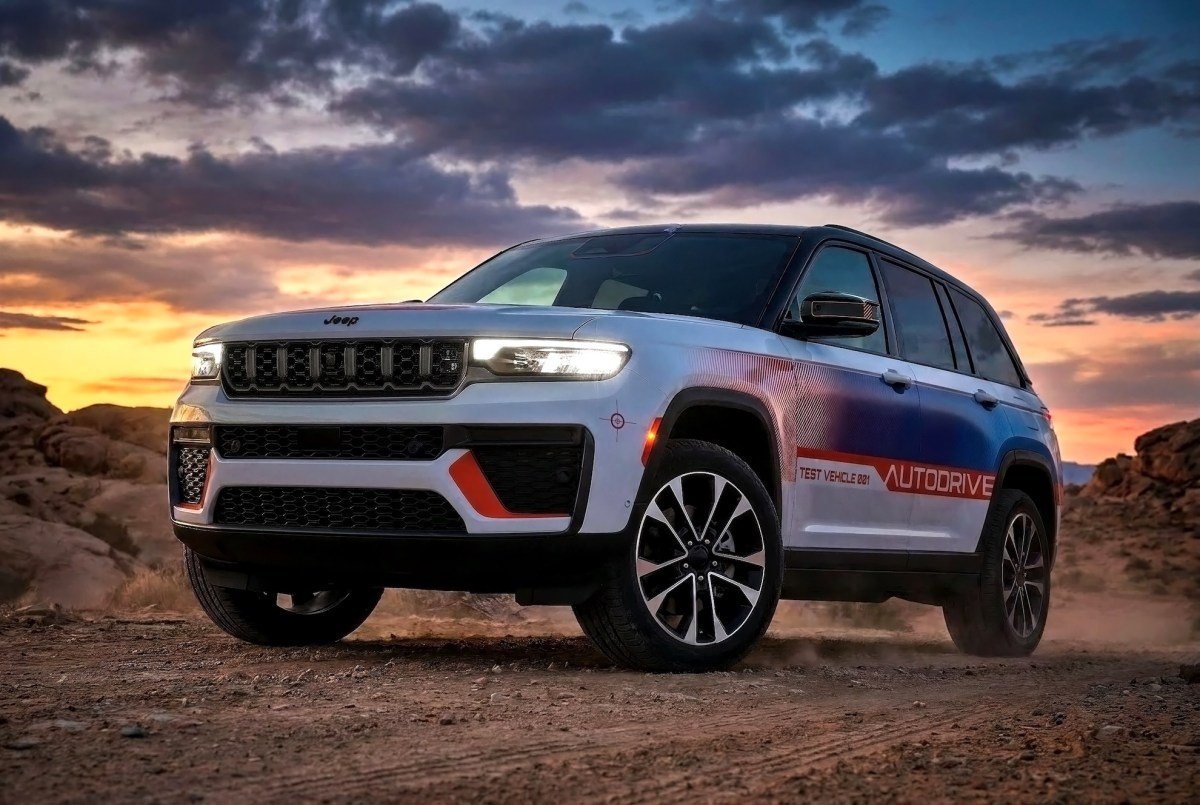
Stellantis, the automaker behind the Jeep and Ram brands, has tapped self-driving startup Wayve to bring hands-free driving to its vehicles by 2028.
The companies announced the deal Thursday during Stellantis’ investor day at its North American headquarters in Michigan.
This is the second automotive deal for the bustling UK-based startup and comes after a $1.2 billion Series D funding round that attracted strategic investors including Nissan and Stellantis, as well as backers Microsoft, Nvidia and Uber.
Wayve did not disclose the contract value of the partnership or provide details on which Stellantis vehicles will get the self-driving software developed by Wayve, but according to Wayve CEO Alex Kendall, it is a commercial contract to provide technology to Stellantis at scale. The companies are targeting the North American market first, which helps narrow the scope of Stellantis’ 14 brands, which also include Chrysler and Dodge.
“One of the amazing things about Stellantis is the global, massive scale at which they operate and the variety of products they offer,” Kendall told TechCrunch, describing the opportunity for his startup. “It’s one of the reasons why it’s so good because our AI is so adaptable. We can generalize the variety of products that they offer and it means that because of the variety of sizes, shapes of vehicles, different driving styles, different geographies that they run in, our AI is built to scale to everything.”
By 2028, there could be more vehicles to choose from. Stellantis announced on Thursday that it plans to expand its market coverage in North America by launching 11 new vehicles by 2030 as part of its $70 billion turnaround plan.
Seven of those vehicles will be priced under $40,000 and two under $30,000, Stellantis said.
It’s unclear whether Wayve’s technology will appear in those low-cost cars and SUVs. Although, if one were to take Wayve’s performance seriously, it might seem reasonable.
Wayve has developed a self-driving system that isn’t tied to specific sensors, chips or high-definition maps, which cost-sensitive automakers like Nissan — and now Stellantis — have found attractive. Instead, Wayve’s software uses an end-to-end neural network that uses only data — received from whatever sensors are on the vehicle — to direct and teach the vehicle how to drive. Wayve’s software can also run on any chip OEM (original equipment manufacturer) partners already have in their vehicles.
Wayve’s technology underpins two products the company is marketing to automakers and tech companies — a hands-off assisted-driving system comparable to Tesla Full Self-Driving (Supervised) and eventually a driverless system designed for robot taxis or even passenger vehicles.
Stellantis will use the hands-off, eyes-on system, a prototype of which was developed for the automaker in just two months, Kendall said. He noted that within weeks the engineers had the vehicle — using the artificial intelligence-based system — up and driving.
“I think what we’ve been able to show is that we’ve been able to create a version of FSD based on an AI model that’s really set up to generalize,” Kendall said when asked how Wayve compares to Tesla’s system. “It’s able to generalize to different computing stacks, different sensors, different vehicles, shapes and sizes.”
When you purchase through links in our articles, we may earn a small commission. This does not affect our editorial independence.
