


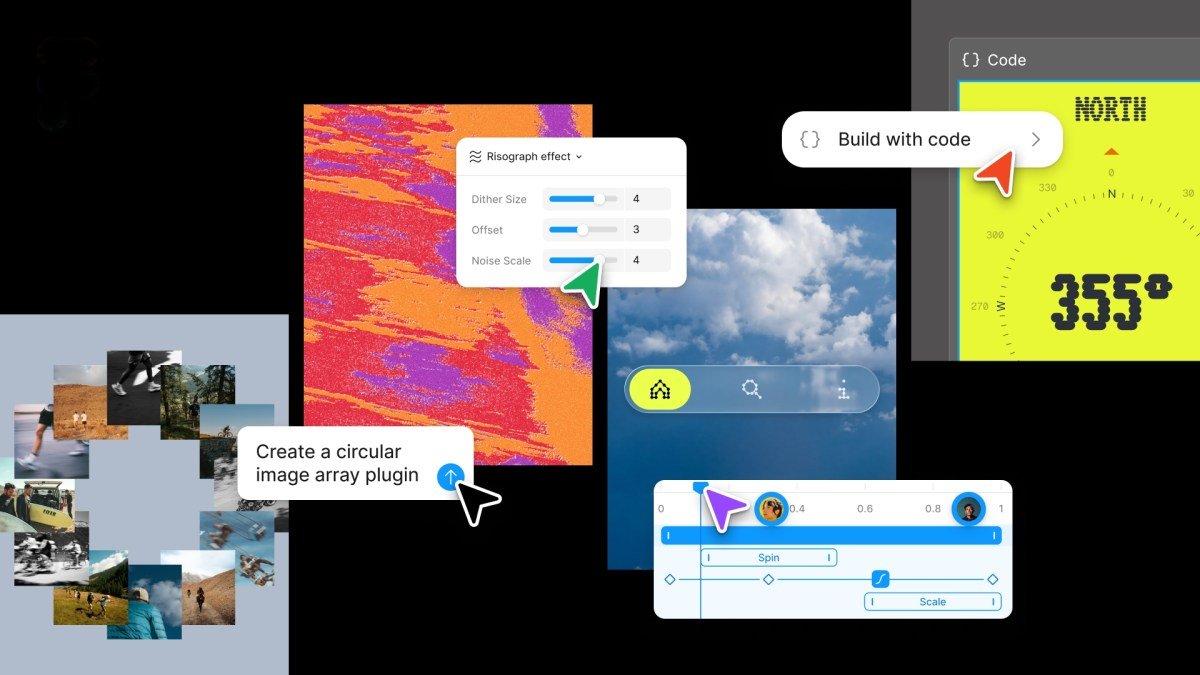
Figma on Wednesday introduced an update that adds a new layer of code, support for animation and shaders, and the ability to create custom plugins for various tasks using AI.
The design platform has been working on bringing code integration to its tool for a while. Last year, it unveiled an AI-based prototyping tool, Figma Make, and has since launched integrations with Claude Code and Codex to improve the relationship between coding and design.
The company now adds code layers directly to the collaborative canvas, helping teams clone repositories and extract code streams to design layers for testing.
Figma Chief Product Officer Yuhki Yamashita said code layers make it easier for designers, product managers and developers to iterate on ideas instead of focusing on creating virgin code that goes into production.
“We think the multiplayer canvas is very powerful because this is an environment where you don’t really care about the quality of the code. If you’re exploring quickly or need to explore a bunch of new directions, you can do it in this spatial way. We hope that this feature generates a different behavior not only with designers, but also with engineers and PMs,” he said.
Figma now also supports animations, transitions and 3D transformations. Previously, designers had to create animations in other software and convert them into code that the application could understand. Now designers can embed animations and transitions directly into Figma.

You can now use AI to create some of these elements, and the update adds support for adding shader effects and fills using AI as well.
Last year, Figma acquired the node-based tool Weavy, which helped designers run workflows through different models to compare results, and is now working to better integrate the two applications. In an update coming later this year, users will be able to create Weavy workflows directly within Figma.
The company is also adding new skills to make the AI assistant more useful with its collaborative canvas. Users can now write text messages to create repeatable skills that AI agents can use. You can also connect tools like Notion, Granola, Excel, and GitHub or attach files to give the AI bot more context about what you want it to do.
The company is also adding a feature to help users create custom plugins, such as layout generators or vector path traces, with prompts.
When you purchase through links in our articles, we may earn a small commission. This does not affect our editorial independence.
